Основи ручного шиття · деталь Nº 51 · 54 хв
Grain, bias, and selvage: how to read woven cloth
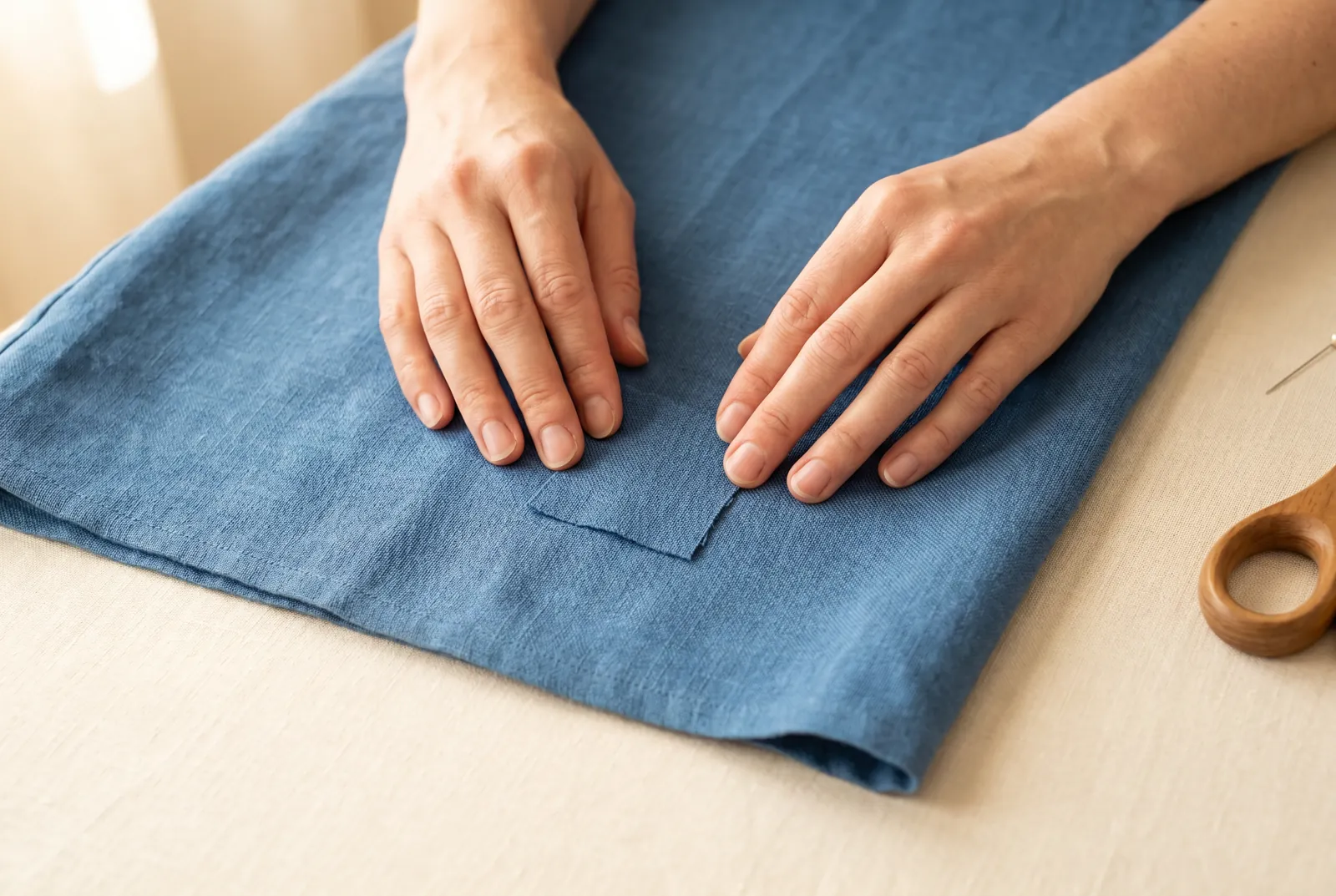
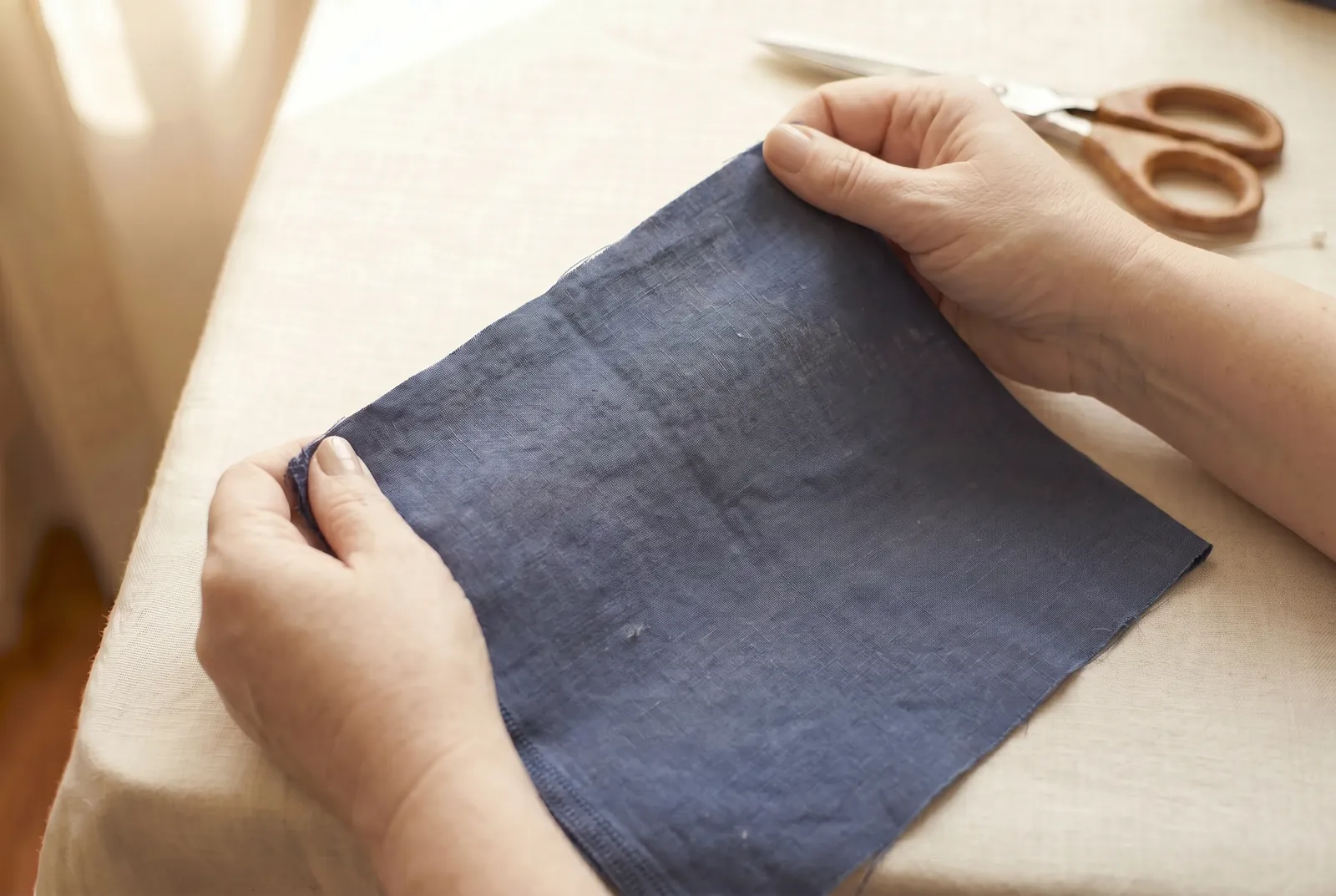
Learn to read a piece of woven cloth: find the selvage, tell the lengthwise grain from the crosswise, and feel where the bias stretches. Knowing which way the grain runs is what makes a garment hang straight, a bias binding curve smoothly around an edge, and a mending patch sit flat instead of pulling against the cloth around it.
Шов · 9 кроків
Крок 1
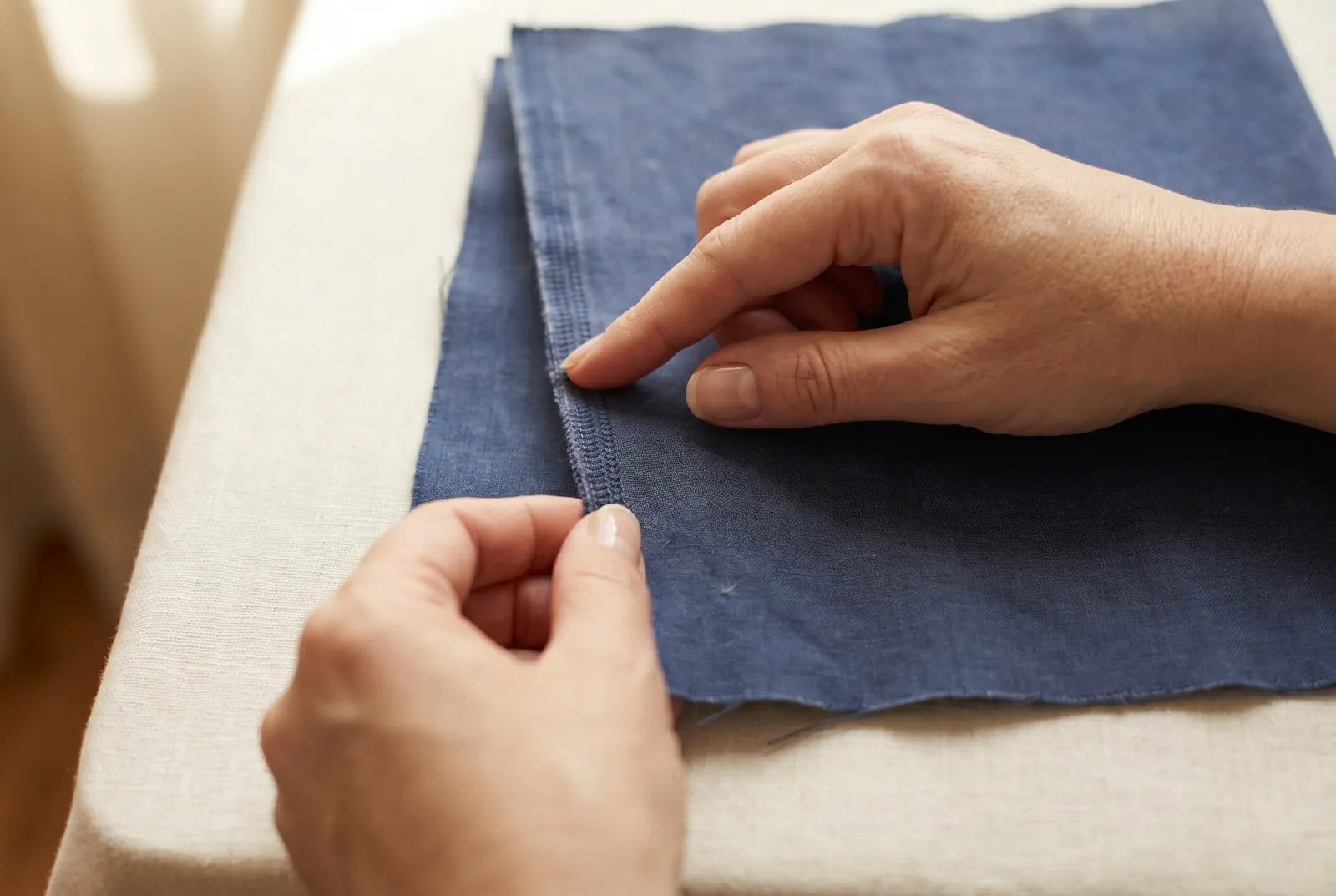
КРОК 1/9Lay the fabric flat and find a lengthwise edge that is firm and does not fray: this finished border is the selvage, formed where the crosswise threads turn back at each side and bind the lengthwise threads into a tight edge. Run a fingernail along it and notice that, unlike a cut edge, it sheds no loose threads. Because the selvage is a firmer border than the rest of the cloth, do not plan to sew it into a seam or use it as a hem edge.
Крок 2
КРОК 2/9Look at the threads that run the length of the piece, parallel to the selvage: these are the warp, the set put on the loom first and drawn tight. They are the harder-twisted, stronger set, and the cloth stretches least along them. This lengthwise direction is the lengthwise grain, also called the straight grain.
Крок 3
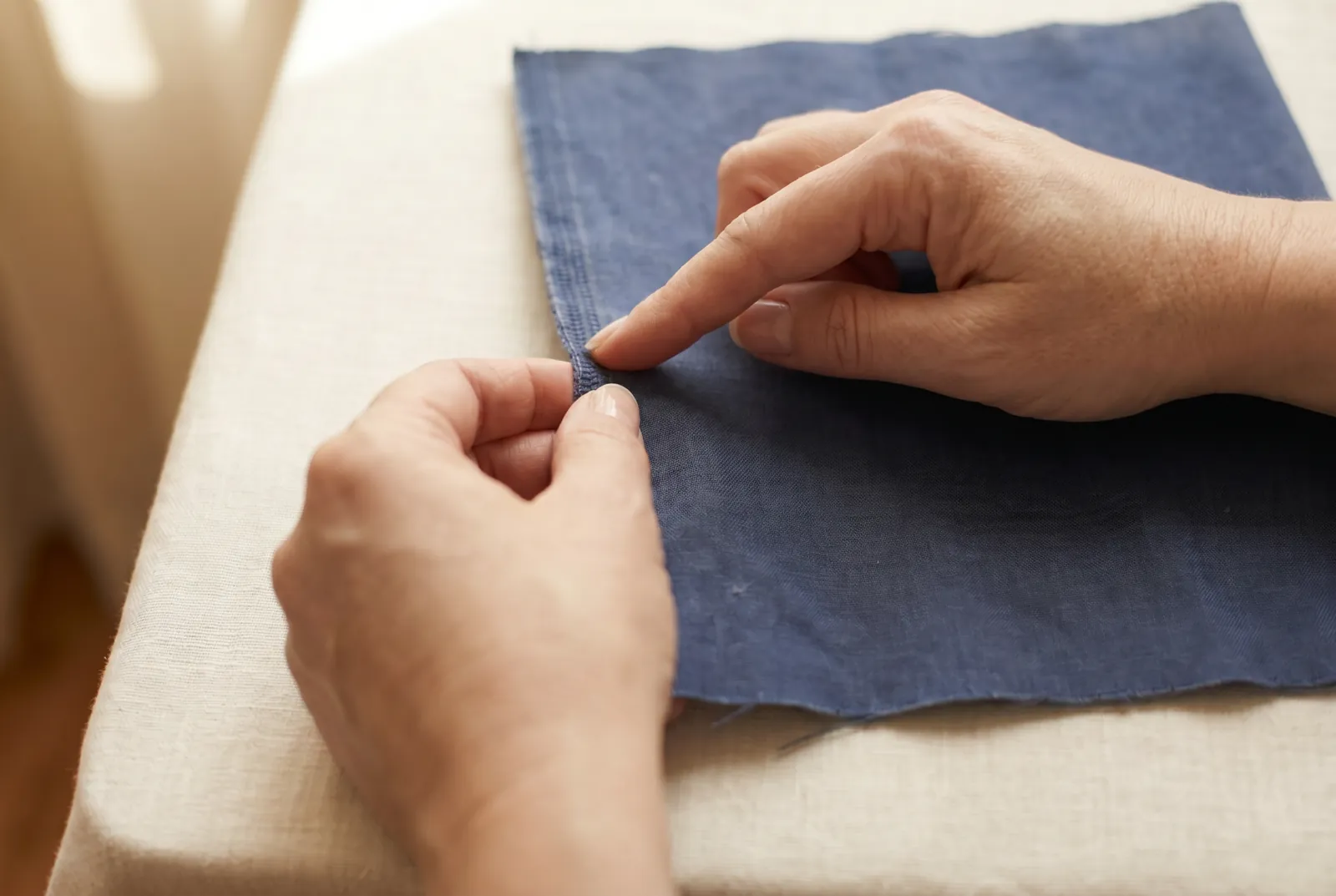
КРОК 3/9Now look at the threads crossing from selvage to selvage, passing over and under the warp: these are the weft (also called the woof or filling). They are the softer set, so the cloth gives a little across its width. This crosswise direction is the crosswise grain.
Крок 4
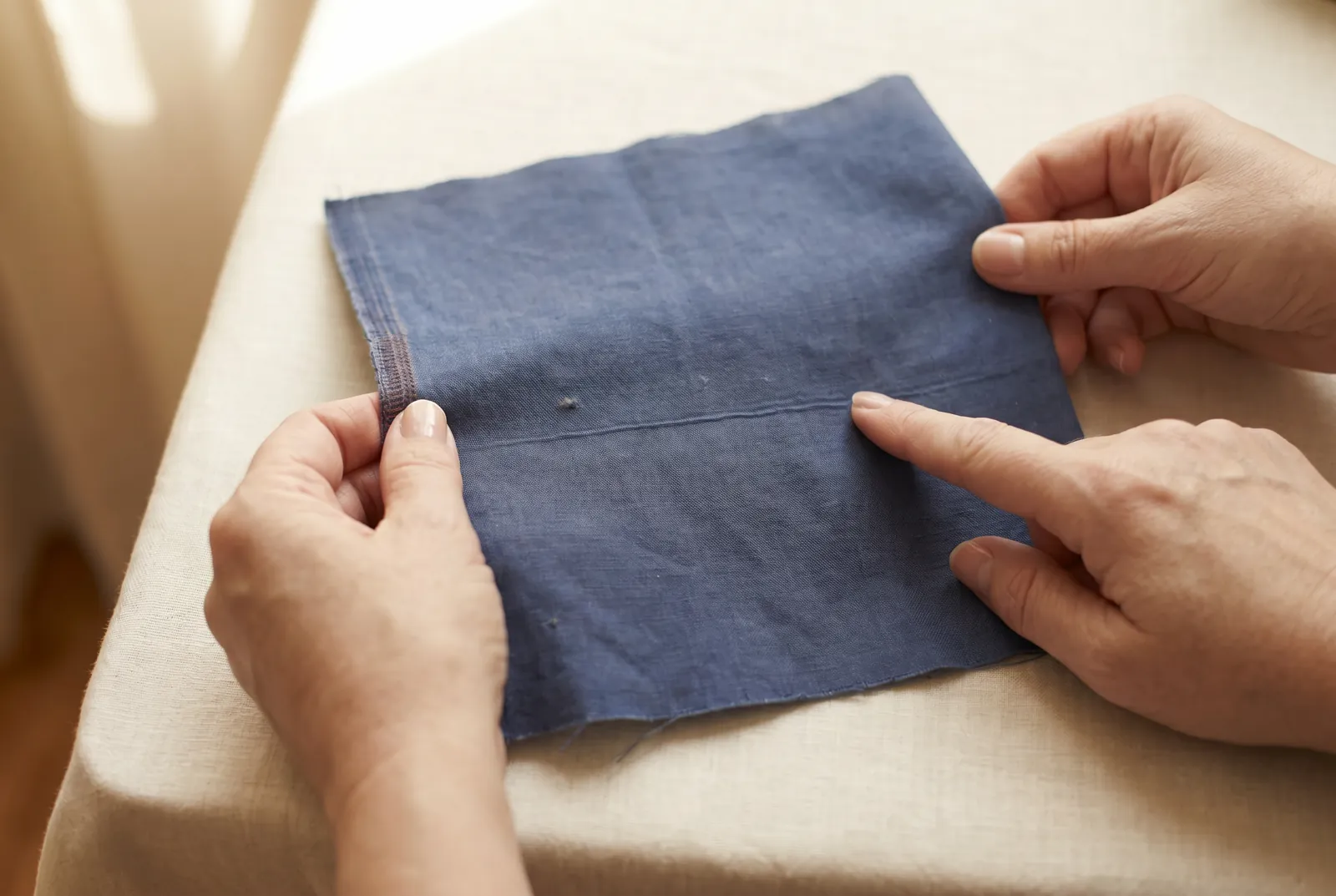
КРОК 4/9Hold the fabric with both hands about a hand-span apart and pull gently along the length, parallel to the selvage: it barely gives. Now pull the same distance across the width, selvage to selvage: it gives a little more. This is why garments are cut with the warp running up and down the body, where it bears the weight and lets the garment keep its shape, while the small crosswise give eases around the body.
Крок 5
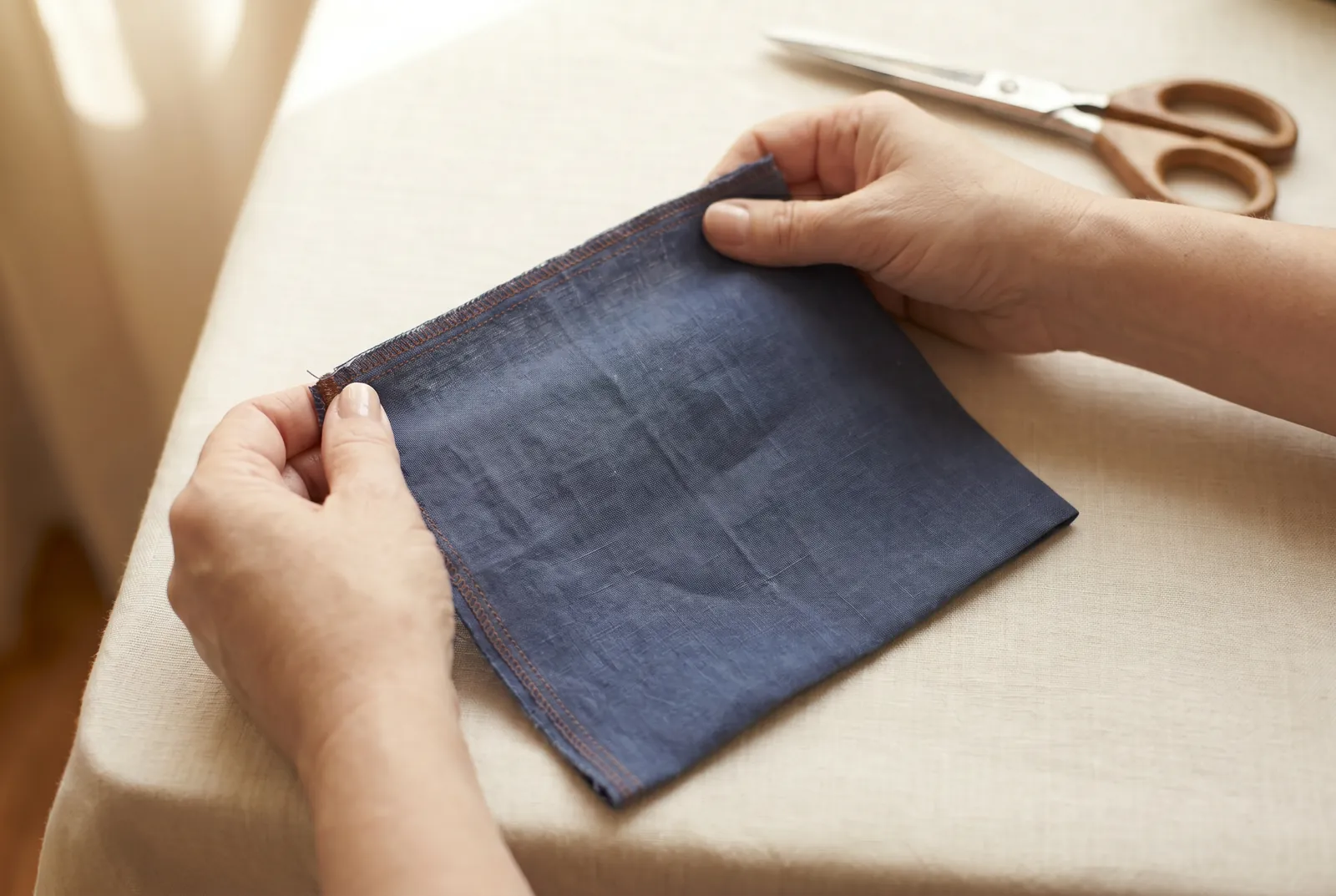
КРОК 5/9Now pull on the diagonal, slanting across both sets of threads: this slant is the bias, and the true bias at forty-five degrees stretches more than either straight direction. Feel how much further it gives. That stretch is what lets a bias strip settle smoothly around a curved edge, but it also means a raw edge cut on the bias will sag if it is not stayed, and a bias seam stretches as you sew and has to be held in.
Крок 6
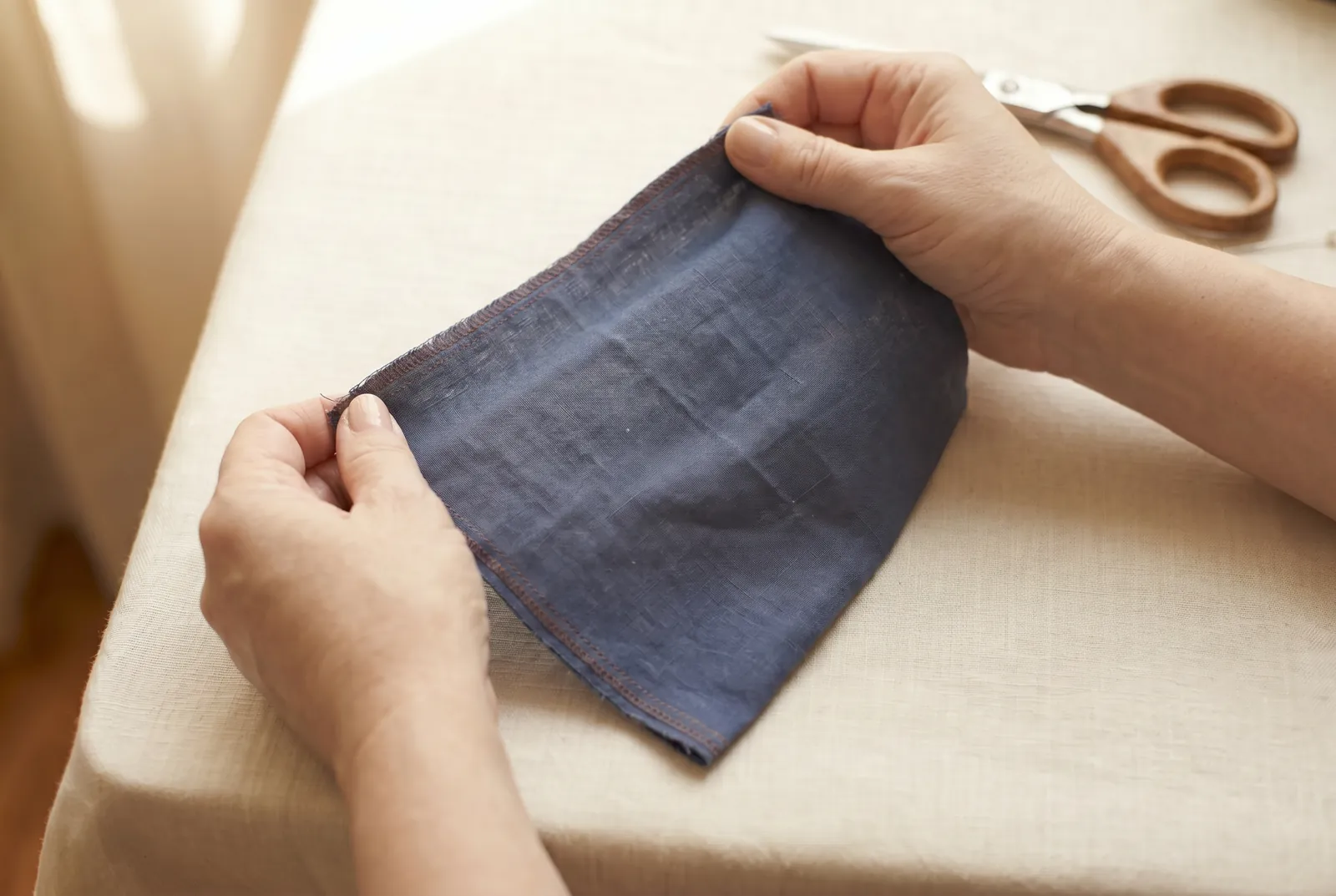
КРОК 6/9To locate the true bias exactly instead of by eye, fold the cloth so that a straightened crosswise end lies along the selvage. The diagonal fold this makes is the true bias, and bias strips for binding are measured and cut parallel to that fold.
Крок 7
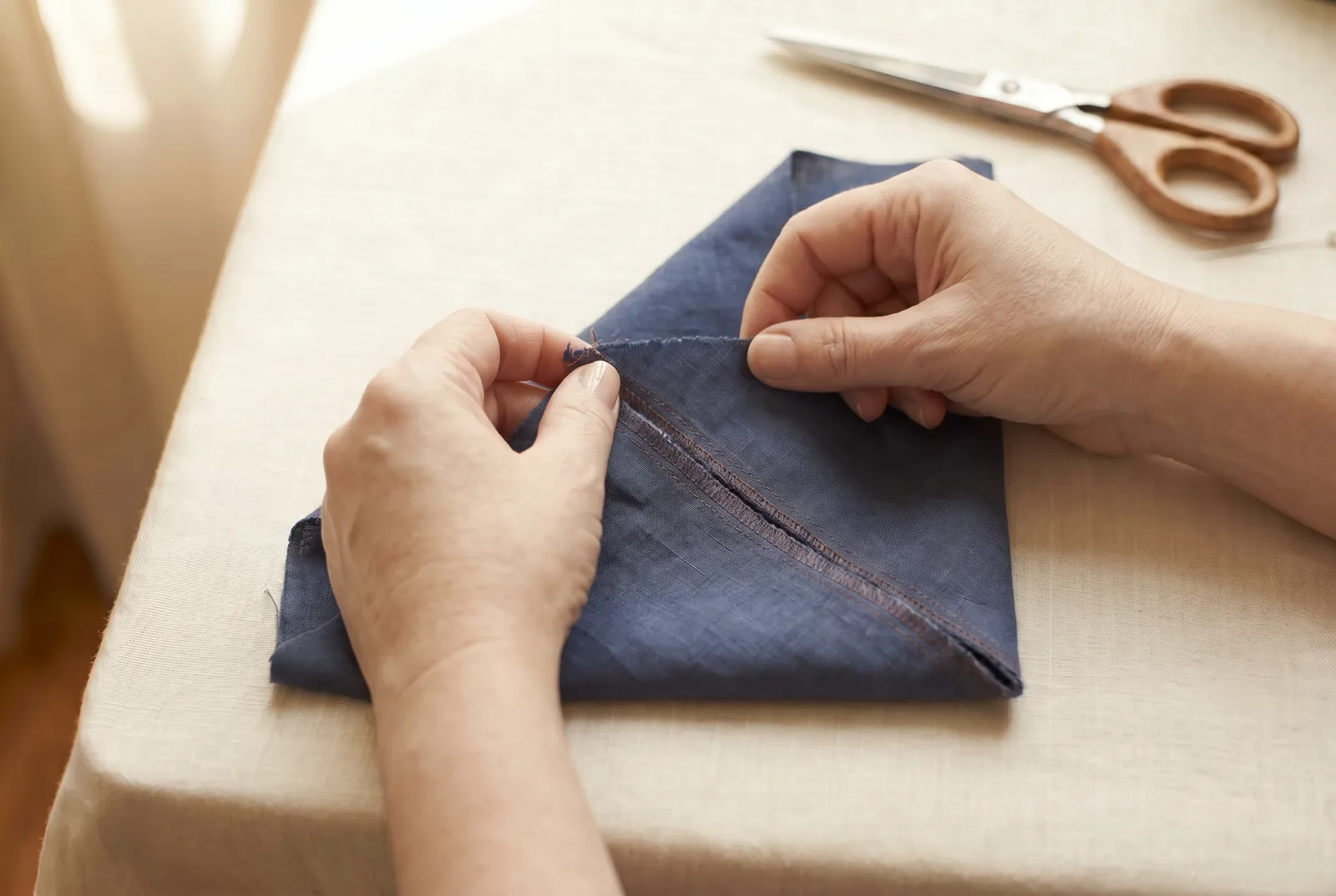
КРОК 7/9The cut ends of shop or offcut fabric are seldom cut along a single thread, so square one end before cutting a project from it. Near the end, lift one crosswise thread with a pin and draw it, gathering the cloth along that thread until it either pulls free or leaves a clear drawn line across the full width, then cut along that line. Tearing firm cloth along a thread also works, but it roughens the edge, so drawing a thread is the surer way.
Крок 8
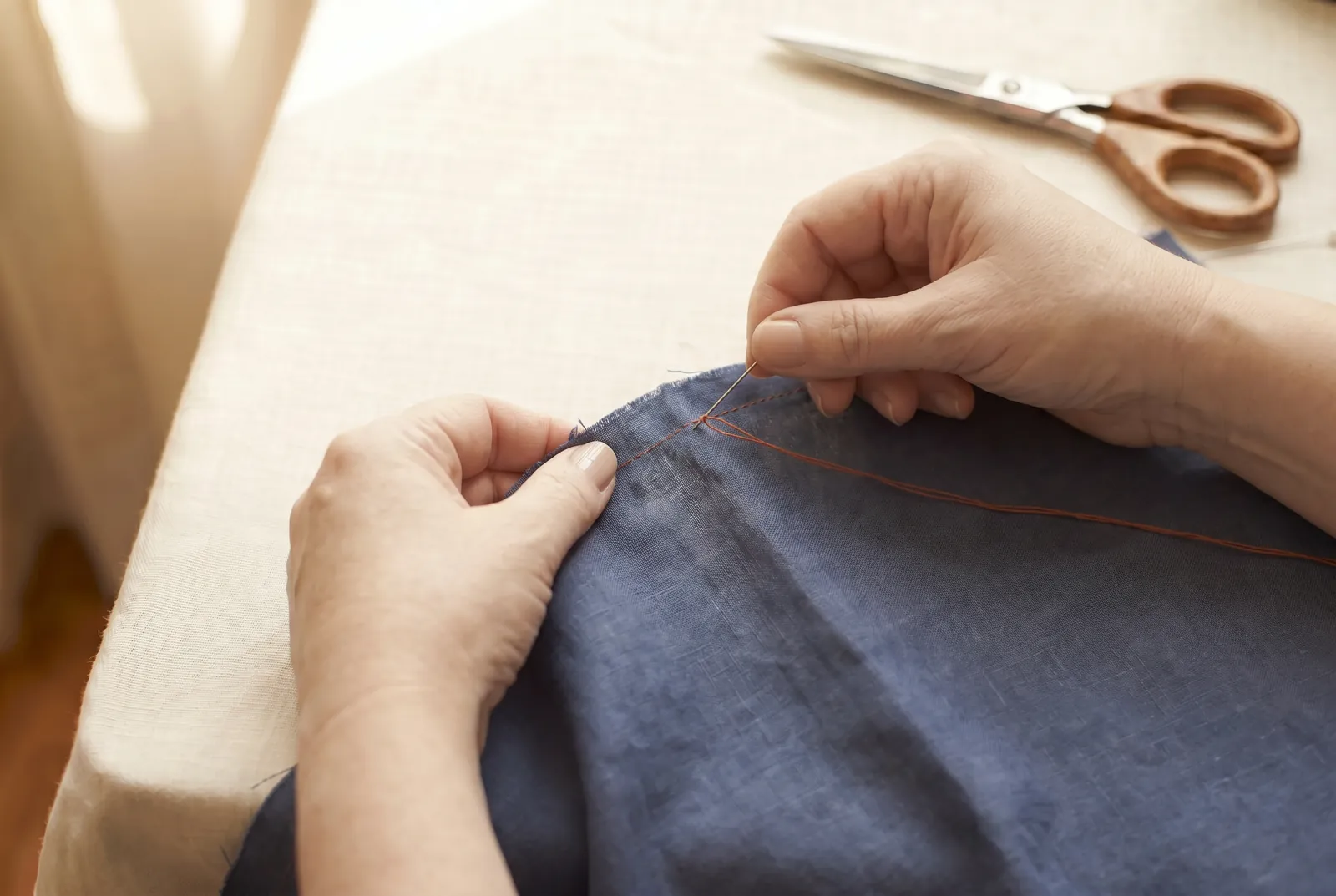
КРОК 8/9If your fabric has been folded or balled up off grain, pull it back true before cutting: take the short corners and stretch the cloth gently on the bias until the crosswise threads run square to the lengthwise ones again.
Крок 9
КРОК 9/9Carry this into mending: when you cut a patch, lay it so its lengthwise threads run with the lengthwise threads of the garment. A patch set askew of the grain loses half its worth, because patch and garment then shrink and pull against each other in washing.