Основи ручного шиття · деталь Nº 02 · 54 хв
Sew a strong seam with the backstitch
The backstitch is the strongest of the hand stitches and stands in for machine stitching on a seam that has to hold. In this lesson you build a plain seam with it: match and baste the two pieces, work the backstitch, then finish and press the seam. You should already know how to start and fasten off a thread, because securing both ends is what keeps the seam from pulling out.
Шов · 9 кроків
Крок 1
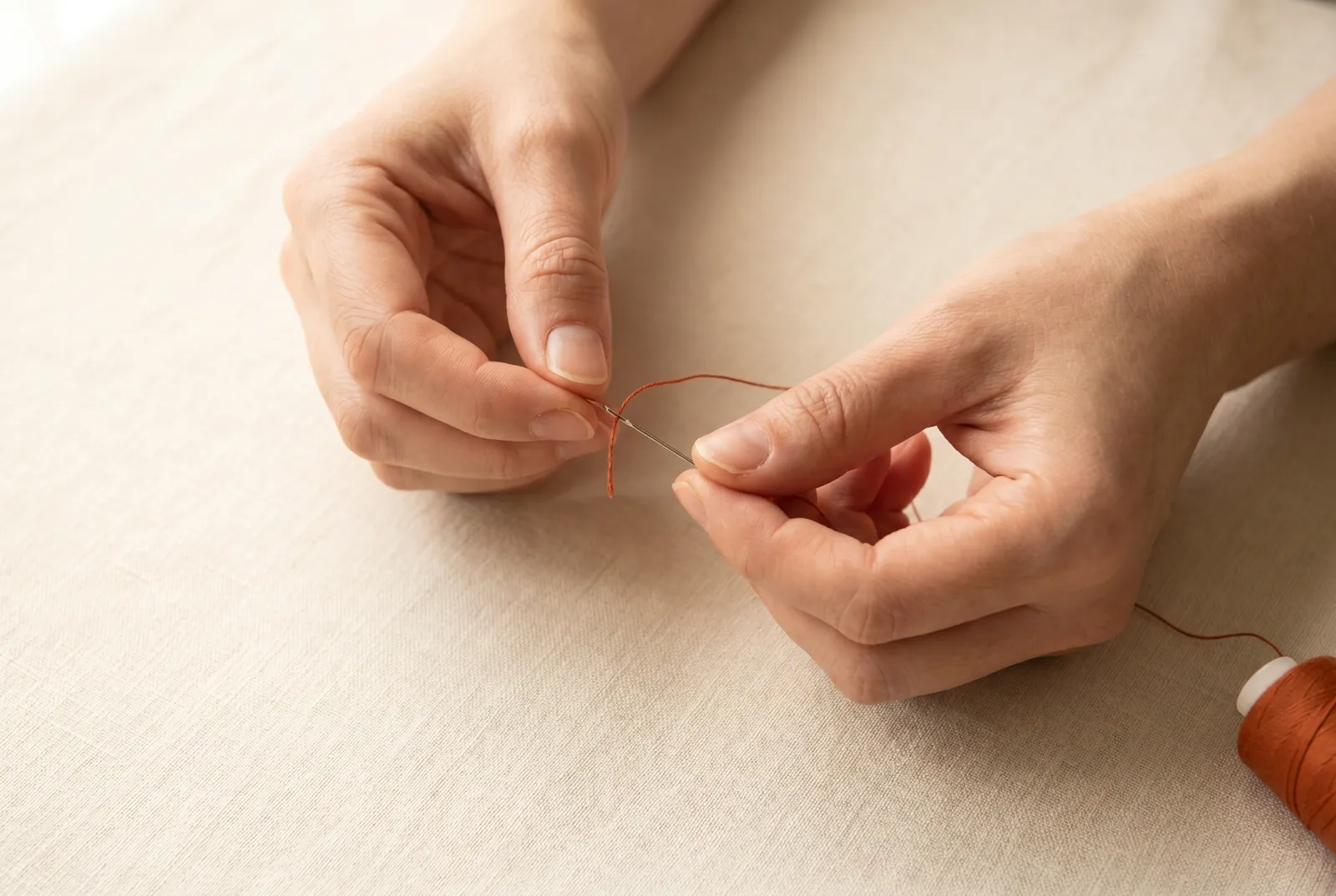
КРОК 1/9Match a needle and thread to your cloth. For ordinary sewing on muslin or calico, use No. 60 or 70 cotton thread with a No. 8 or 9 needle, and keep the needle a little larger than the thread so it opens the way and the thread follows without chafing. A needle too fine frays the thread, and one too coarse leaves holes in the cloth.
Крок 2
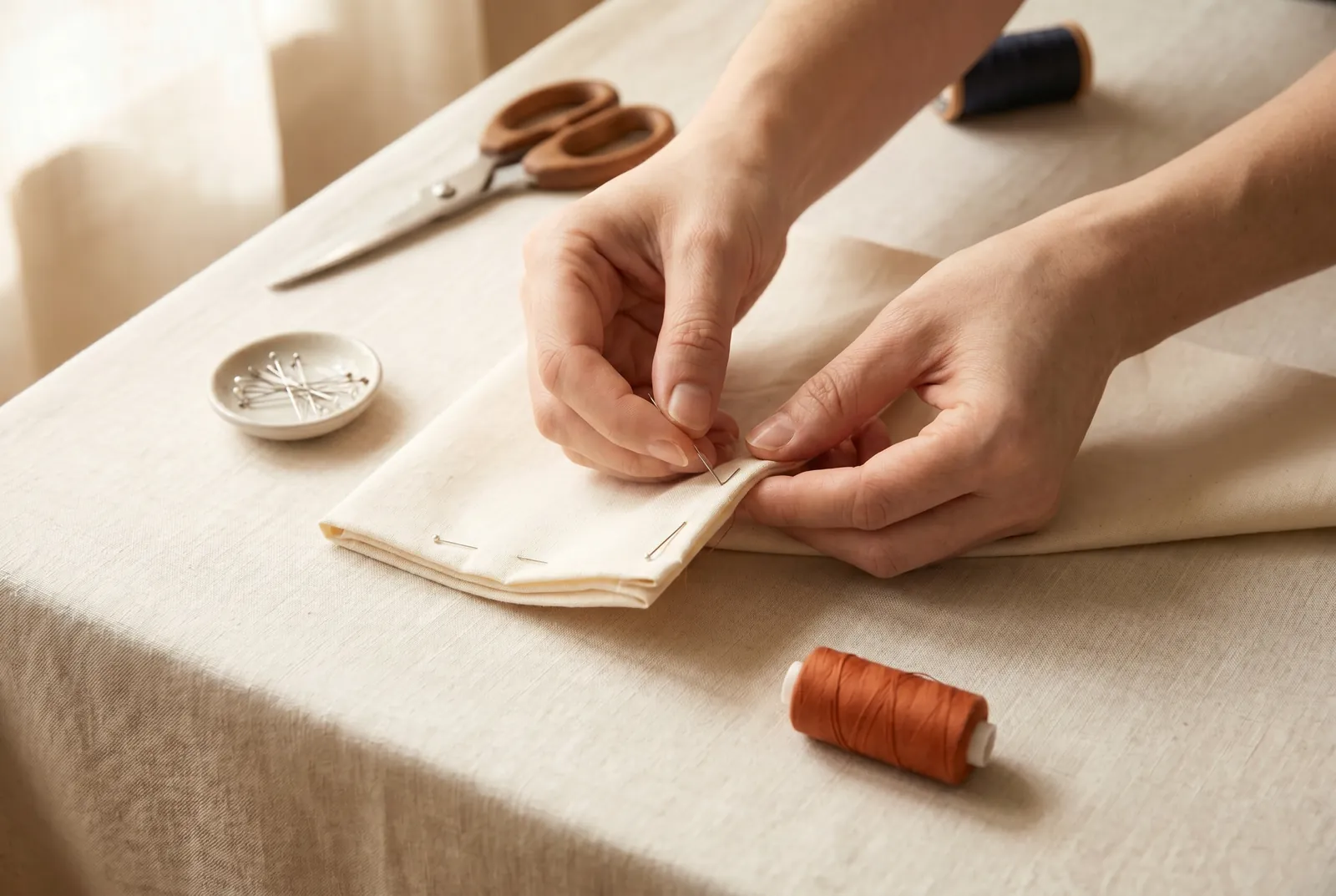
КРОК 2/9Lay the two pieces right sides together with the edges even, matching any notches or cross marks. Pin at the ends first and then between, with the pins set at right angles to the edge so the layers cannot shift.
Крок 3
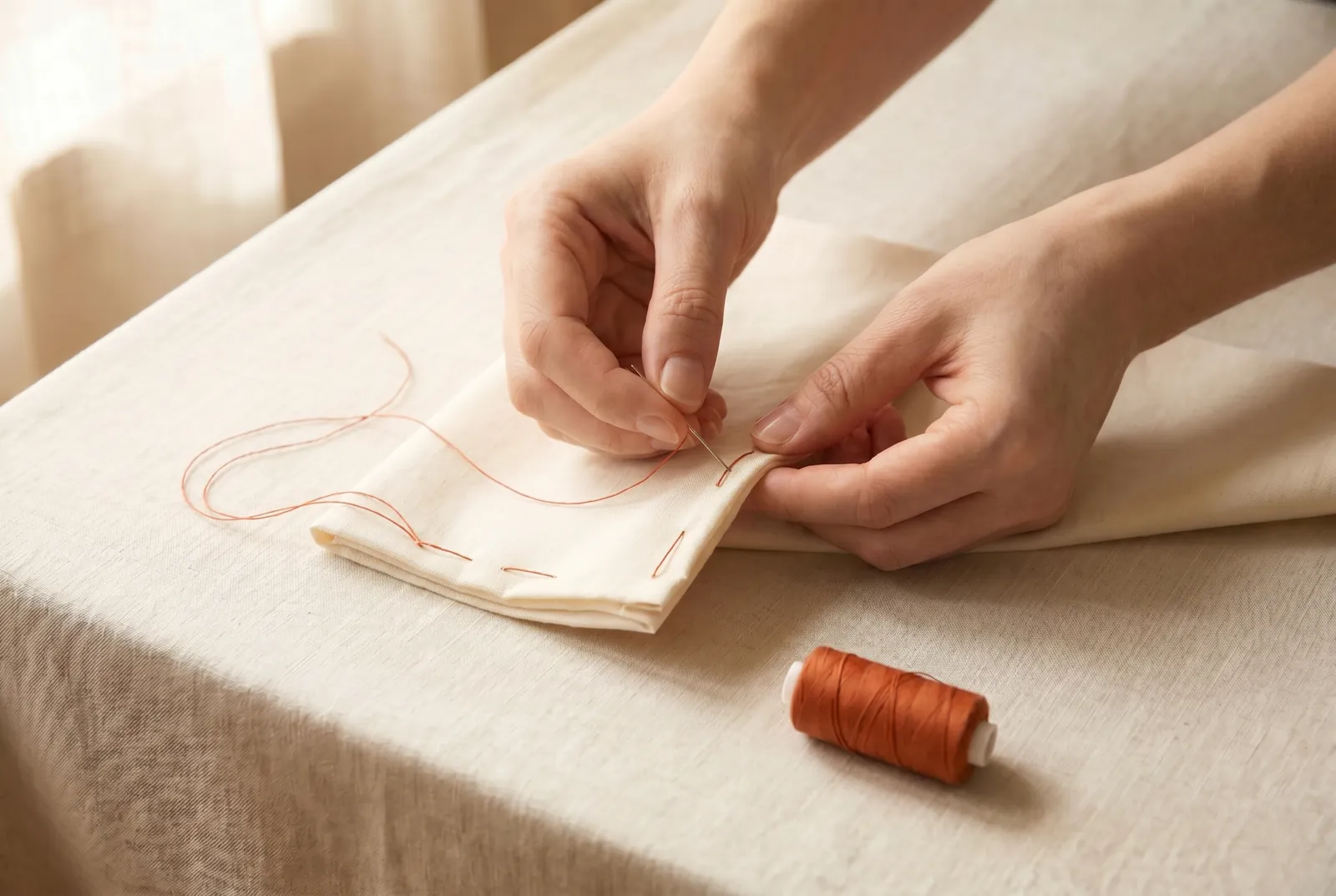
КРОК 3/9Baste a thread's width outside the seam line through both layers, then take the pins out. The basting holds the cloth steady so the seam runs straight while you stitch.
Крок 4
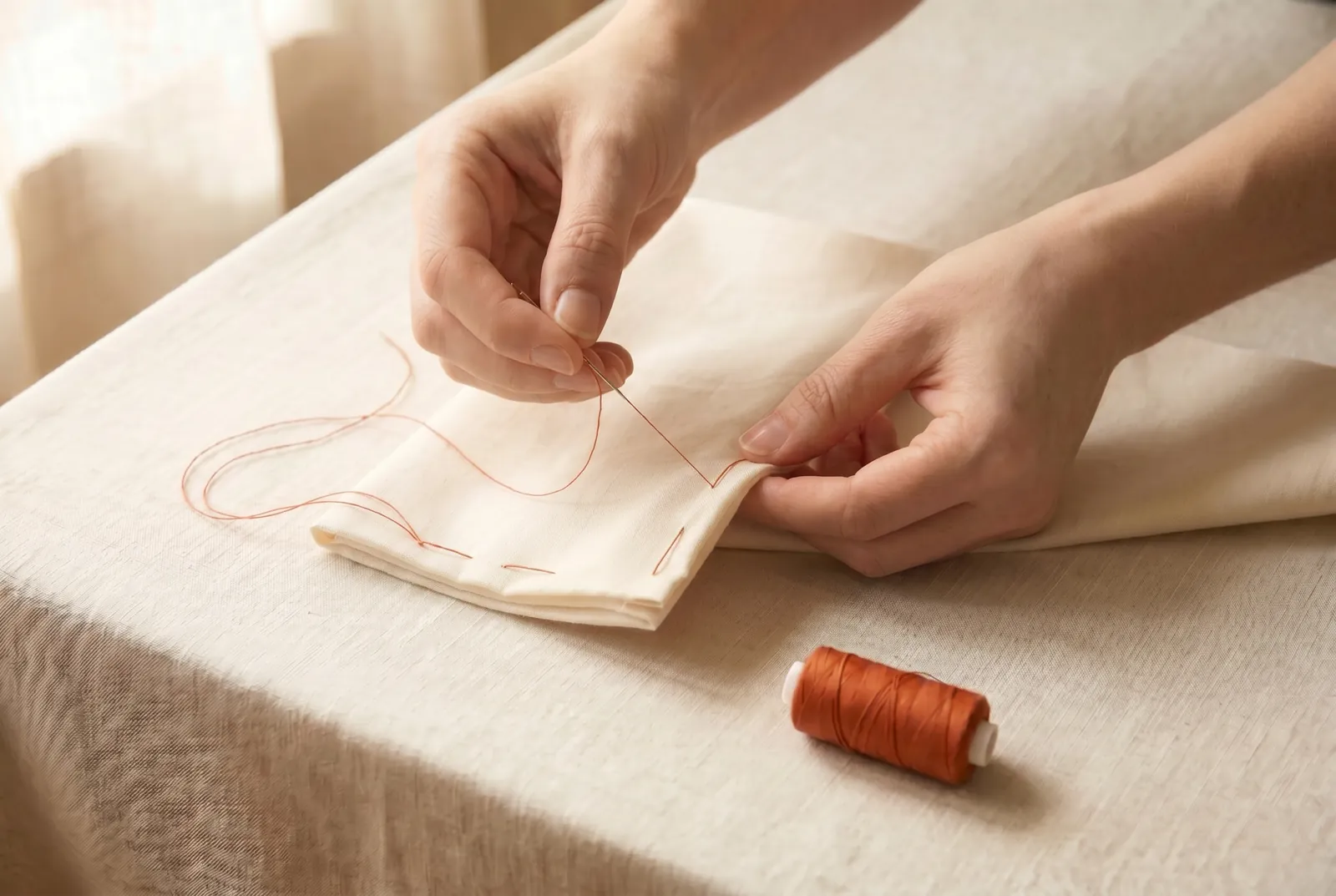
КРОК 4/9Secure your thread to the cloth where the seam begins. Set that starting point 1 to 1.3 cm (3/8 to 1/2 in) in from the raw edge, which fixes an even seam allowance; the anchored start is what the whole strong seam hangs on.
Крок 5
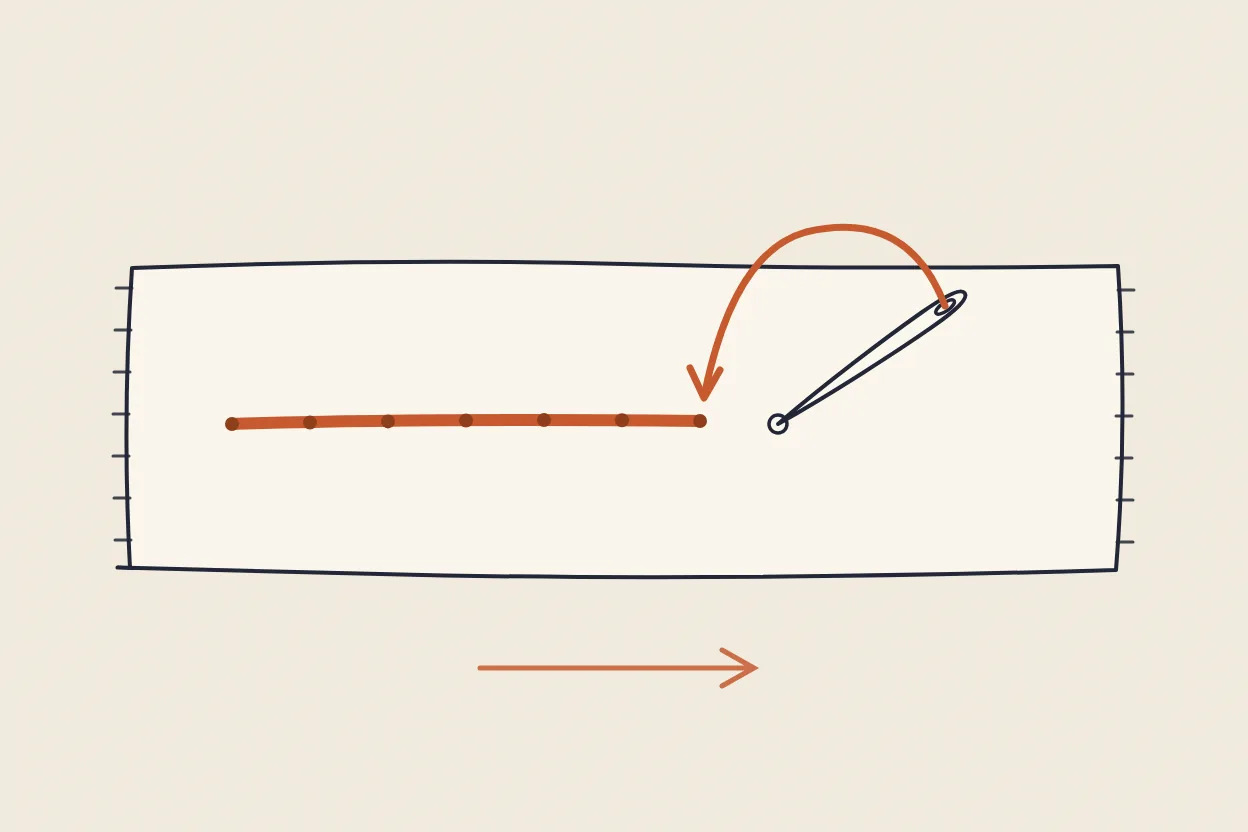
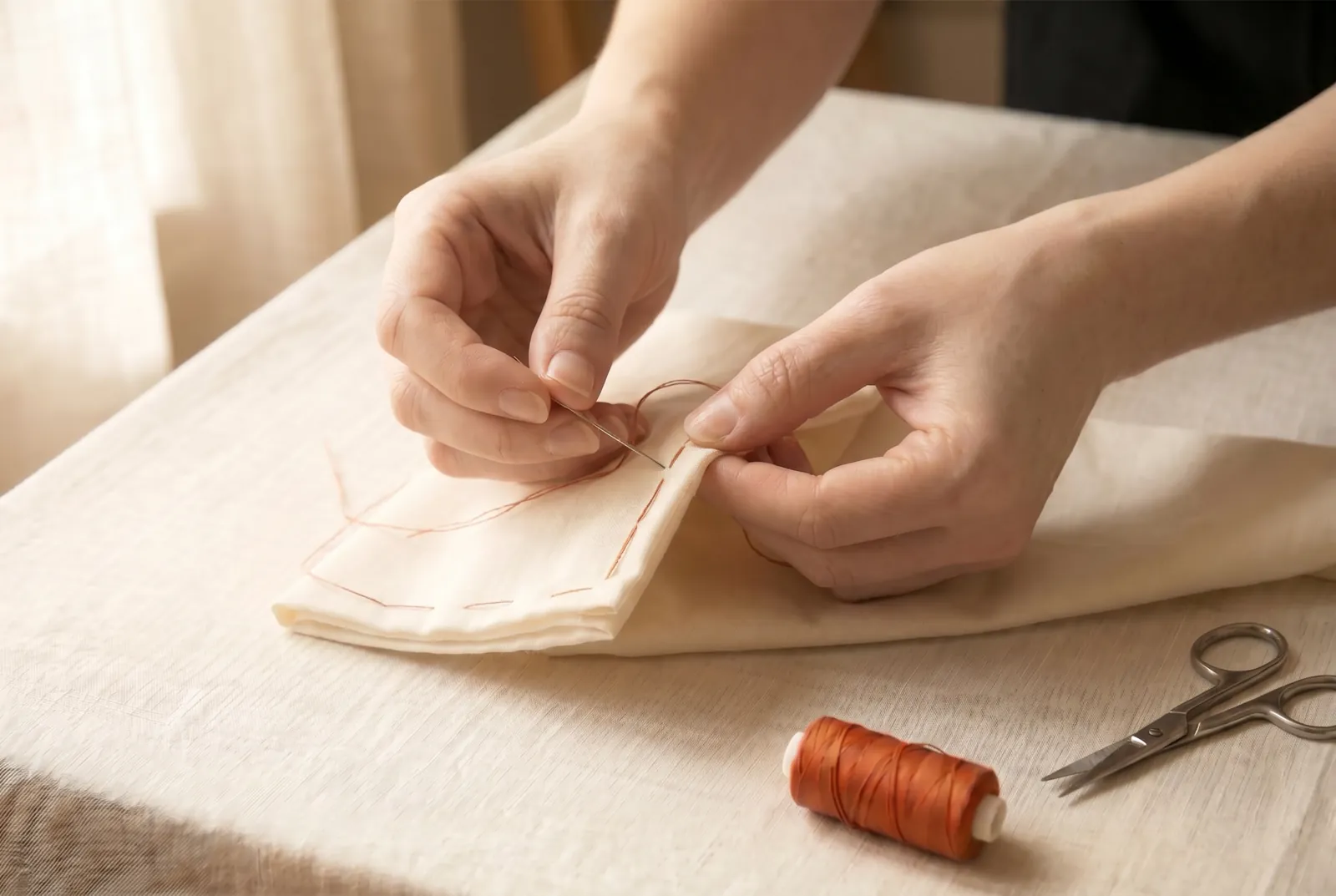
КРОК 5/9Work the backstitch along the seam line: bring the needle up on the line of sewing, put it in a stitch's length behind, in the end of the last stitch, and bring it out a stitch's length in front. Keep the stitches small and even, 1.5 to 3 mm (1/16 to 1/8 in) long. On the upper side they meet end to end like machine work, while underneath they overlap.
Крок 6
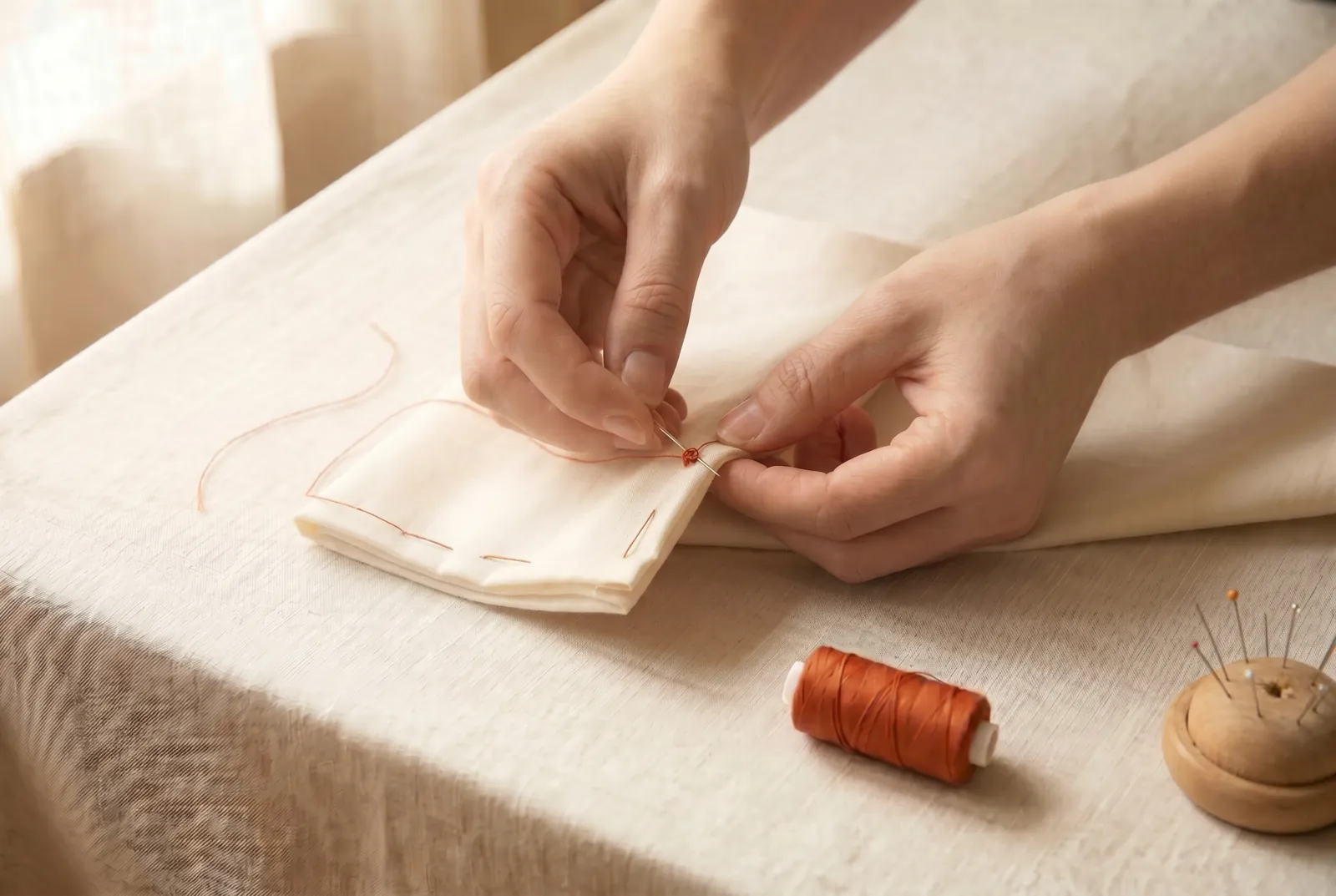
КРОК 6/9Fasten the thread off at the end of the seam so the line cannot draw back out. A backstitch left loose at either end pulls out under the first strain, which is what turns a strong stitch into a failed seam.
Крок 7
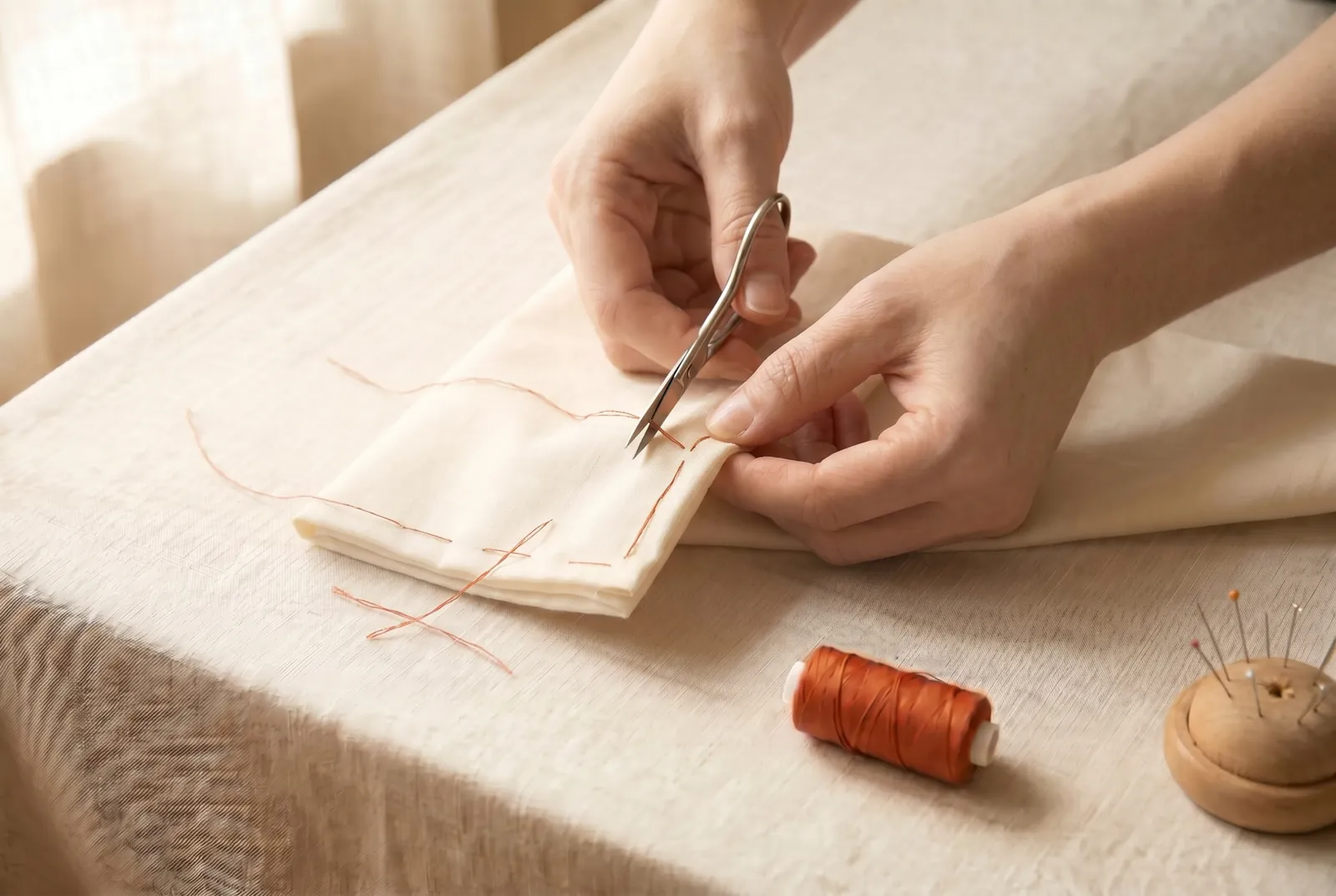
КРОК 7/9Draw the bastings out, cutting the basting thread every few inches so it slips free without dragging on the new seam.
Крок 8
КРОК 8/9If your cloth frays, overcast each raw edge with slanting stitches about 3 mm (1/8 in) deep; firm goods that fray little can be left plain or notched.
Крок 9
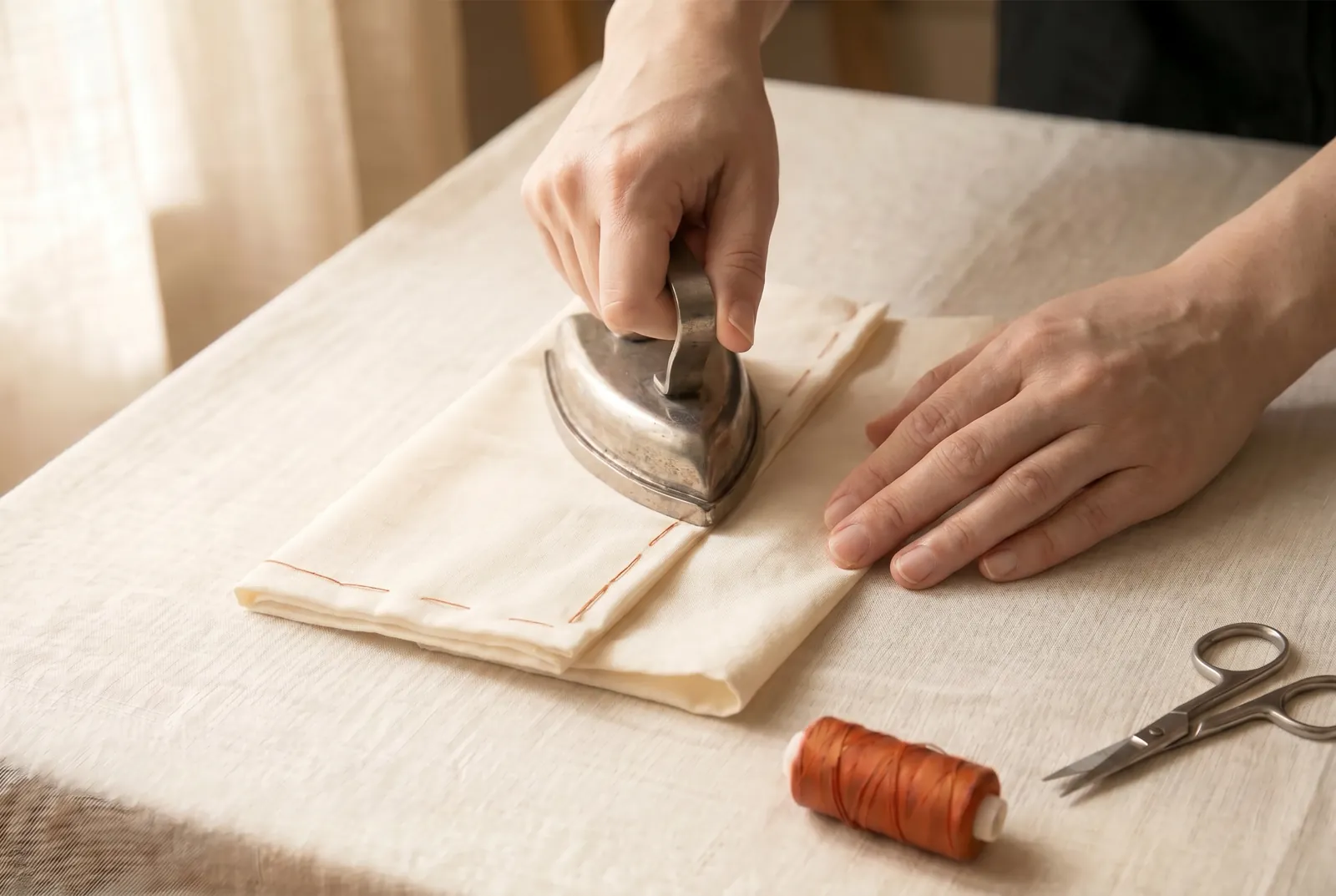
КРОК 9/9Press the seam as soon as it is sewed, laying the work wrong side up, and press it before any other seam crosses it — a seam once crossed can never afterward be pressed flat.