Your First Machine Projects · piece Nº 04 · 60 min
Machine-mend a burst seam or a small hole
Two quick machine repairs in one lesson: restitch a seam that has popped open, and patch a small hole or tear from behind. It's the same mending value as hand repairs, done faster with the machine.
The seam · 10 steps
Step 1
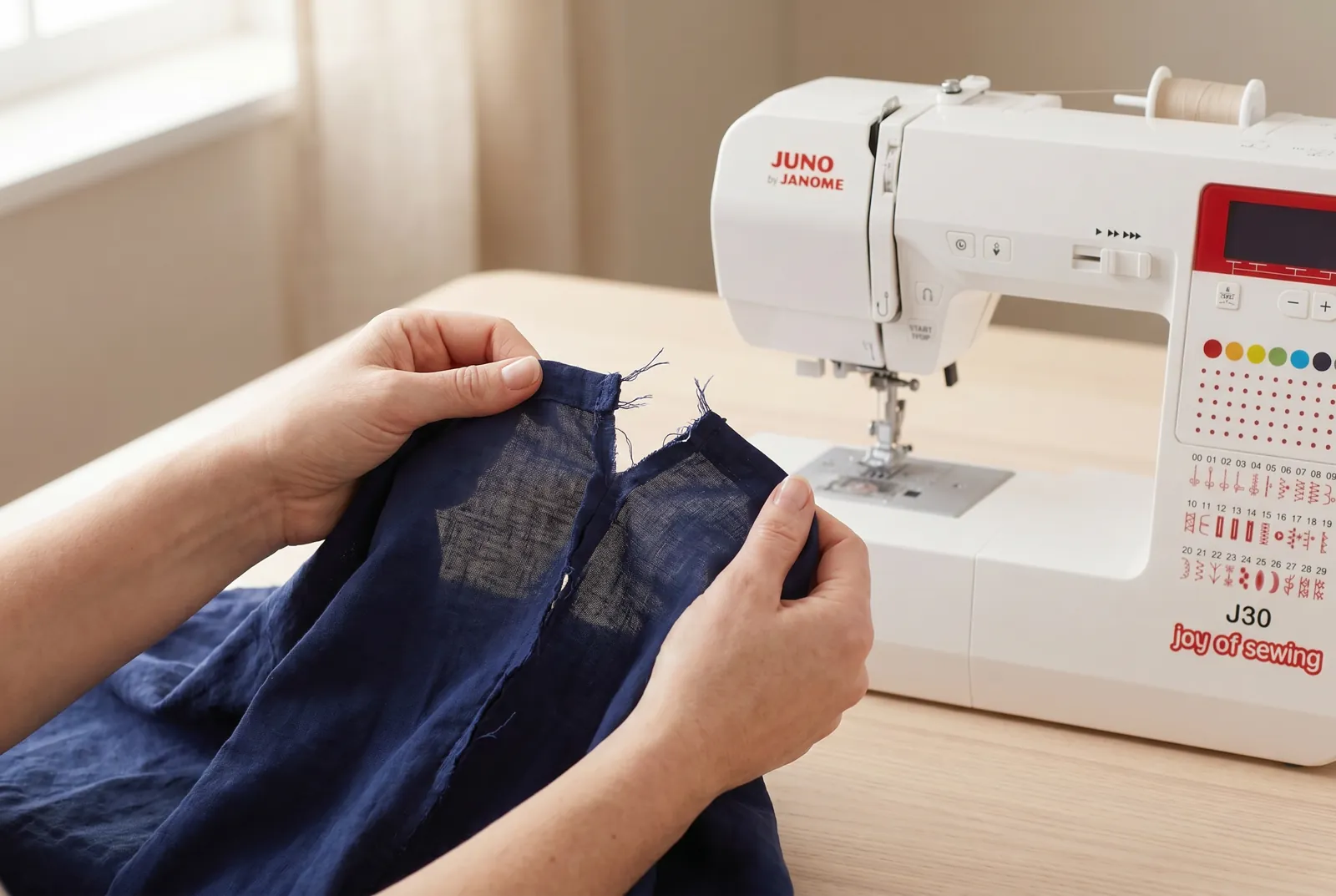
STEP 1/10Turn the garment inside out and find where the seam has burst - look for a gap in the stitching line where the fabric edges have pulled apart and a few broken stitches at each side.
Step 2
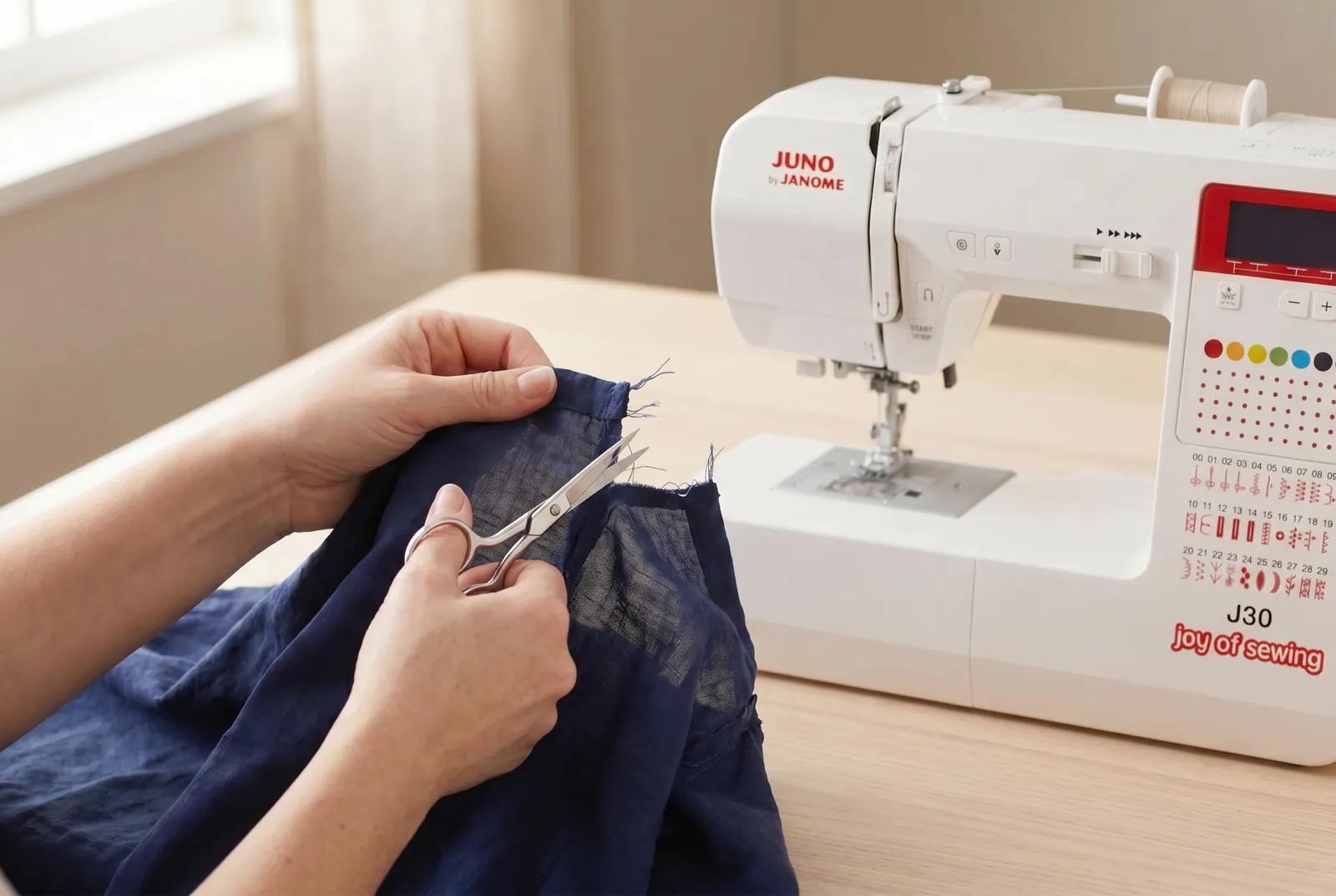
STEP 2/10Trim any loose thread tails close to the fabric with small scissors so they don't catch under the presser foot.
Step 3
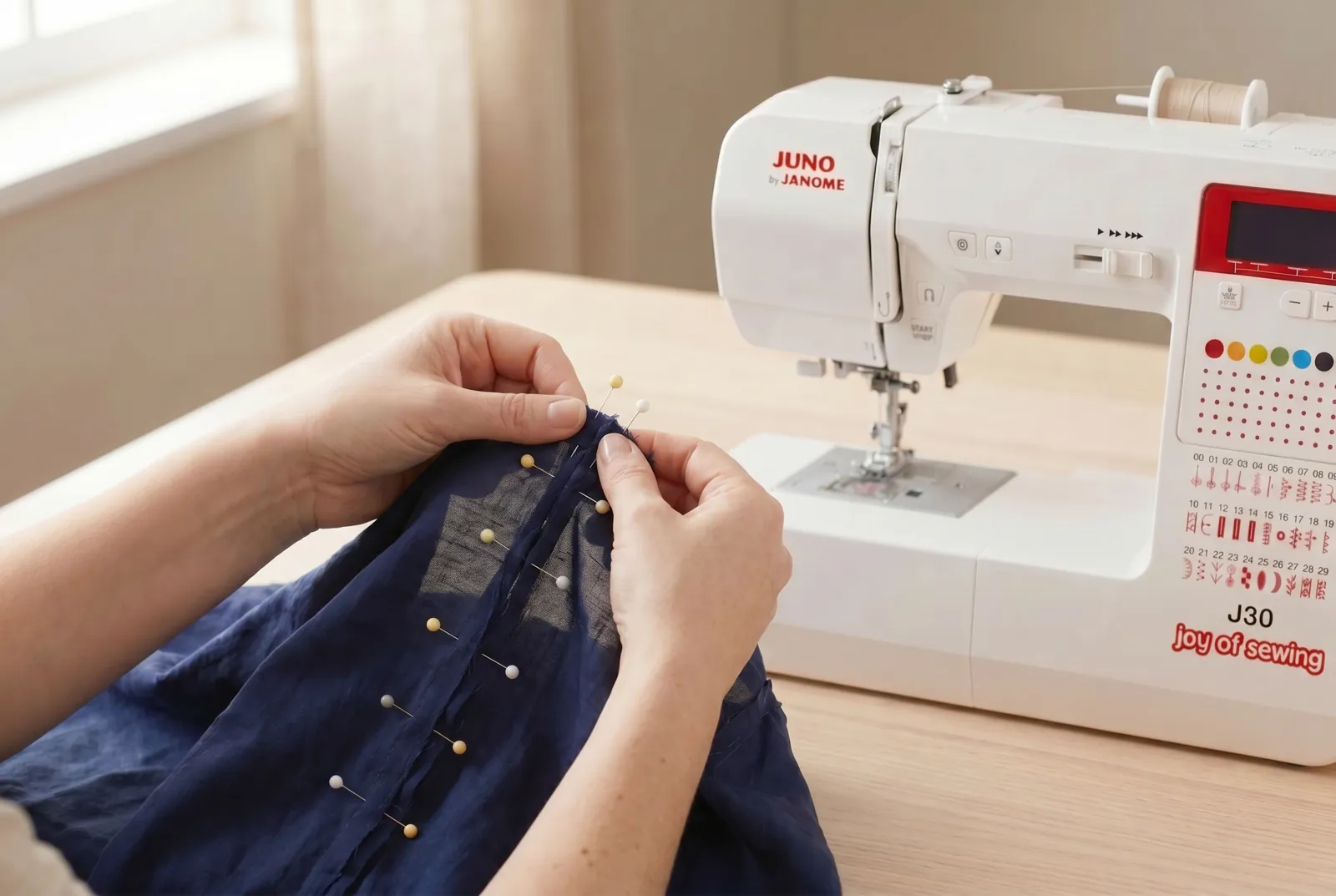
STEP 3/10Line the two fabric edges back up exactly along the original seam line and pin every 3 cm (1 1/4 in) if the fabric shifts.
Step 4
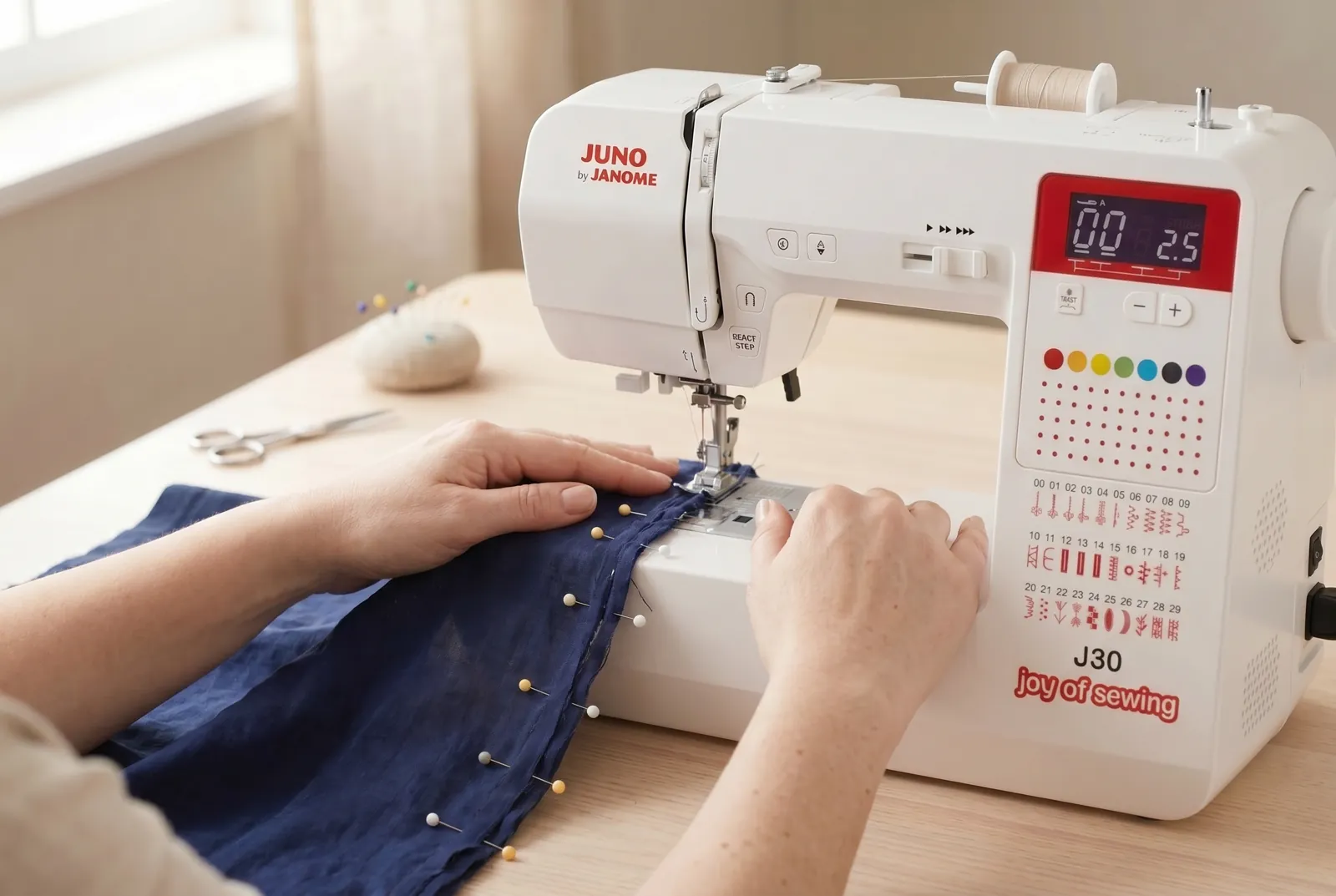
STEP 4/10Fit the universal foot (A), select straight stitch (program 00) at 2.5 mm length, and start stitching about 1.5 cm (5/8 in) before the gap, on intact original stitches. Backtack for 3-4 stitches with the reverse button.
Step 5
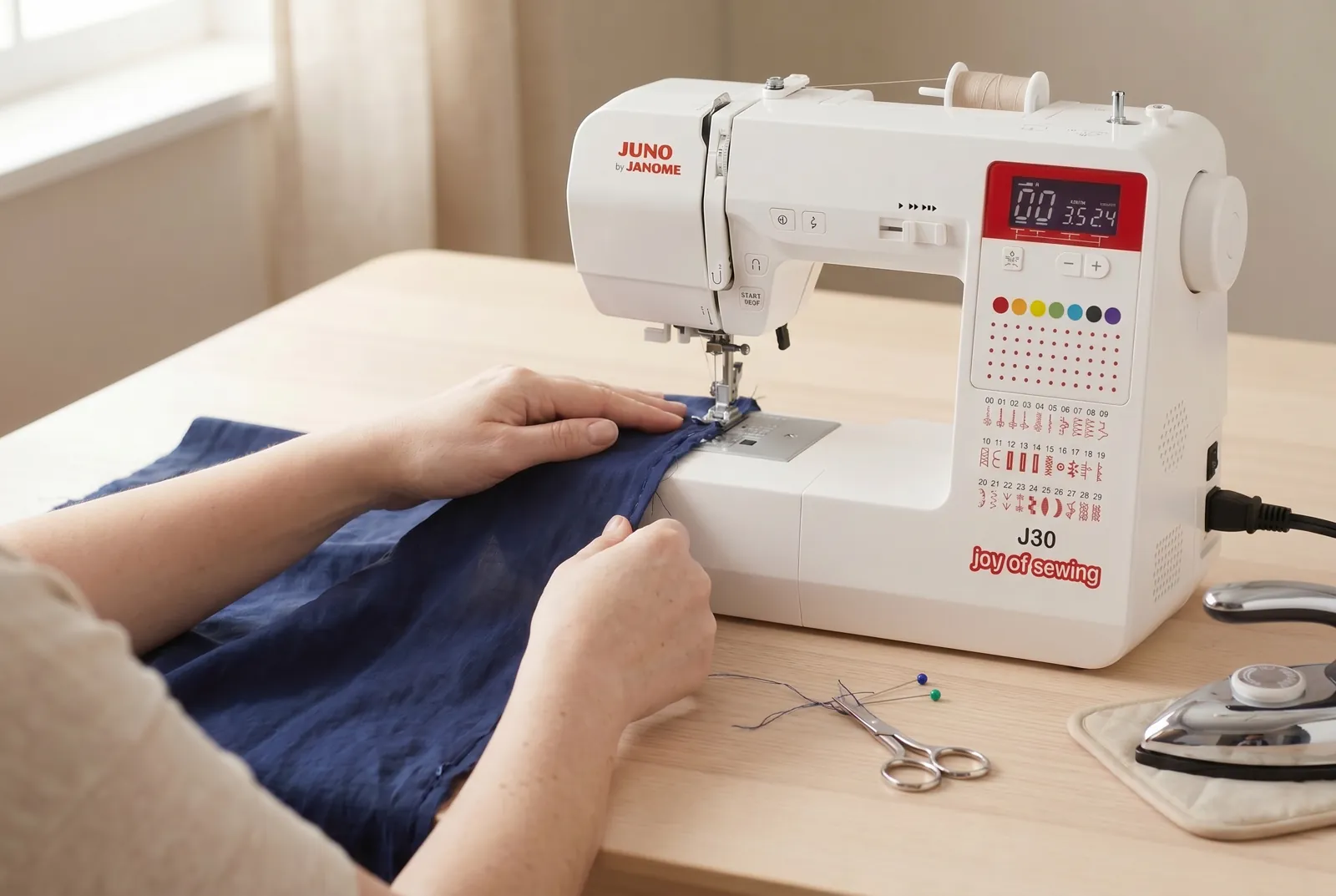
STEP 5/10Stitch forward over the backtack, across the open gap, and 1.5 cm (5/8 in) past the far end of the gap onto intact stitches on the other side. Backtack again for 3-4 stitches, trim the thread tails, and press the seam the way it was pressed originally.
Step 6
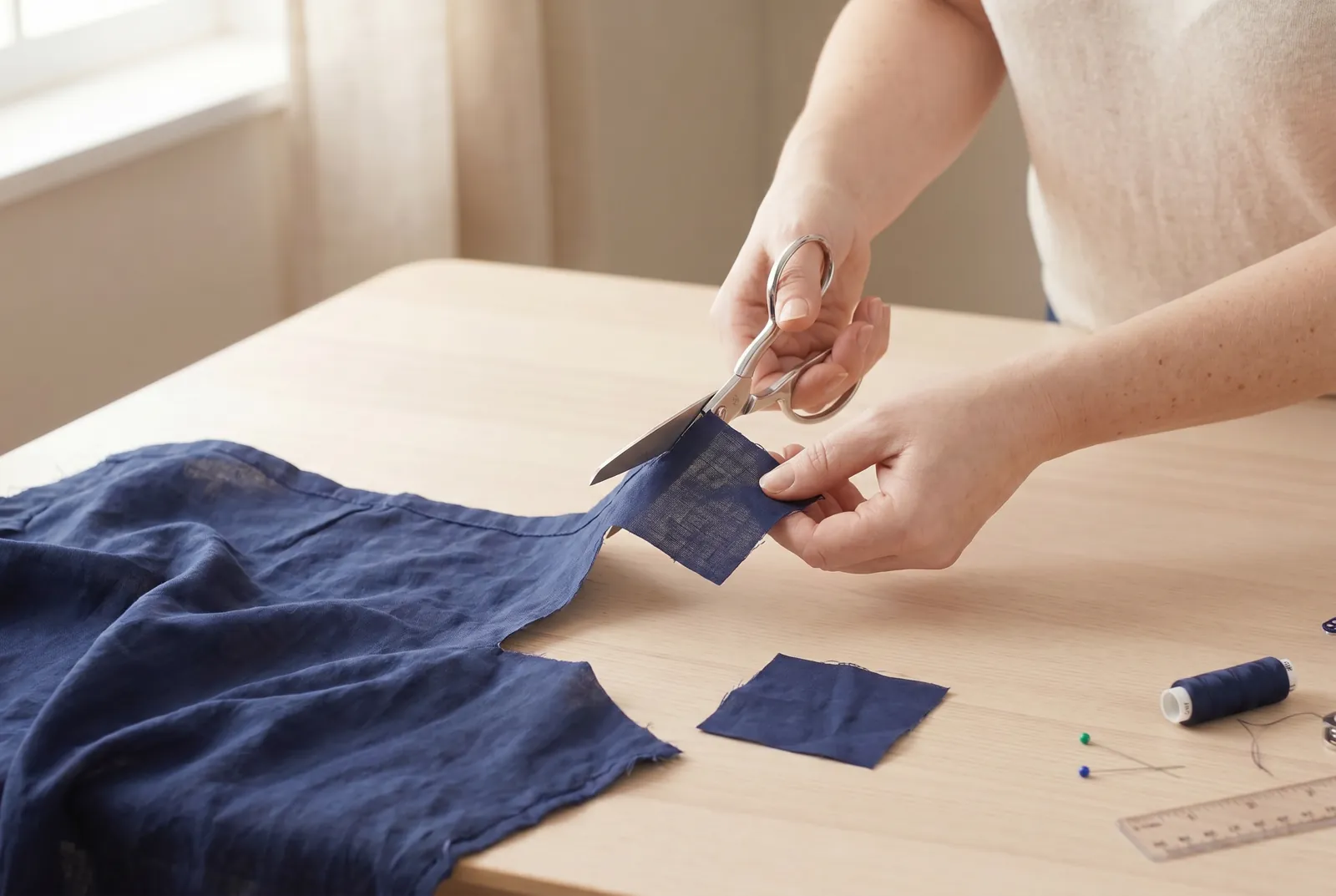
STEP 6/10For a hole or tear: cut a patch of fabric similar in weight and stretch to the garment, about 2 cm (3/4 in) larger than the hole on every side - for a 2 cm hole, cut a patch about 6 cm x 6 cm (2 3/8 x 2 3/8 in).
Step 7
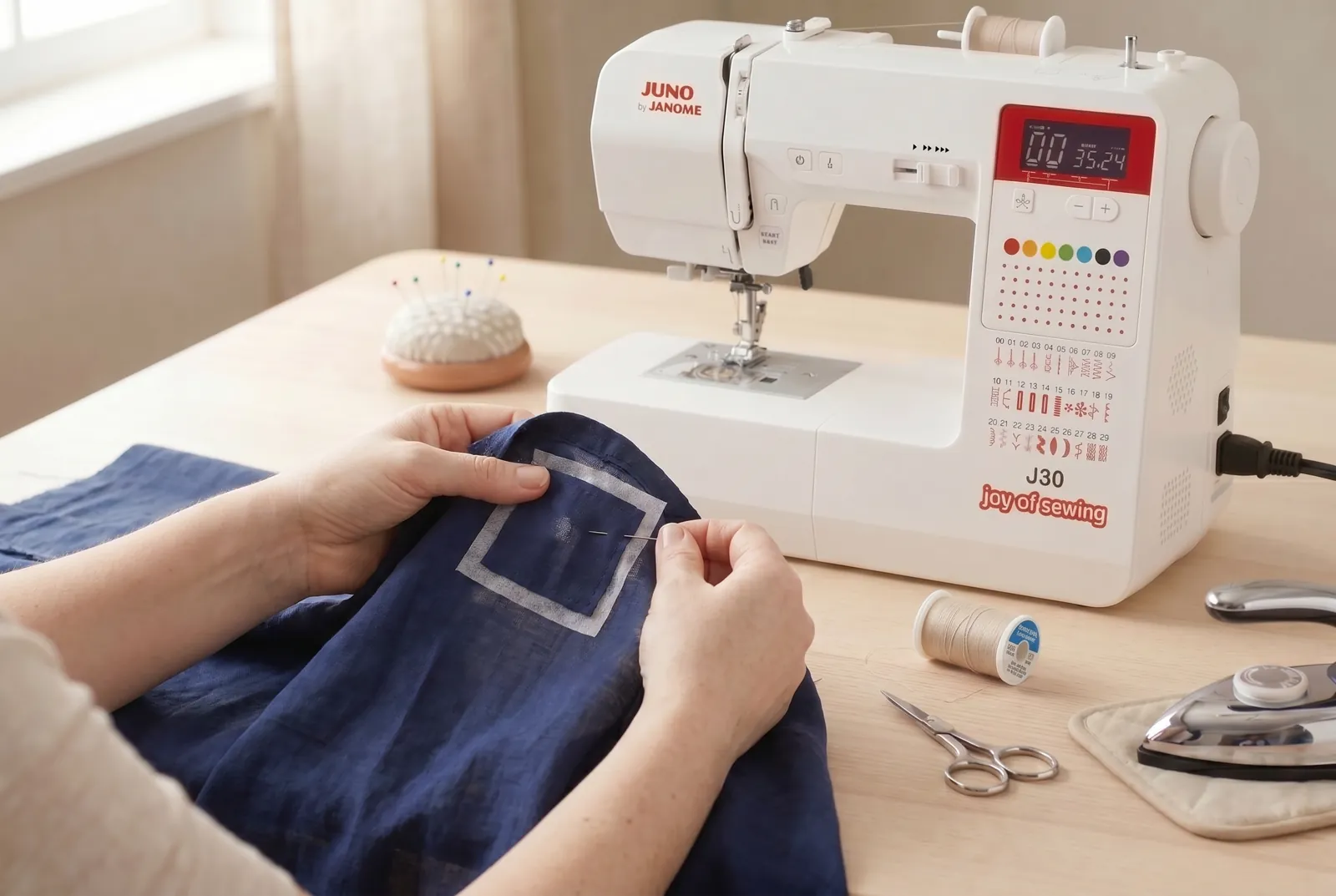
STEP 7/10With the garment inside out, pin the patch behind the hole so it fully covers the hole with an even margin all round. On stretchy knits, fuse a small scrap of lightweight interfacing to the patch first so it doesn't stretch out of shape while you stitch.
Step 8
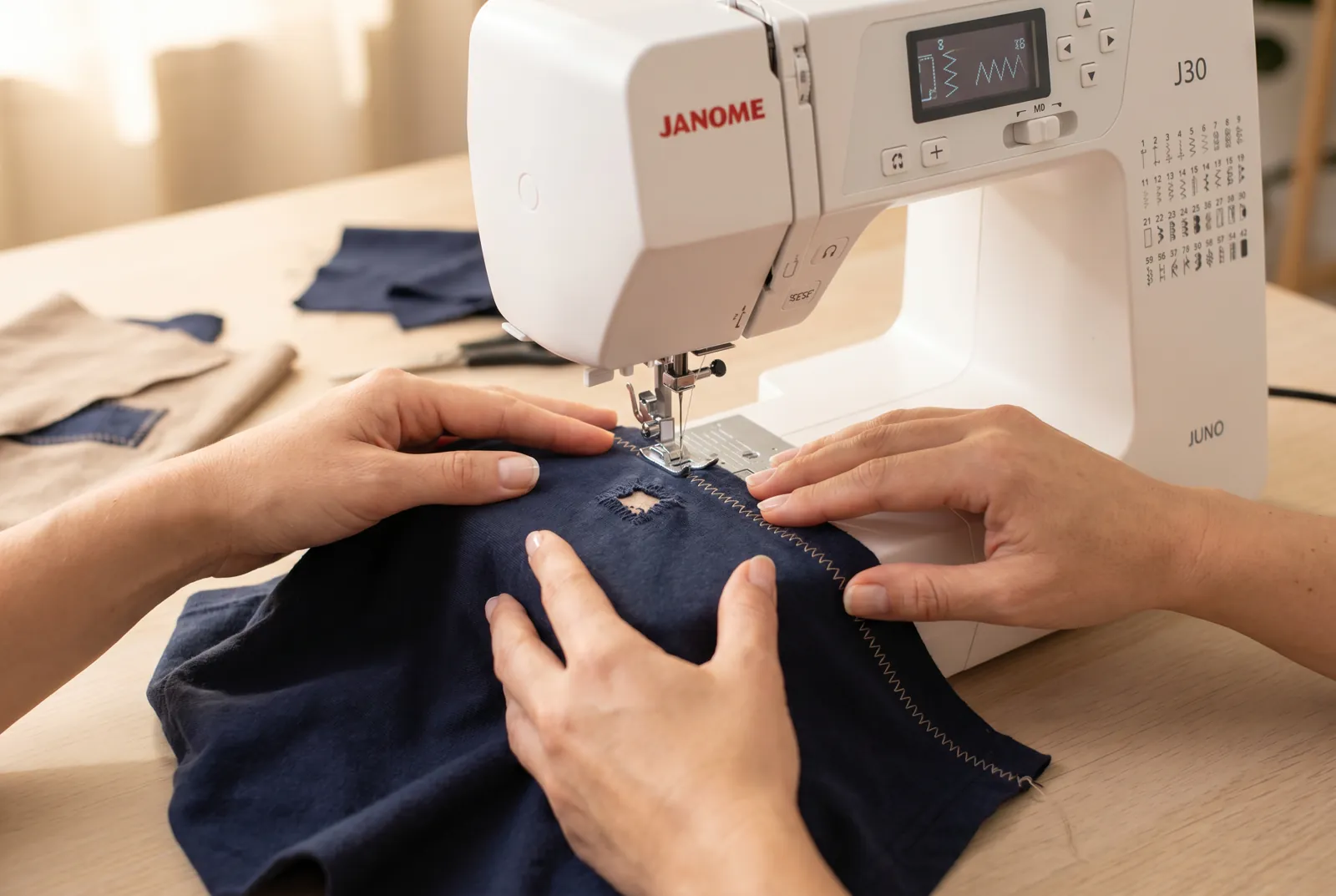
STEP 8/10Turn the garment right side out, set a zigzag stitch (width about 3 mm, length about 1 mm), and stitch back and forth across the hole and around its edge, catching the patch underneath every pass, to bind the raw edges down - a machine darn. Go slow and guide the fabric by hand rather than pushing it, so the feed dogs don't tunnel or pucker the knit. As an alternative, straight-stitch tight parallel rows about 2 mm apart across the hole instead.
Step 9
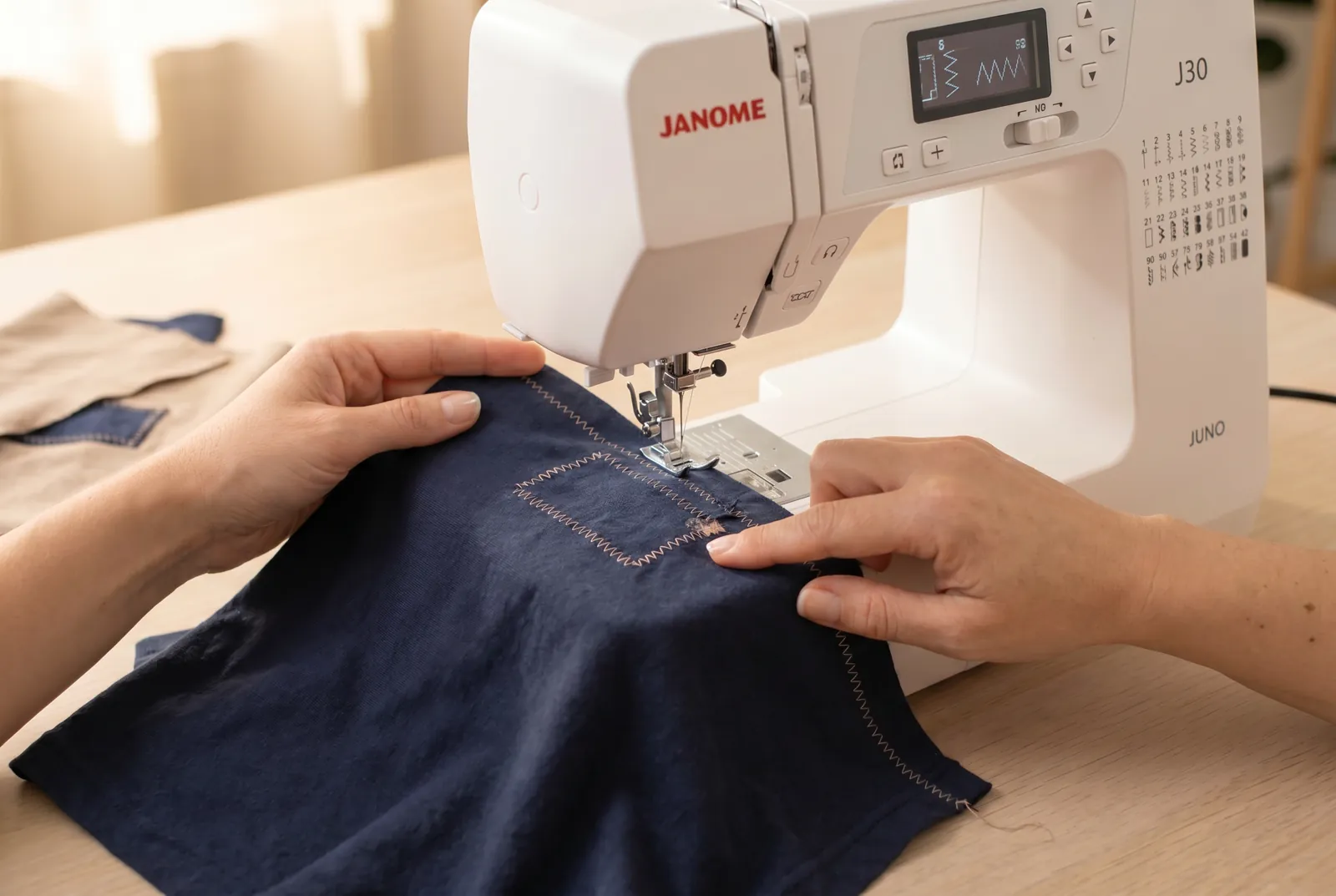
STEP 9/10Check the right side for full coverage and go back over any spot where a raw edge isn't caught.
Step 10
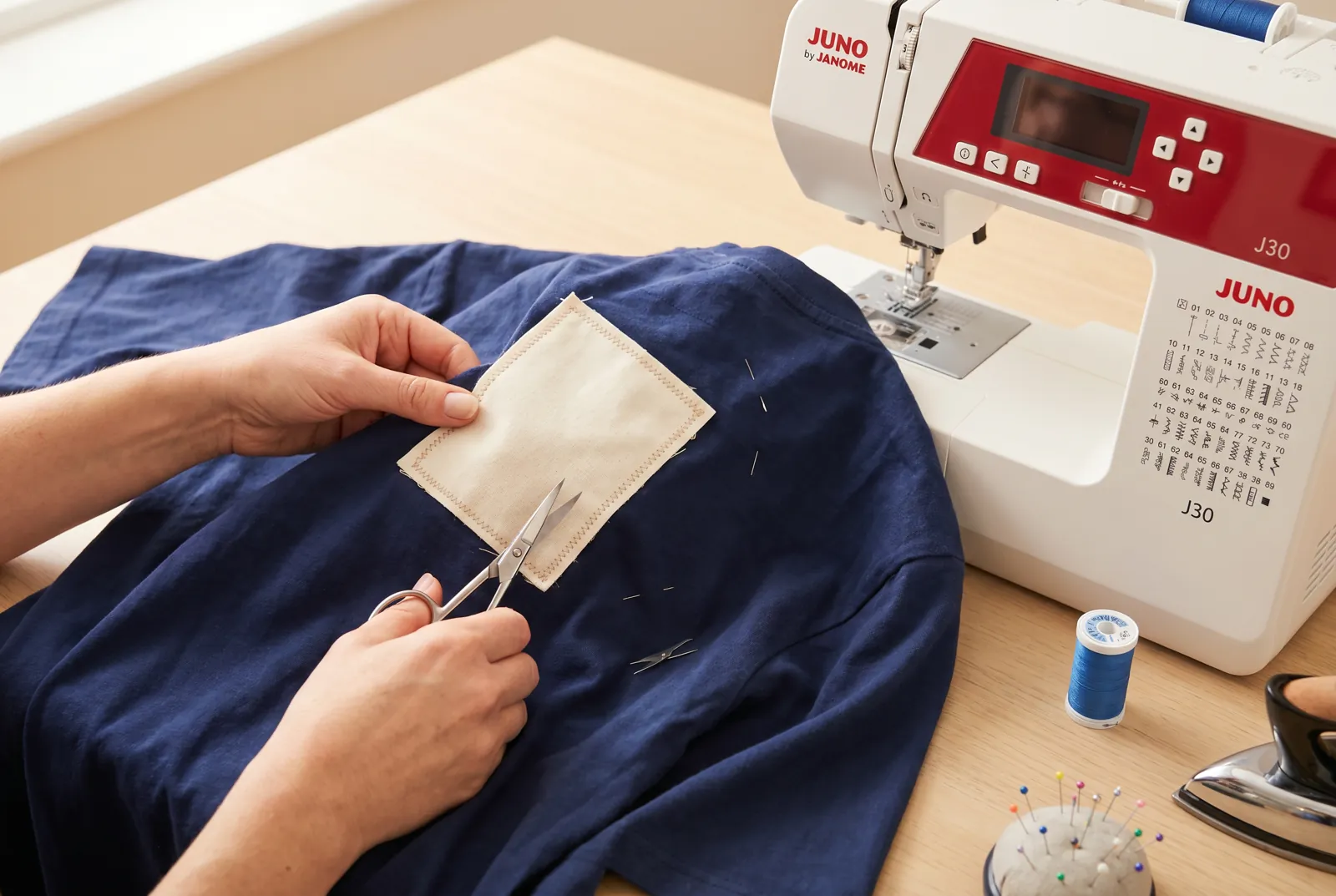
STEP 10/10Turn the garment inside out, trim the patch close to the stitching line, and snip off any loose threads.