Upcycling & Thrift Flips · piece Nº 50 · 54 min
Turn a Maxi Skirt into a Midi with a Hand-Sewn Hem
Shorten a too-long maxi skirt to a midi length you will actually wear by cutting off the excess and hand-sewing a hem that stays hidden on the right side. It is a patient, low-cost way to keep a thrifted or outgrown skirt in rotation instead of sending it to landfill.
The seam · 9 steps
Step 1
STEP 1/9Start from a skirt you have already washed and dried, so any shrinking happens now and not after you sew, since an un-shrunk fabric can pull up and pucker a finished hem. Put the skirt on with the shoes you plan to wear it with, stand straight on a flat floor, and have a friend pin the new midi length evenly all around. Take the skirt off, join the pin marks into a chalk line, and remove the pins.
Step 2
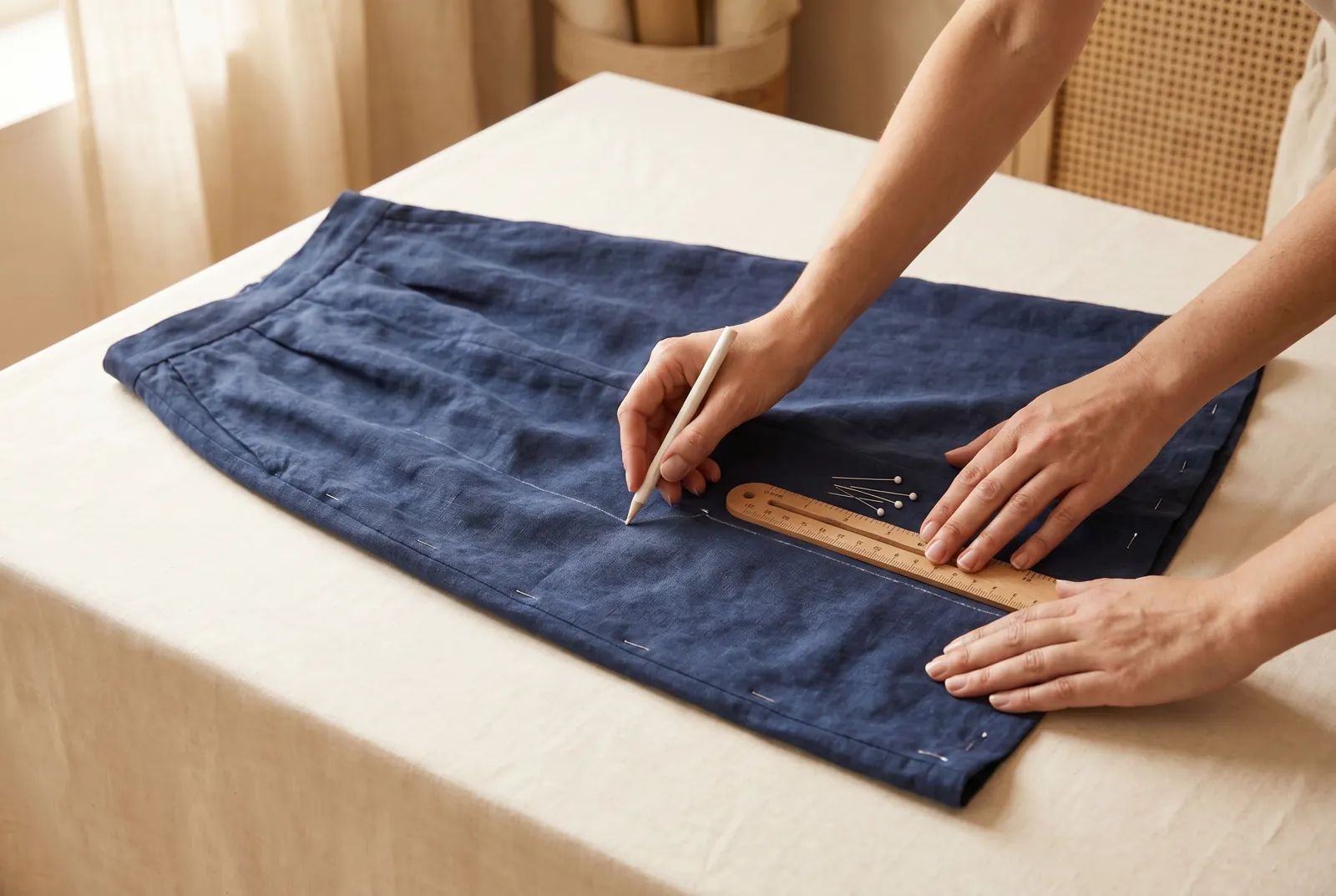
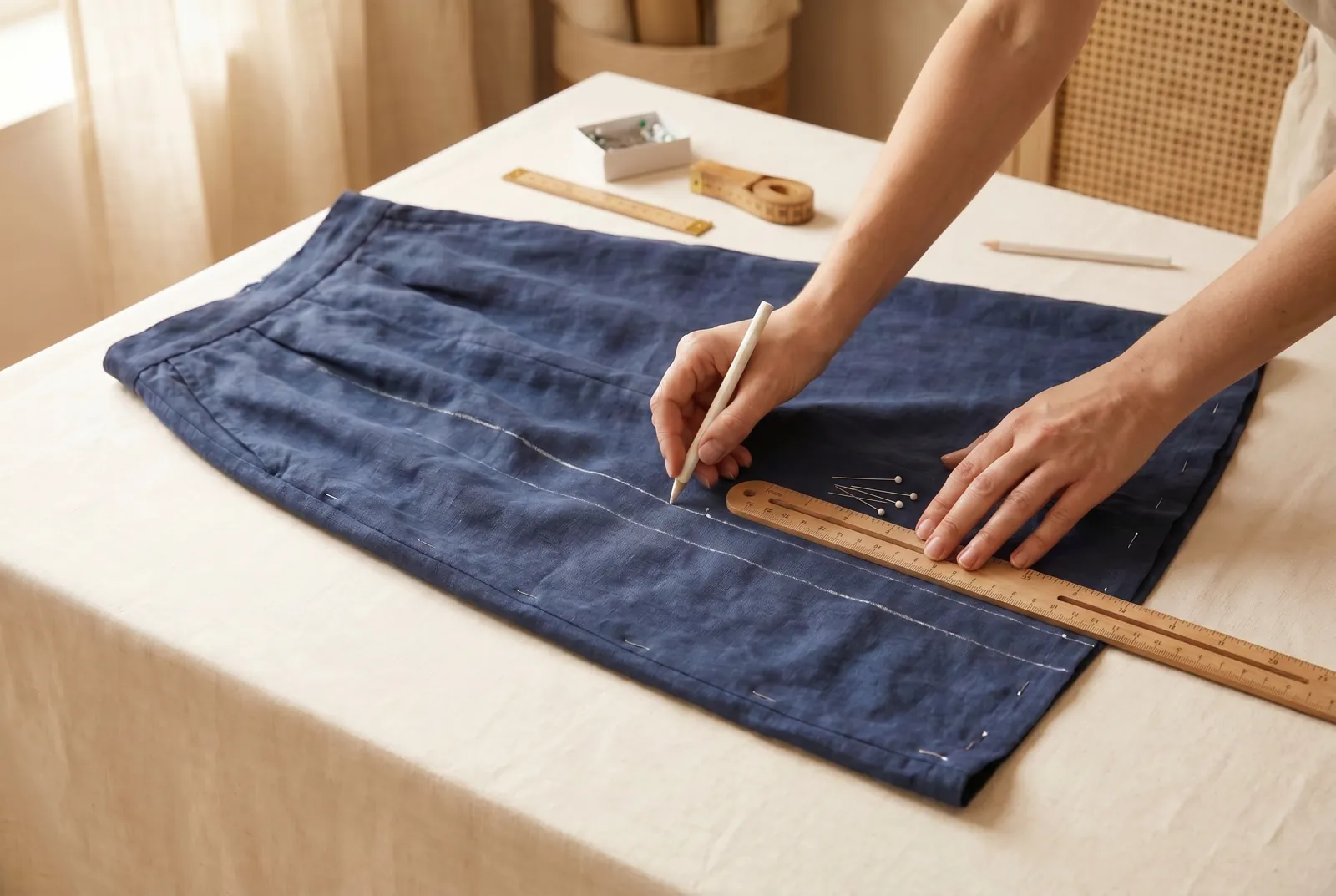
STEP 2/9Lay the skirt flat and smooth out the wrinkles. Measure 4.5 cm (1 3/4 in) straight down from the chalk line at several points and draw a second chalk line all around. This lower strip is your hem allowance, enough for a 4 cm (1 1/2 in) hem plus a 6 mm (1/4 in) tuck to hide the raw edge.
Step 3
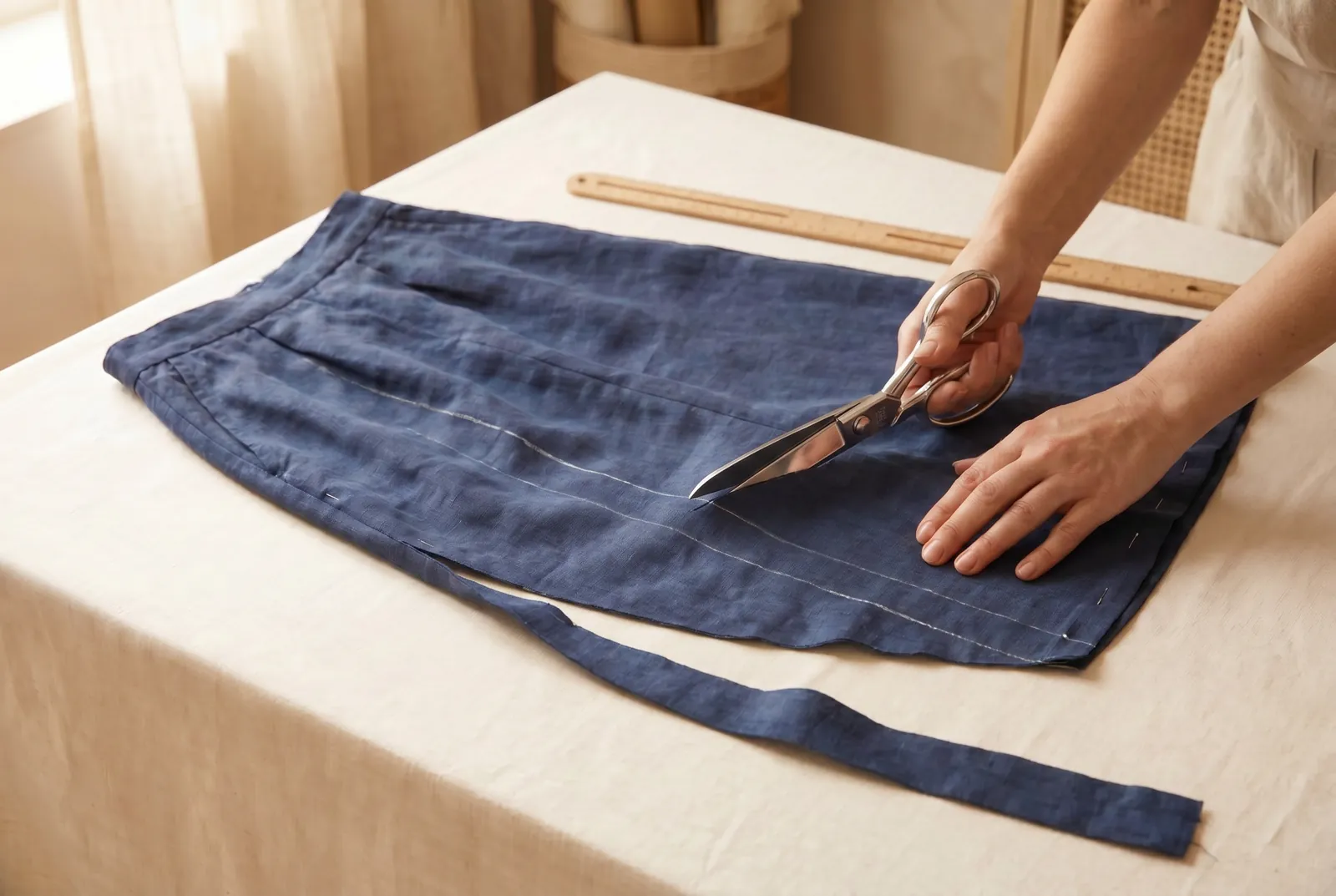
STEP 3/9Cut along the lower chalk line with sharp fabric shears, taking long smooth strokes rather than short choppy ones so the edge stays even. Keep the front and back layers separate as you cut, and save the cut-off strip: it is enough matching fabric to practice your stitches on before you touch the skirt.
Step 4
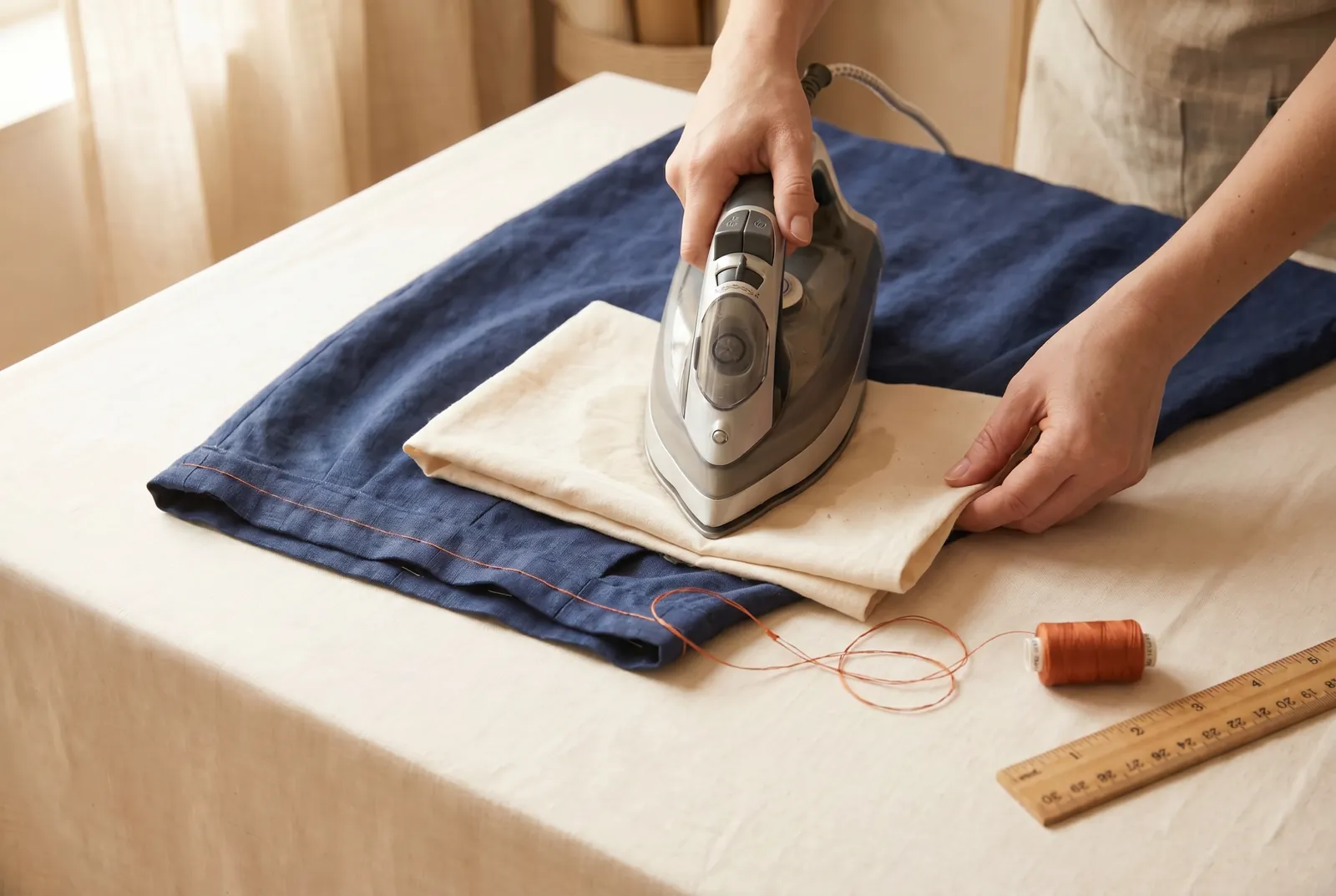
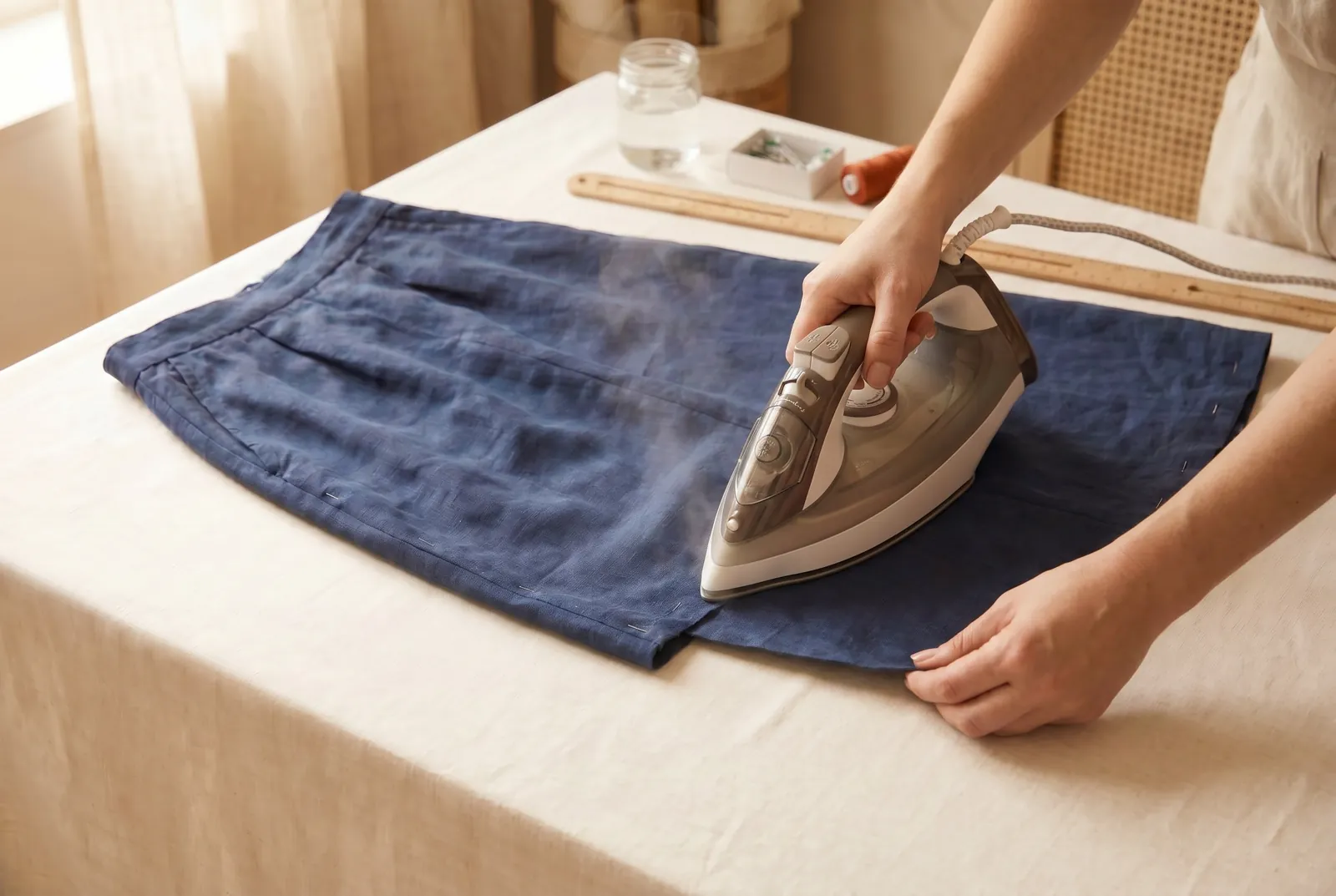
STEP 4/9Fold the raw cut edge under toward the wrong side by 6 mm (1/4 in) and press the fold with a warm iron as you work around the skirt. This first fold traps the cut edge inside the hem so a loosely woven fabric cannot fray and unravel.
Step 5
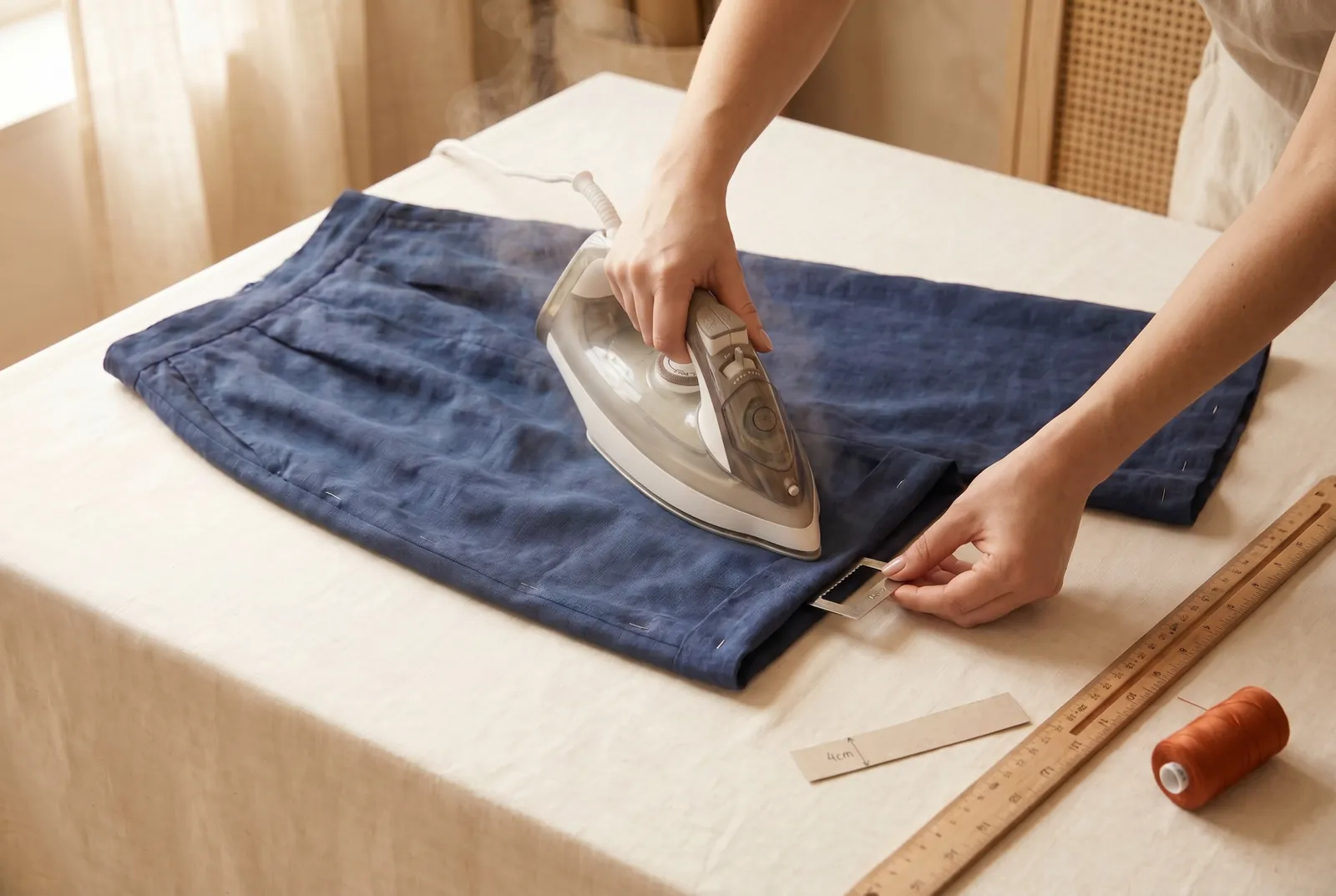
STEP 5/9Fold the pressed edge up a second time so its top edge lines up with the upper chalk line, making a hem about 4 cm (1 1/2 in) deep. Check the depth at many points with a hem gauge or a strip of card cut to 4 cm so the hem is even all around, then press the whole fold flat. A deep, even hem hangs better than a shallow uneven one.
Step 6
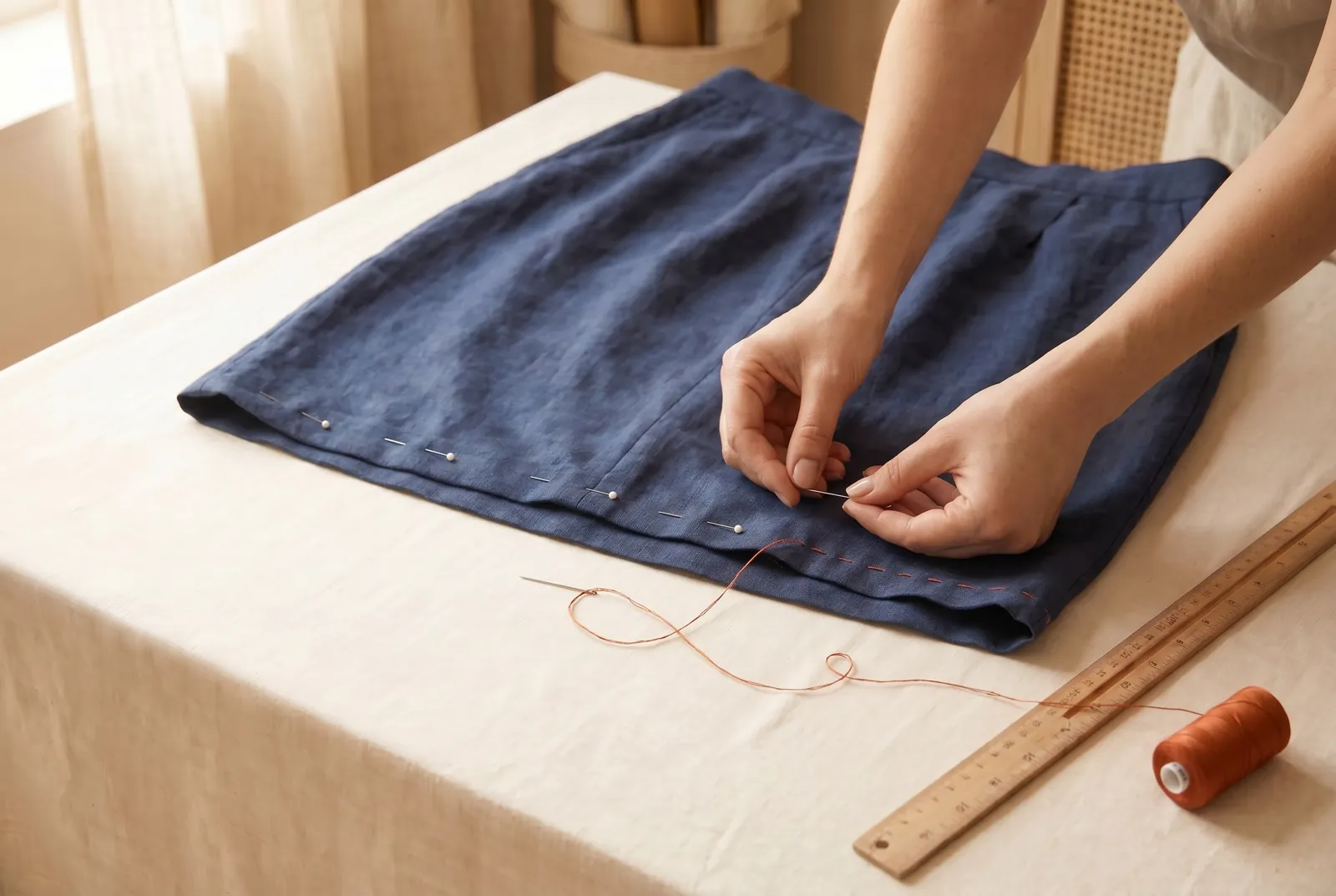
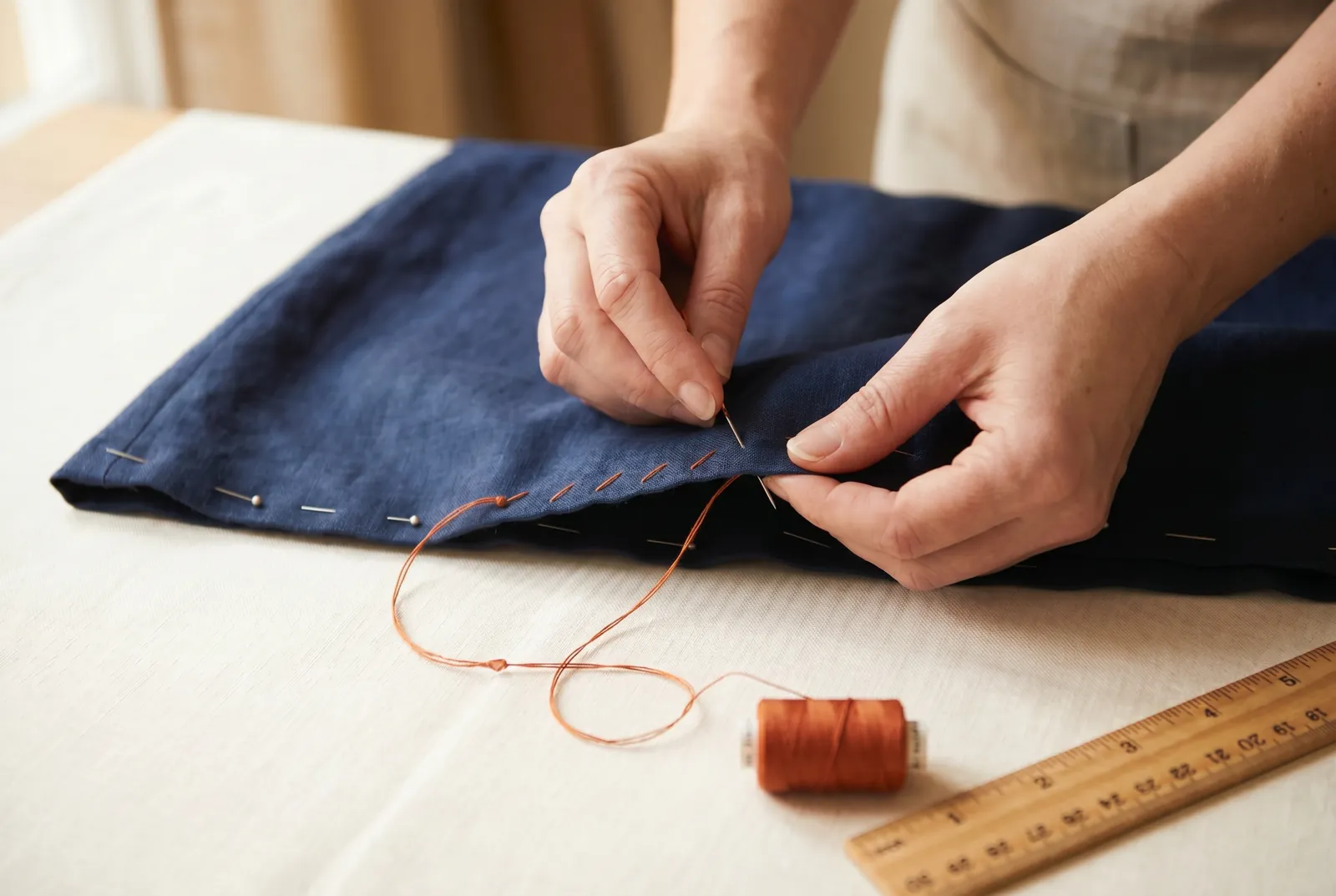
STEP 6/9Pin the hem in place, spacing the pins about a hand's width apart with their points toward the fold. Then baste the hem down about 1 cm (3/8 in) below the folded edge, using a single knotted thread and long running stitches roughly 1 cm long. Basting holds the hem steady so it cannot shift or slip while you sew the stitches that show.
Step 7
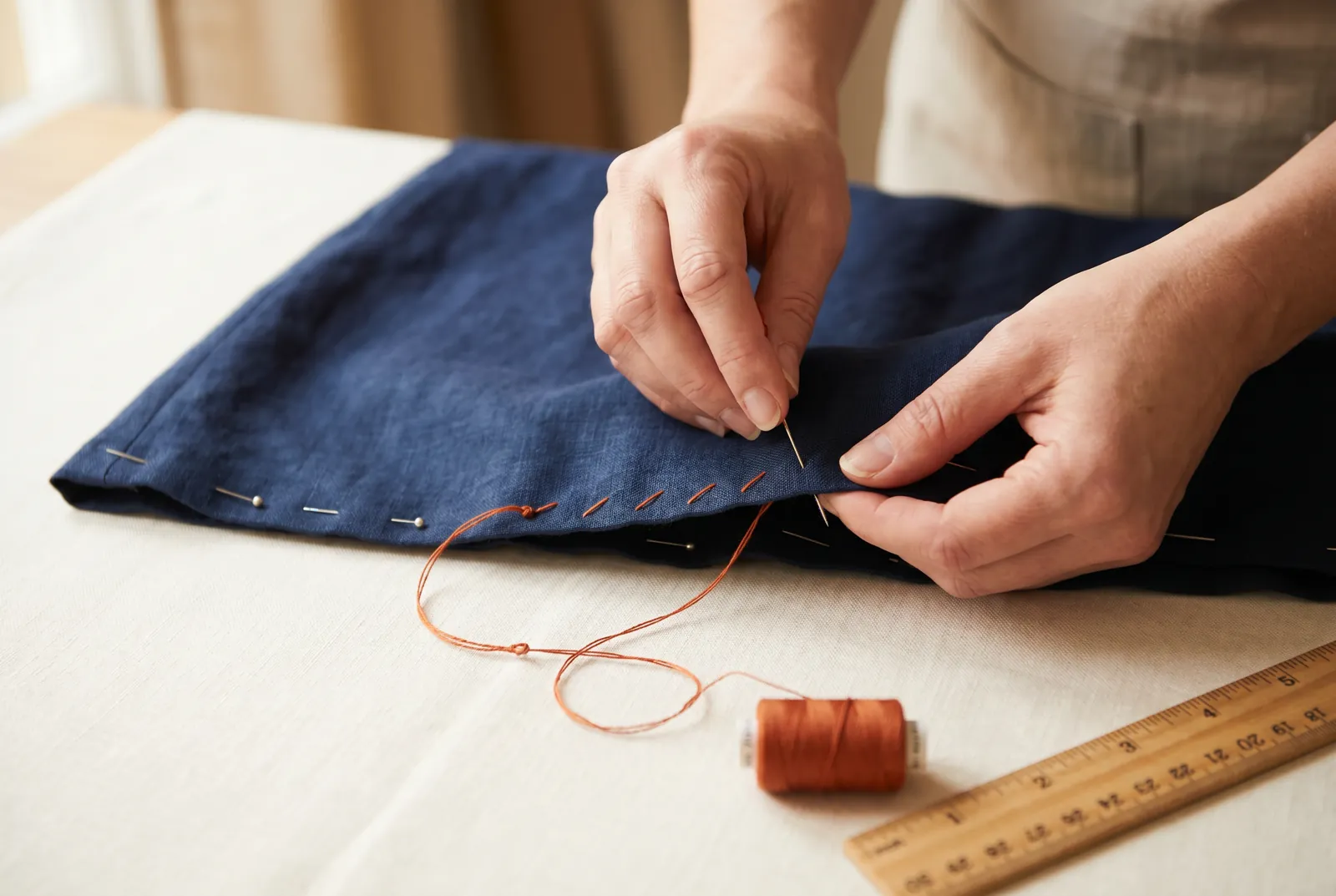
STEP 7/9Thread a size 7-8 sharps needle with about 45 cm (18 in) of soft cotton thread (silk cuts a wet-washed cloth, and a thread much longer than this tangles as you sew), and tie a firm knot in the long end so the sewing cannot pull out. Working from the wrong side, sew the hem down with small slanting stitches about 5 mm (3/16 in) apart; at each stitch pick up only one or two threads of the outer cloth and a little more of the hem fold, so the stitch buries itself and does not show through on the right side. Keep an even, gentle tension and do not draw the thread tight, or the hem gathers into puckers.
Step 8
STEP 8/9When you reach where you began, fasten the thread off so the hem cannot work loose: take three or four small stitches on top of one another into the hem fold, then run the needle under the fold for about 2 cm (3/4 in) and cut the thread close to the cloth. An unfastened end slips out with wear and the whole hem drops open.
Step 9
STEP 9/9Pull out the basting thread, then press the finished hem under a damp cloth with a hot iron, working from the wrong side so the outer fabric does not shine. Let the skirt cool and dry flat before you wear it so the new hem sets crisp.