Everyday Mending · piece Nº 22 · 48 min
Mend a small hole in a knit T-shirt by darning
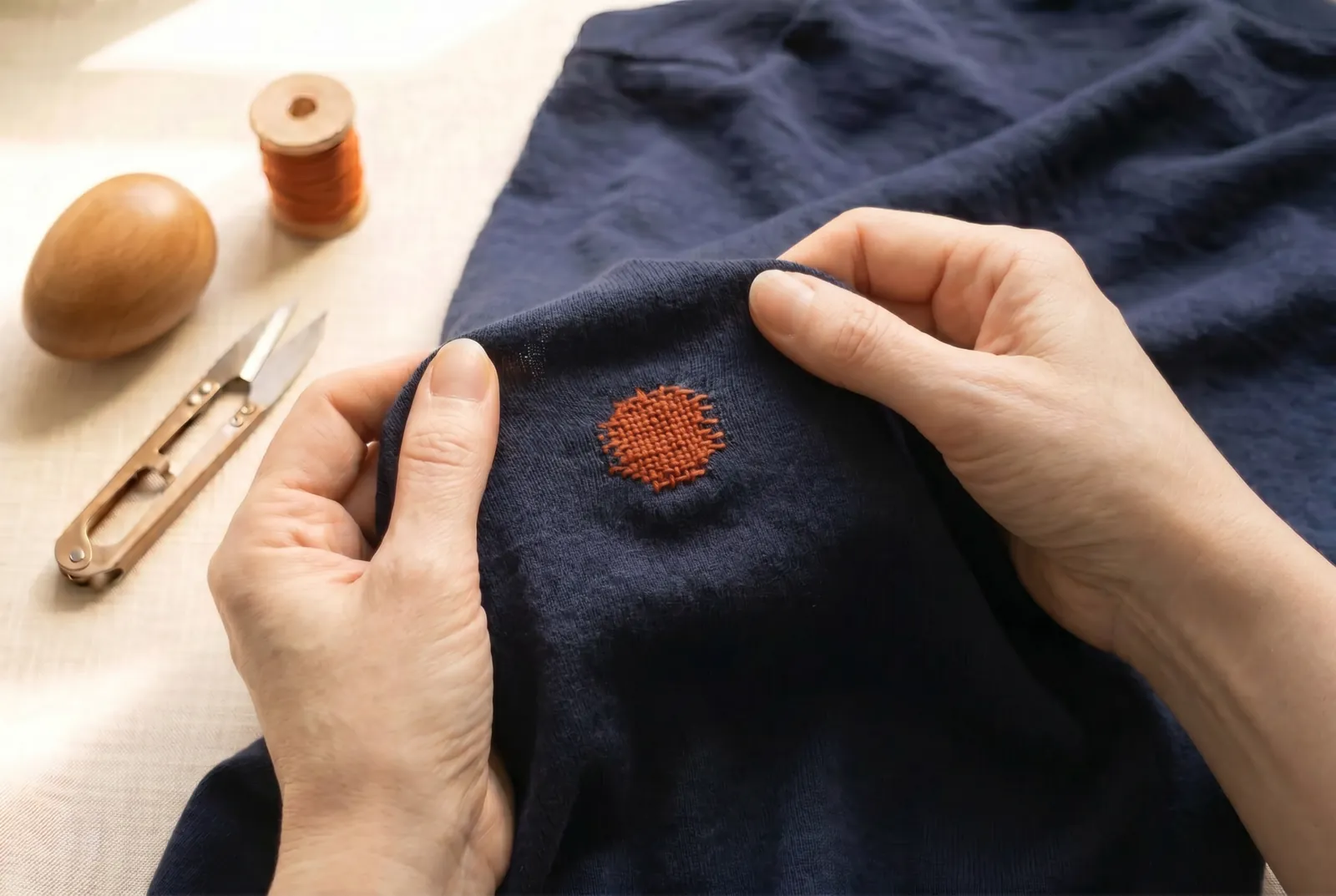
Close a small hole in a knit T-shirt by darning — weaving a small web of thread across the gap so the mend stretches with the knit instead of pulling tight and puckering. In thread that matches the shirt the mend stays quiet; in a contrasting color, worked in even rows, it becomes a visible mend you can wear on purpose.
The seam · 8 steps
Step 1
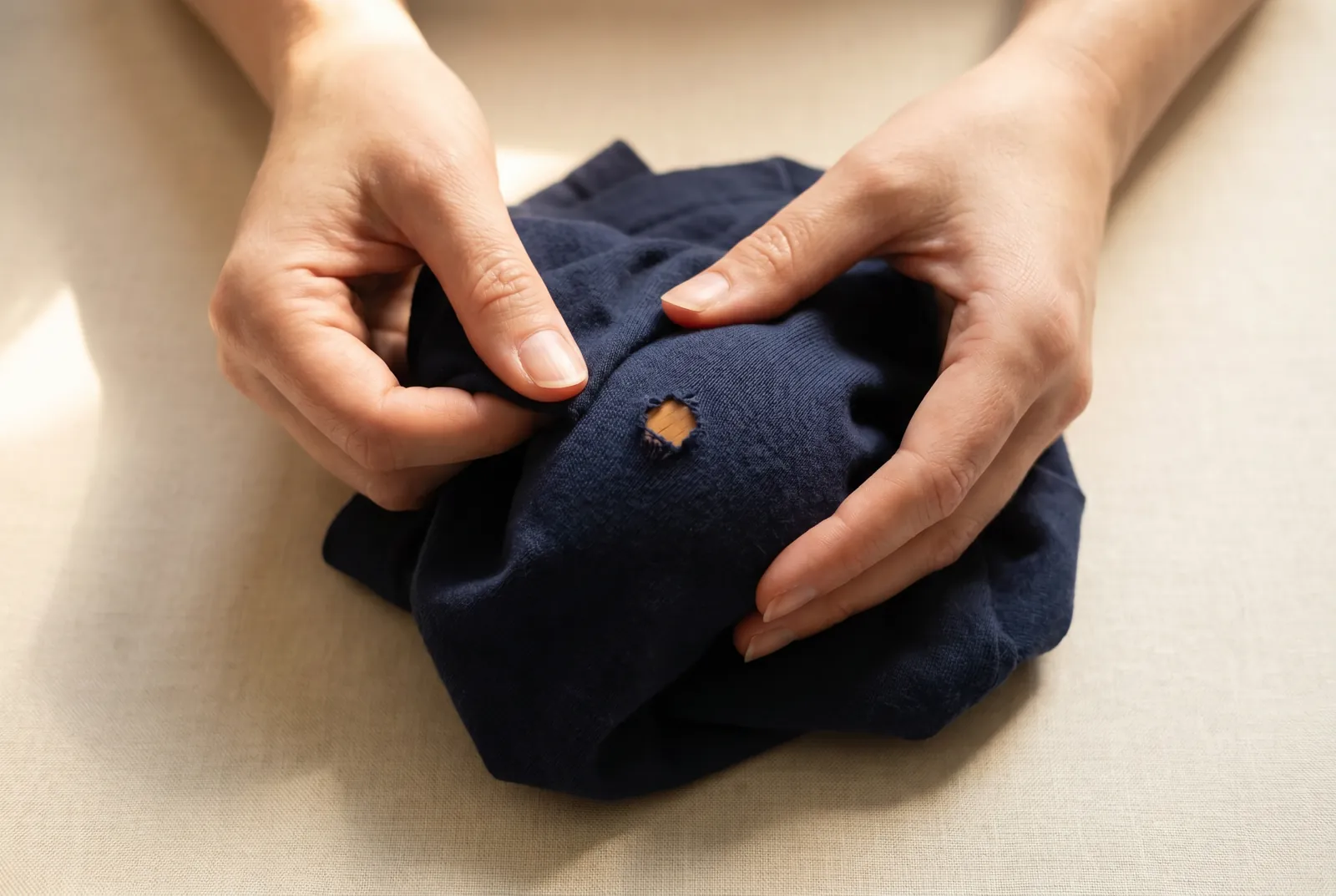
STEP 1/8Turn the shirt so the hole is easy to reach and lay the hole over a darning egg or ball (or a smooth, rounded object that fills the opening). Hold the fabric smooth over the curve with your other hand, without stretching it.
Step 2
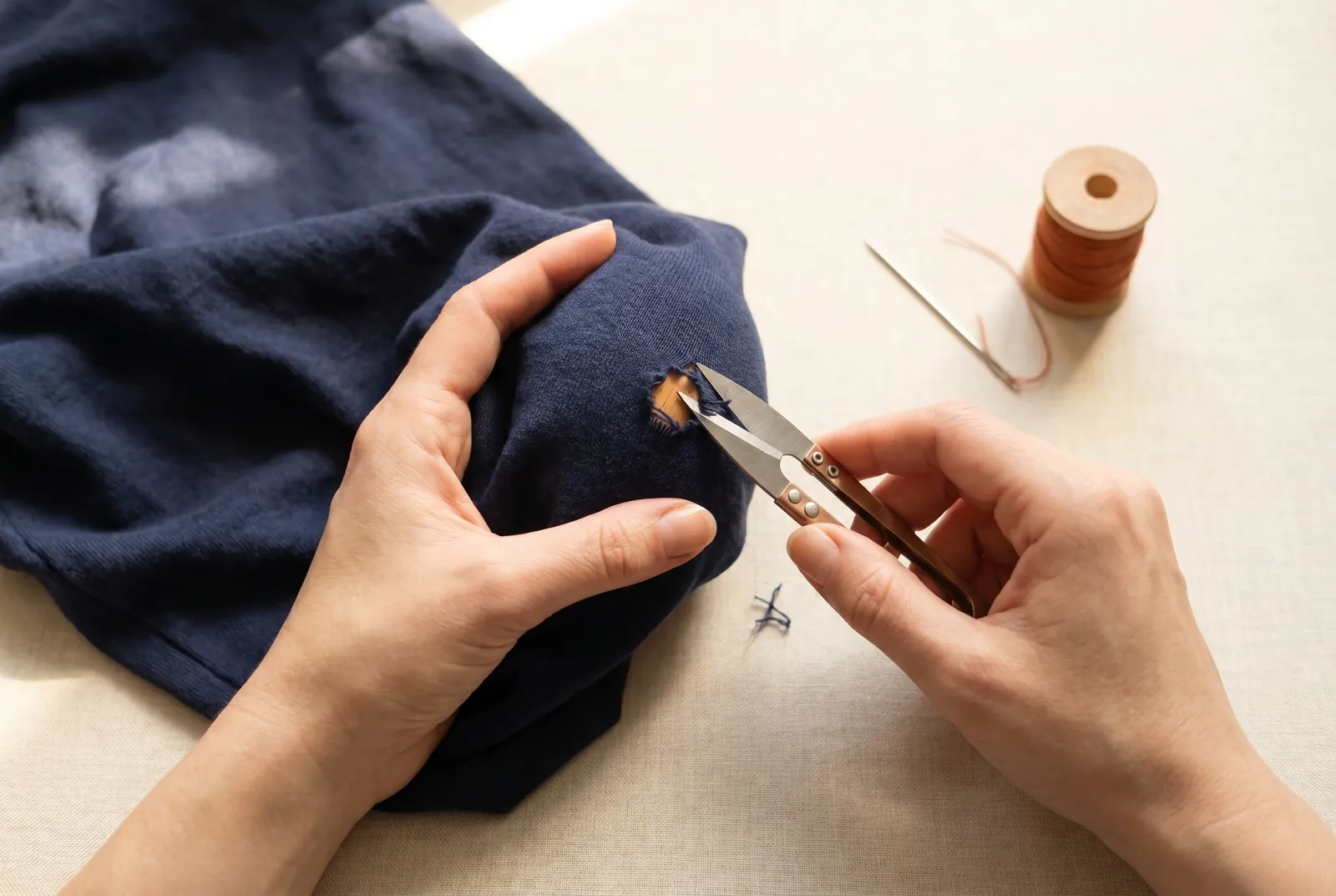
STEP 2/8With small, sharp scissors, trim away only the frayed, ragged ends around the hole. Cut no sound loop of the knit — a cut loop can run and make the hole larger.
Step 3
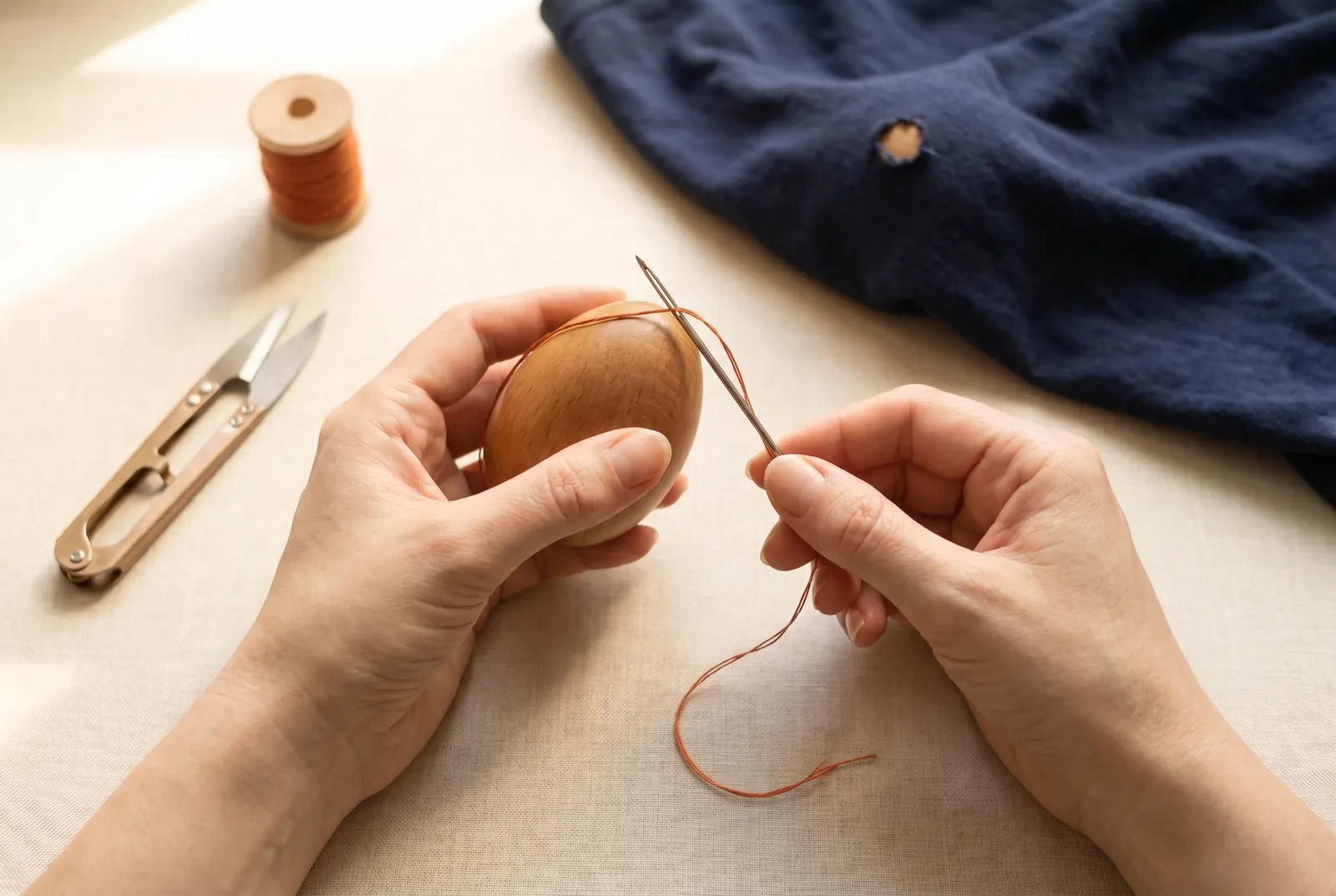
STEP 3/8Thread a long darning needle, or a blunt tapestry needle that slips between the knit loops without splitting them, with a fine cotton darning thread. Choose thread that matches the shirt for a quiet mend, or a contrasting color if you want the mend to show. Do not knot the end, and avoid a hard, tightly twisted thread — it makes a stiff darn that will not stretch with the knit.
Step 4
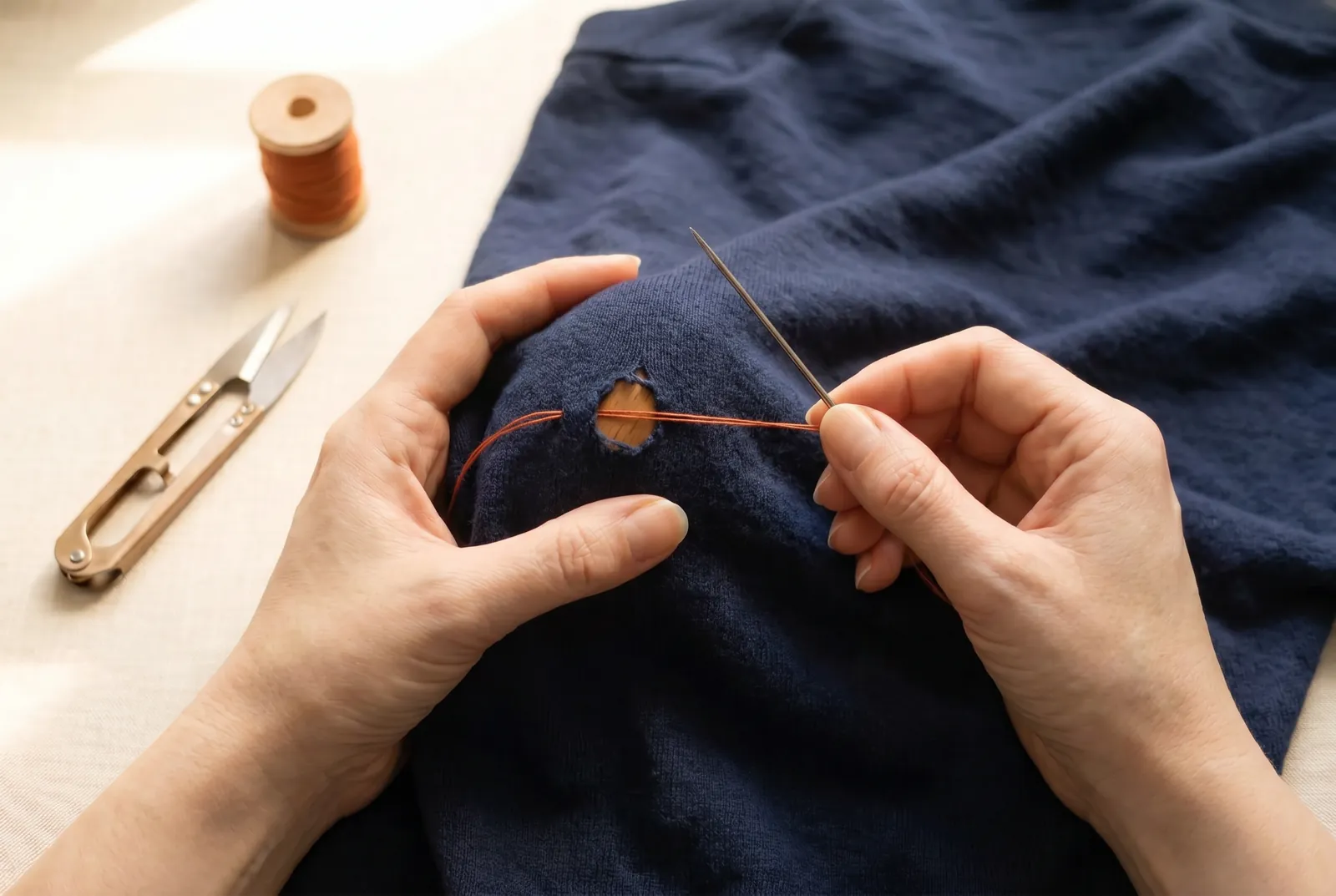
STEP 4/8Starting in the sound knit about 6-13 mm (about 1/4 to 1/2 in) to one side of the hole, run the needle in and out along the knit, taking up one or two threads at a time, carry it in a straight strand across the hole, and run the same distance into the sound knit on the far side. Leave a short tail and work it into the knit as you go — that anchors the thread without a knot.
Step 5
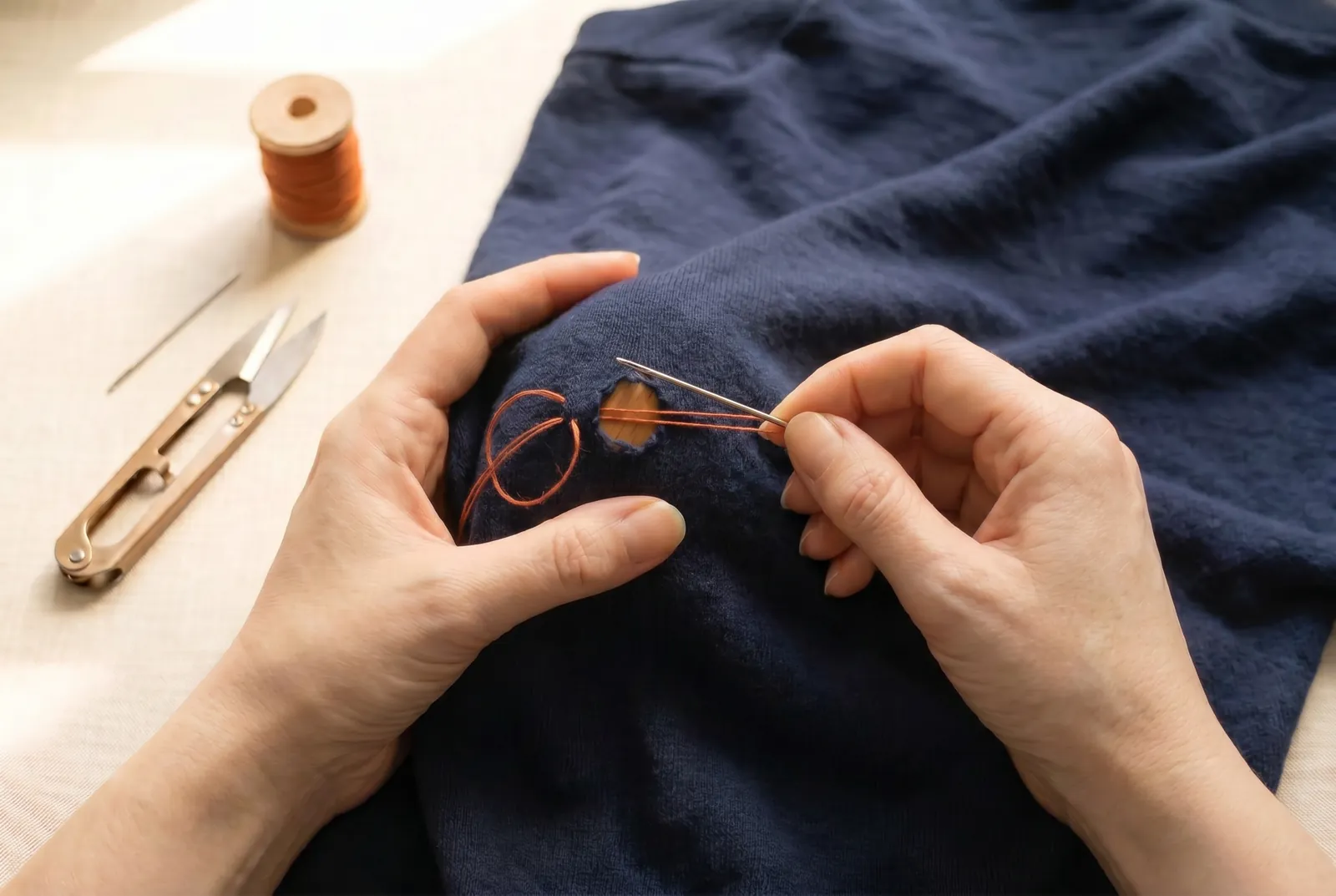
STEP 5/8Turn and come back close beside the first strand, about a thread's width away, and keep laying parallel strands until they span the whole hole. At each turn leave a tiny loop of thread instead of pulling it tight; the loops let the darn shrink in the wash and stretch in wear, while thread drawn tight puckers the whole shirt.
Step 6
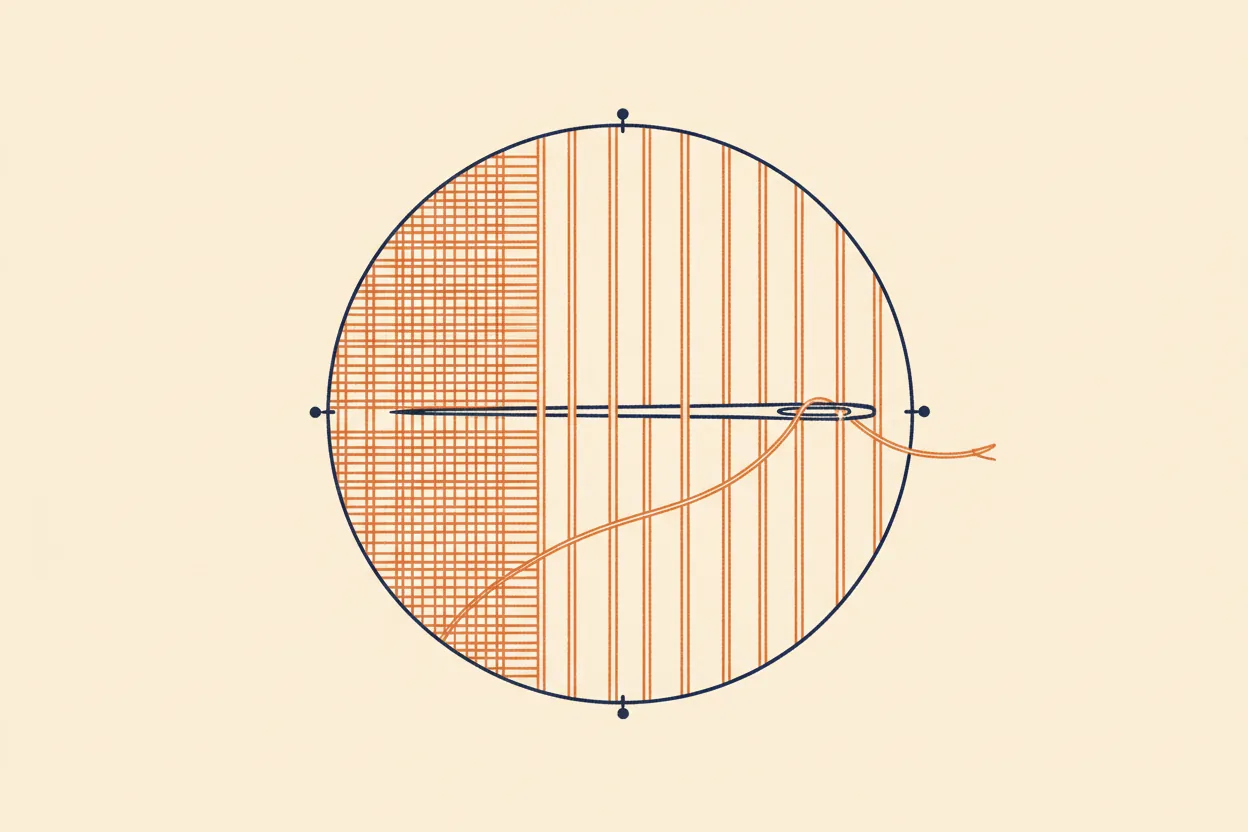
STEP 6/8Weave a second set of strands across the first at a right angle, passing the needle over one lengthwise strand and under the next, and reversing that order on each return row so the threads lock into a small web that fills the hole. Keep leaving a small loop at each turn as before.
Step 7
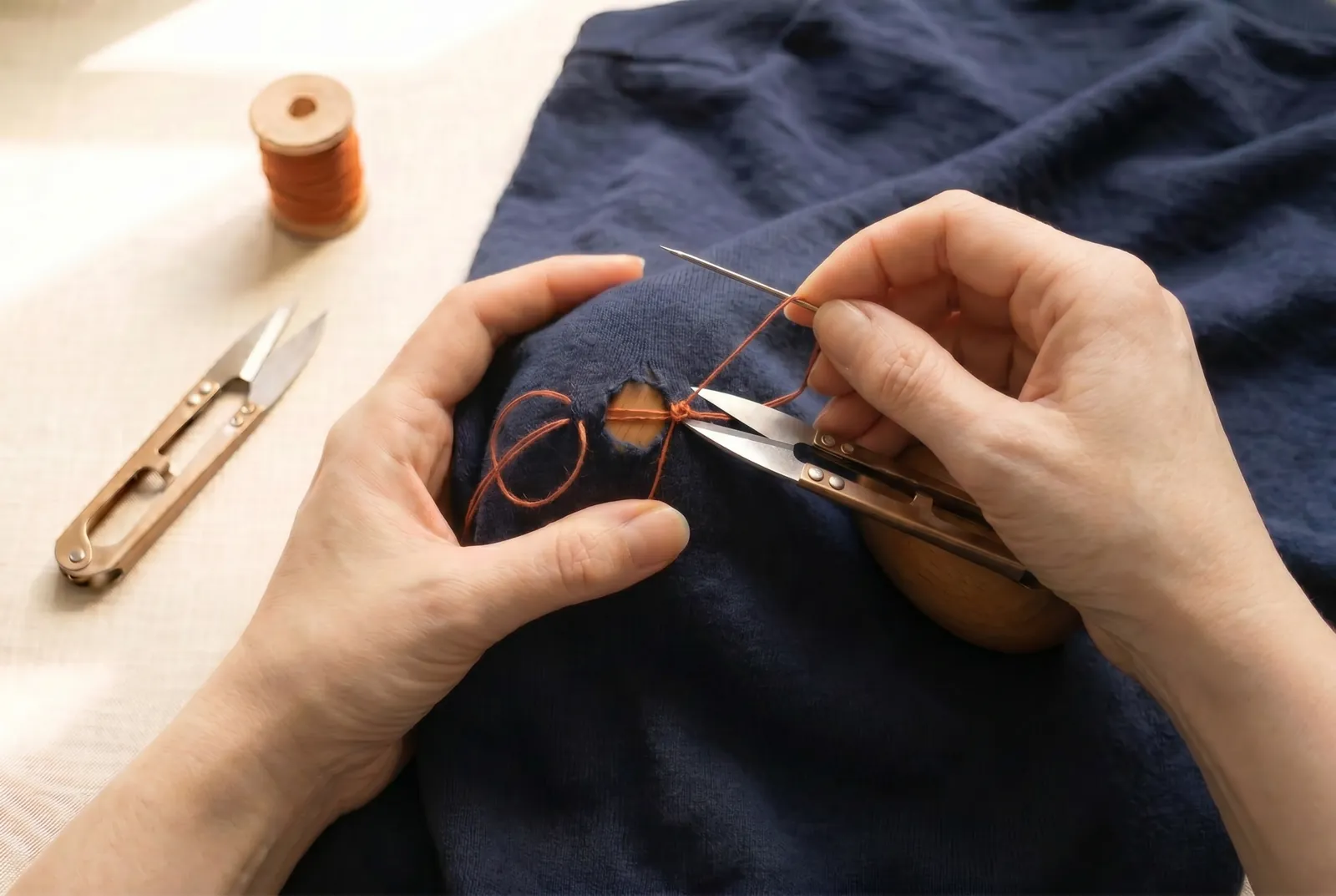
STEP 7/8Finish the thread by running its end 6-13 mm (about 1/4 to 1/2 in) into the sound knit and clipping it close, or by burying a small knot between the layers of the fabric. Do not leave a hard knot sitting on the surface, where it can rub against the skin.
Step 8
STEP 8/8Slip the darning egg out and gently stretch the mend in every direction; the darn should give with the knit. If it feels stiff or the fabric puckers, the strands were pulled too tight — ease them or rework that area more loosely.