Sustainable Basics · piece Nº 21 · 48 min
Make fabric ties and bands from salvaged cloth
Turn a worn but sound cotton or linen garment into flat fabric ties and bands — apron strings, drawstrings, a bag handle — by cutting strips on the straight grain and joining them to the length you need with a French seam. The work reuses cloth that would otherwise go to the rag bag and gives a join that shuts its own raw edges out of sight.
The seam · 8 steps
Step 1
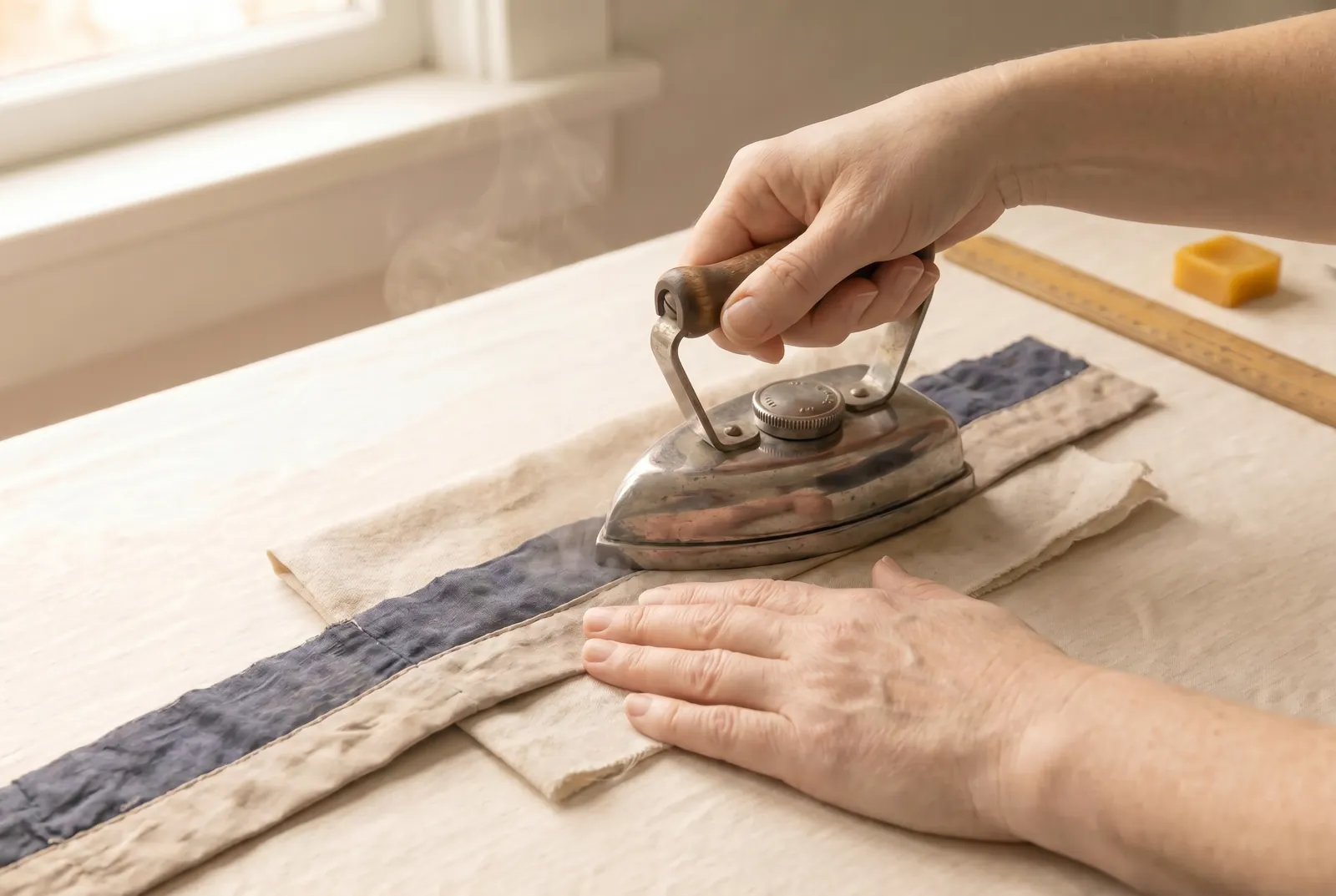
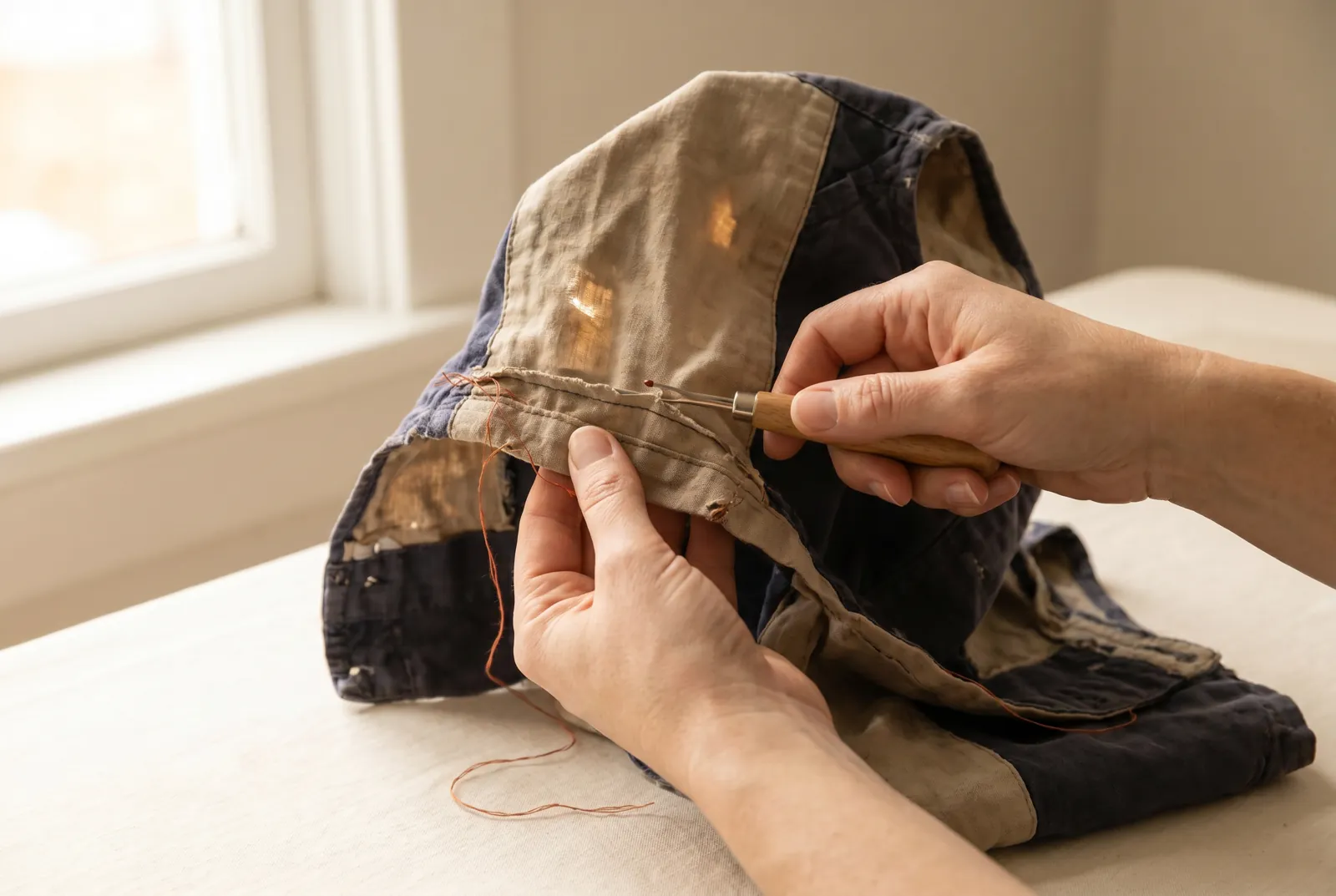
STEP 1/8Look over the worn garment and find the cloth still worth using. Hold each part up to a window: thin places show light, and no strip may be cut where the light comes through. Rip the garment apart along its seams rather than cutting it, taking out every seam with a ripper or a sharp blade that cuts the thread and not the cloth.
Step 2
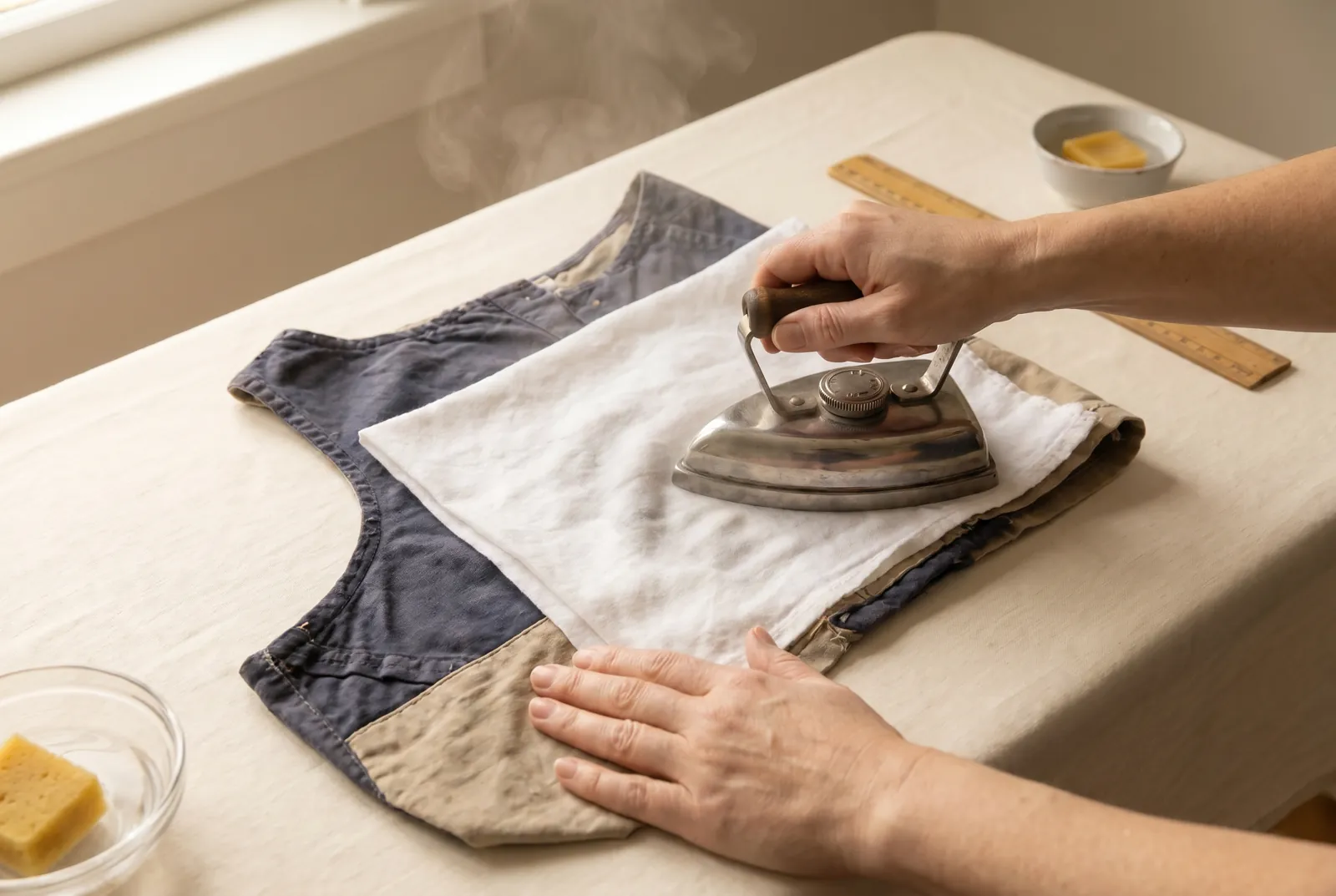
STEP 2/8Make the freed pieces ready to cut. Wash the pieces if the goods wash, or sponge and press woolens under a damp cloth, pressing out every old crease. The pieces are now yard goods again and are handled as new cloth.
Step 3
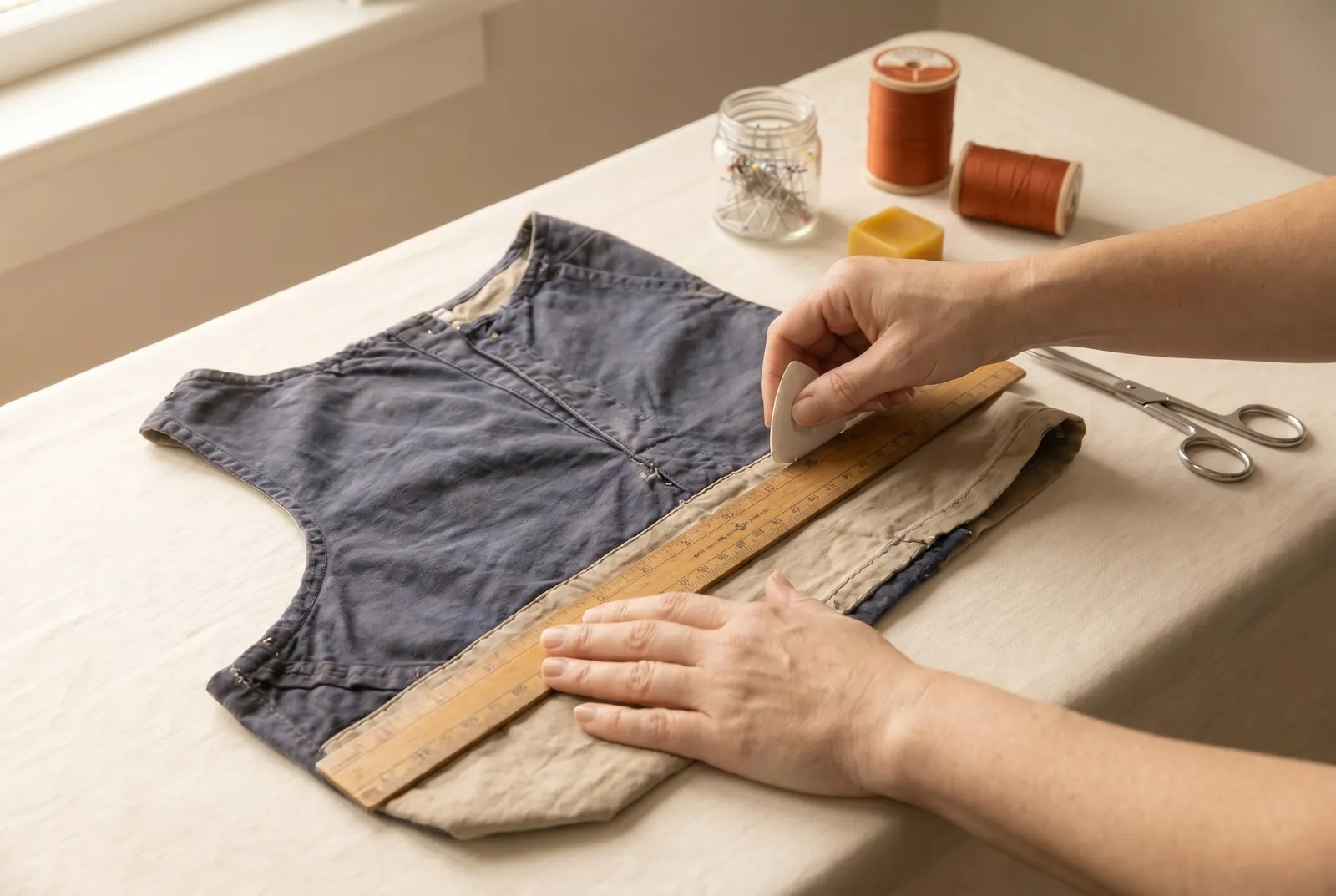
STEP 3/8Decide the finished size first — a flat apron tie runs about 45 cm (18 in) long and 3 cm (1 1/4 in) wide. With a ruler and chalk, mark the strip so its length runs along the warp, the lengthwise grain shown by the old seams and the weave, then cut to the marked lines; a strip cut on the warp holds its shape instead of stretching out of true. Where the cloth allows, set a long edge of the strip on the selvage, which is a finished edge and needs no hem, while a cut long edge is raw and will fray.
Step 4
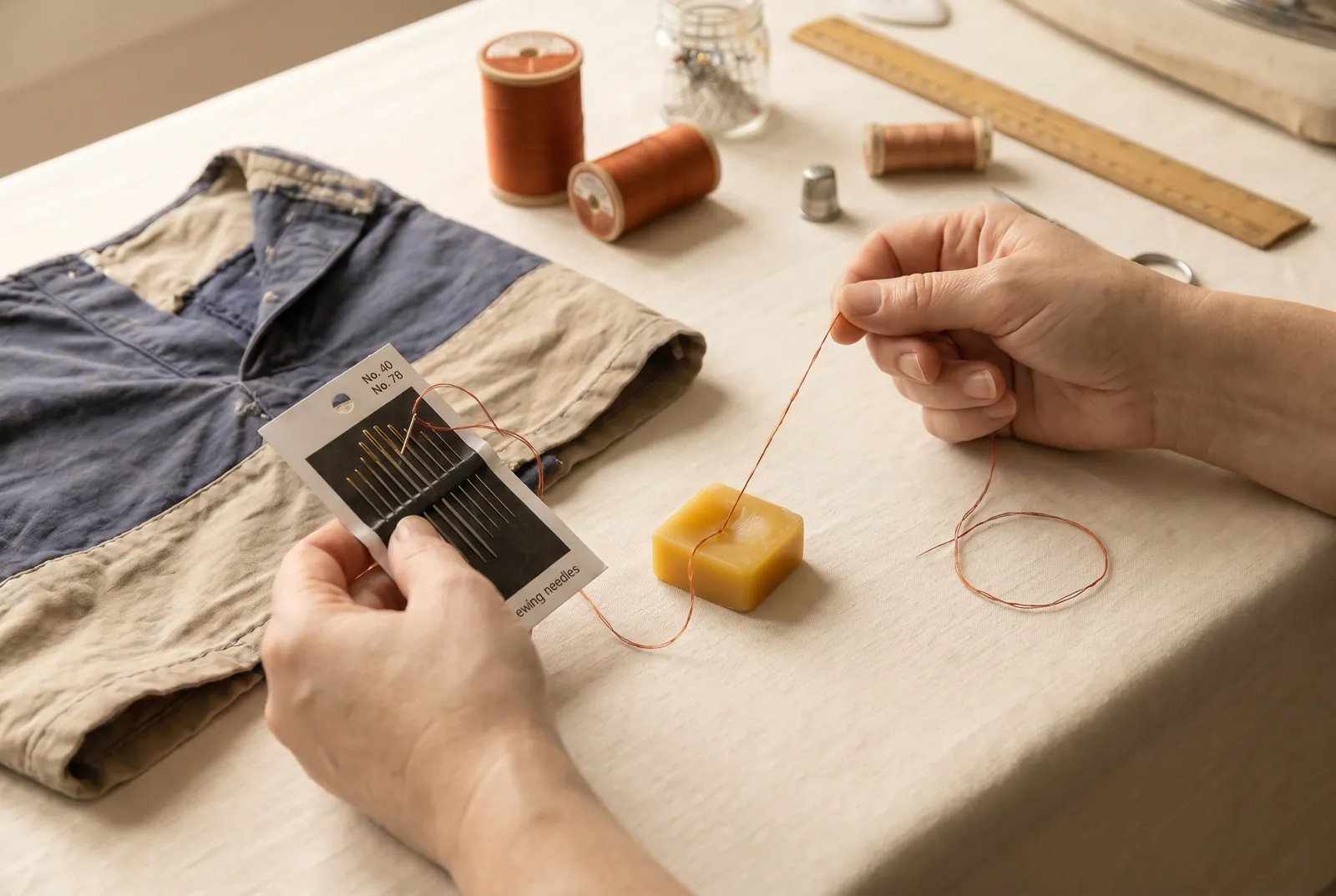
STEP 4/8Match the thread and needle to the cloth: cotton thread No. 40 to No. 70, and a sharps needle No. 5 to No. 10 sized to that thread, since a needle too fine for its thread frays and breaks it. If the tie will bear strain, draw the thread through beeswax first so it holds.
Step 5
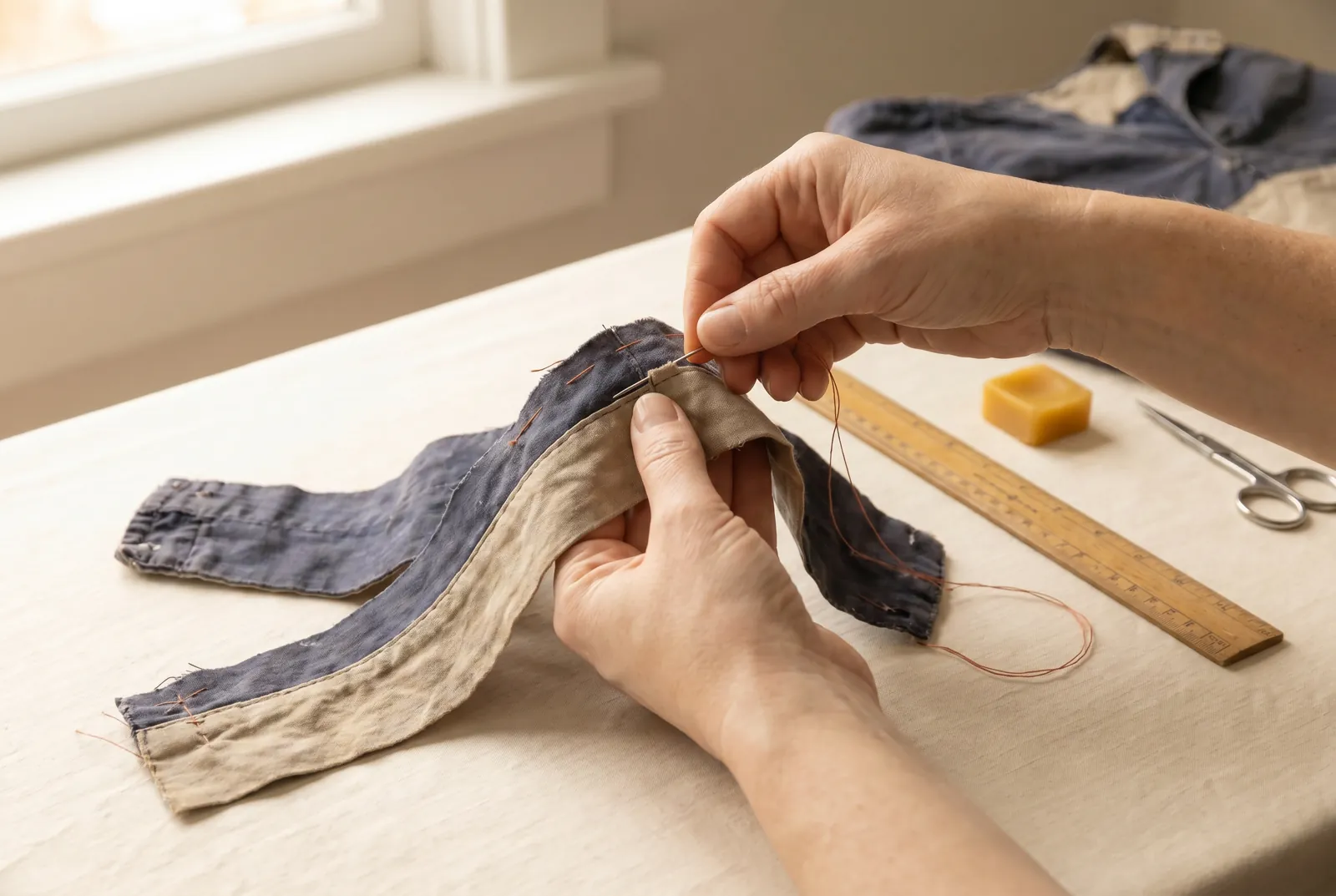
STEP 5/8One salvaged strip is often too short for the length you need, so join two strips end to end with a French seam, which sits well in a straight line like this one. Lay the two ends together with their raw ends even and the wrong sides of the cloth facing out, then run a first line of stitching a scant 4 mm (3/16 in) in from the raw ends. Baste the ends first if the cloth is slippery.
Step 6
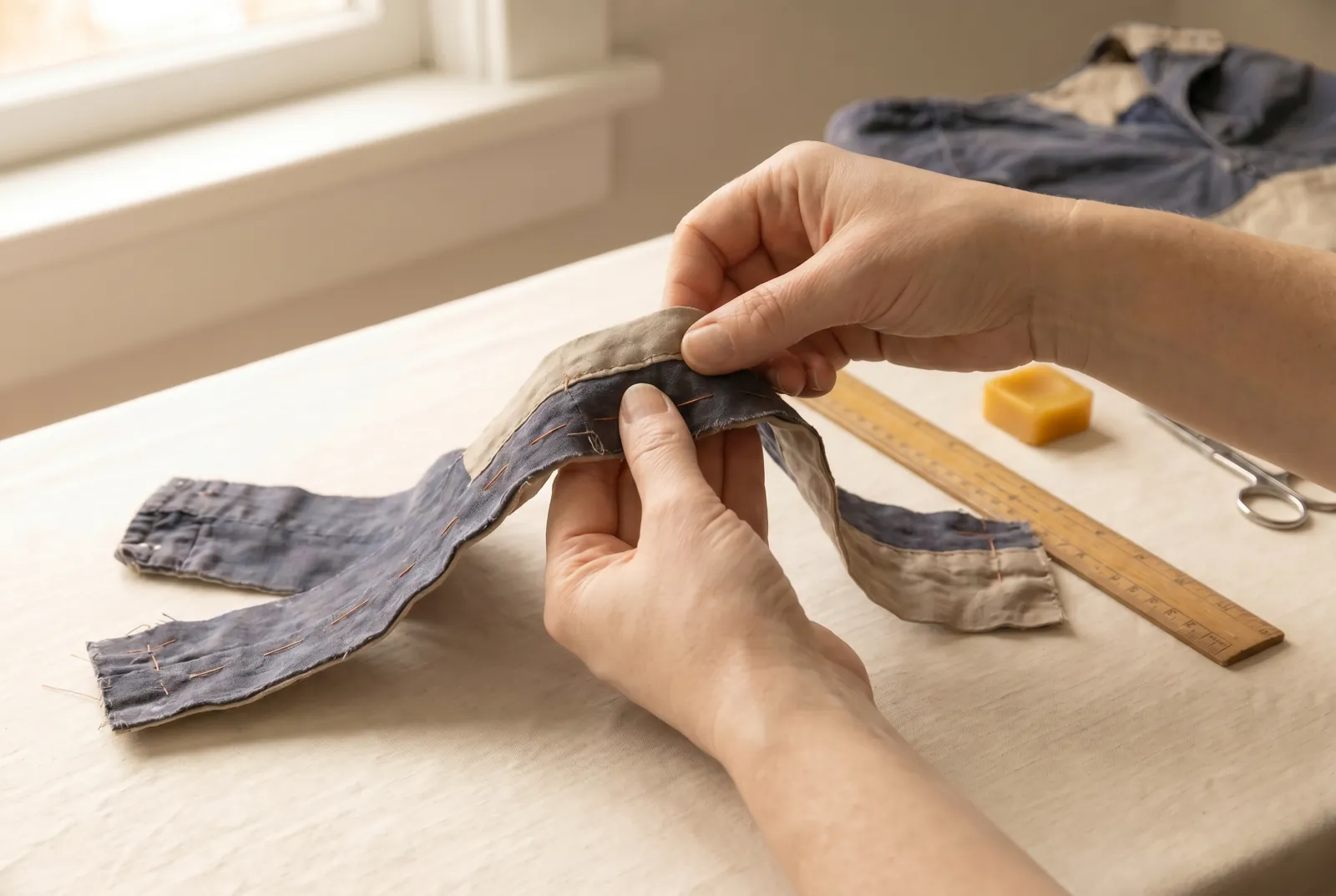
STEP 6/8Open the two strips out and bring them together the other way, so the first line of stitching runs along the joined edge. Roll the seam between your fingers until the stitching itself lies on the fold, and the two raw ends turn to the inside where the next seam will shut them in.
Step 7
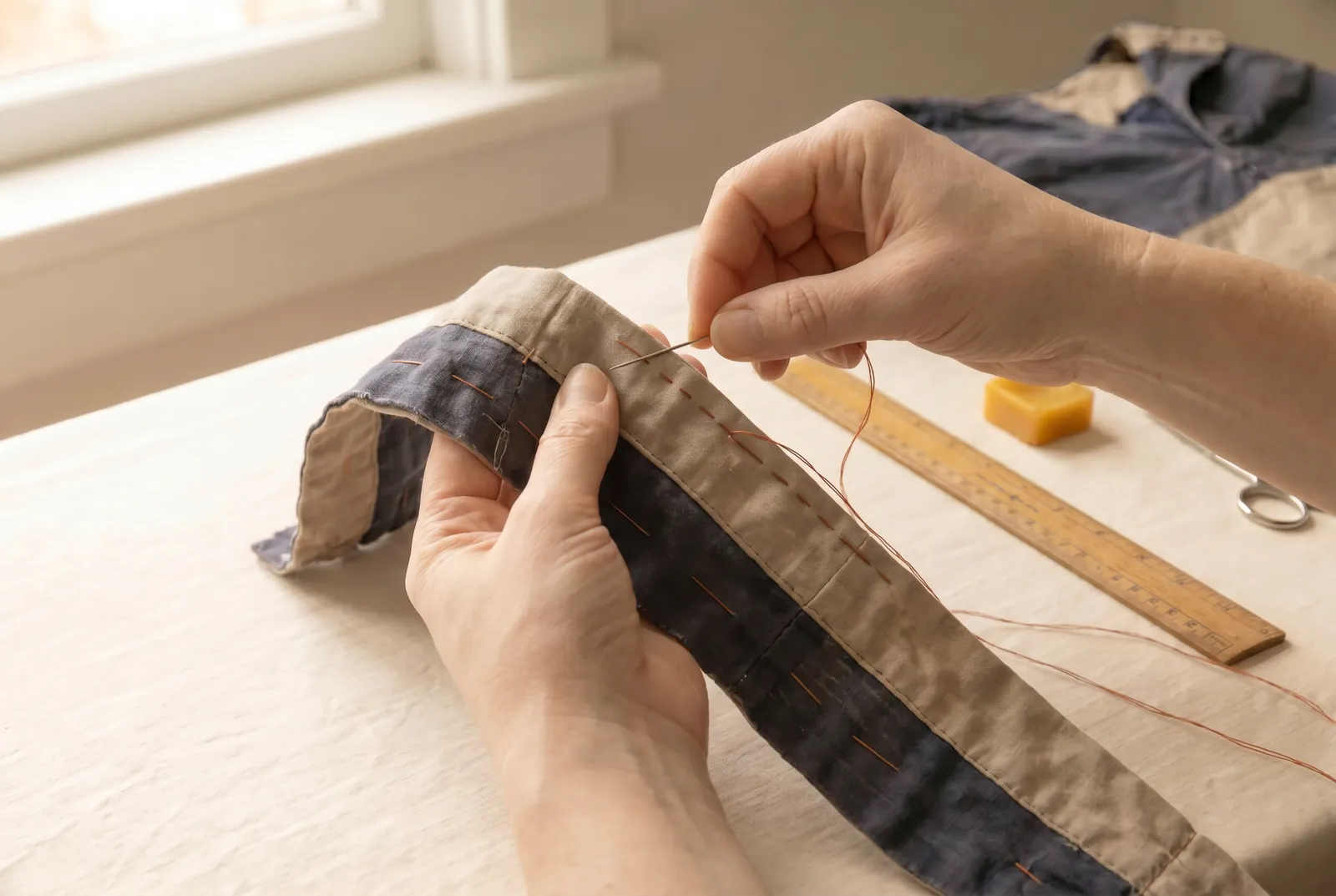
STEP 7/8Sew the second seam 6 mm (1/4 in) from the fold, deep enough to shut in the raw ends entirely; the two seams together take up about 1 cm (3/8 in) of cloth. The right side then shows a plain closed seam and the back a narrow, neat fold — keep this seam narrow, as a wide one is clumsy.
Step 8
STEP 8/8Press the join at once, before any other seam crosses it, since a seam once crossed can never be pressed flat again. Lay the work wrong side up and press the enclosed French seam flat to one side — not open, as it has no open edges to spread — so it lies as the narrow fold the second seam made. Suit the iron to the cloth: cotton and linen take a hot iron and may be pressed damp.