Visible & Decorative Mending · piece Nº 10 · 54 min
Start a Sock-Heel Darn: Lay the Woven Foundation
Begin repairing a worn hole at a sock heel by laying the lengthwise foundation threads a woven darn is built on. This covers the first stage only — the parallel strands span the hole but do not close it, so the sock is not yet mended until crosswise threads are later woven through them.
The seam · 9 steps
Step 1
STEP 1/9A sock darn is a small woven web of thread laid over the hole, and it must stretch in every direction the way the knitted sock does. This lesson lays the foundation of that web — the lengthwise threads — which is the first of two stages; the sock is not mended until crosswise threads are later woven through this foundation.
Step 2
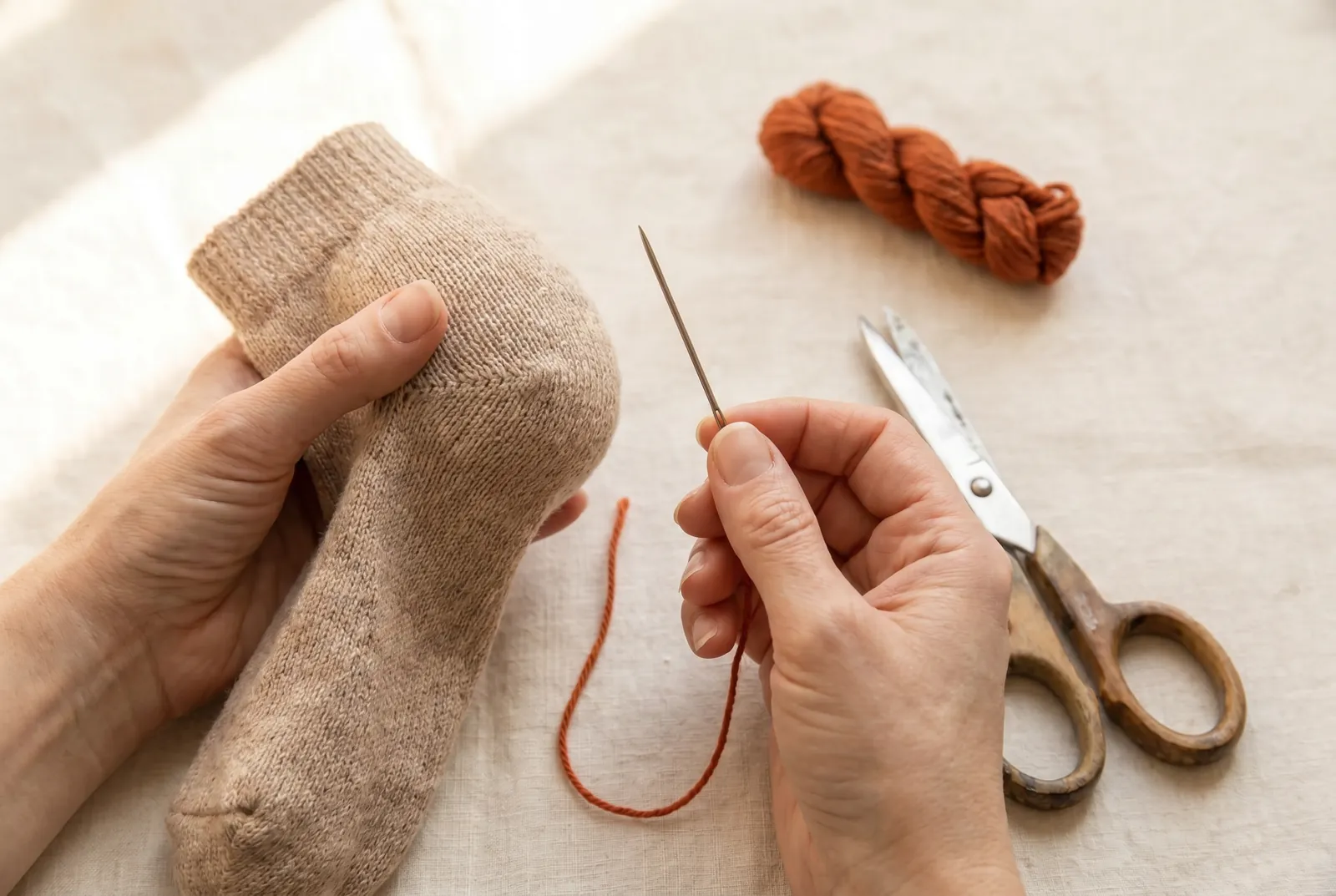
STEP 2/9Choose darning cotton for a cotton sock, or soft wool yarn for a woolen one, splitting the yarn thinner if it is too thick, and match the sock's color. Hard twisted thread makes a hard darn that a heel will not bear. Thread a long darning needle, or a blunt tapestry needle for knitted work, and leave the thread's end loose with no knot.
Step 3
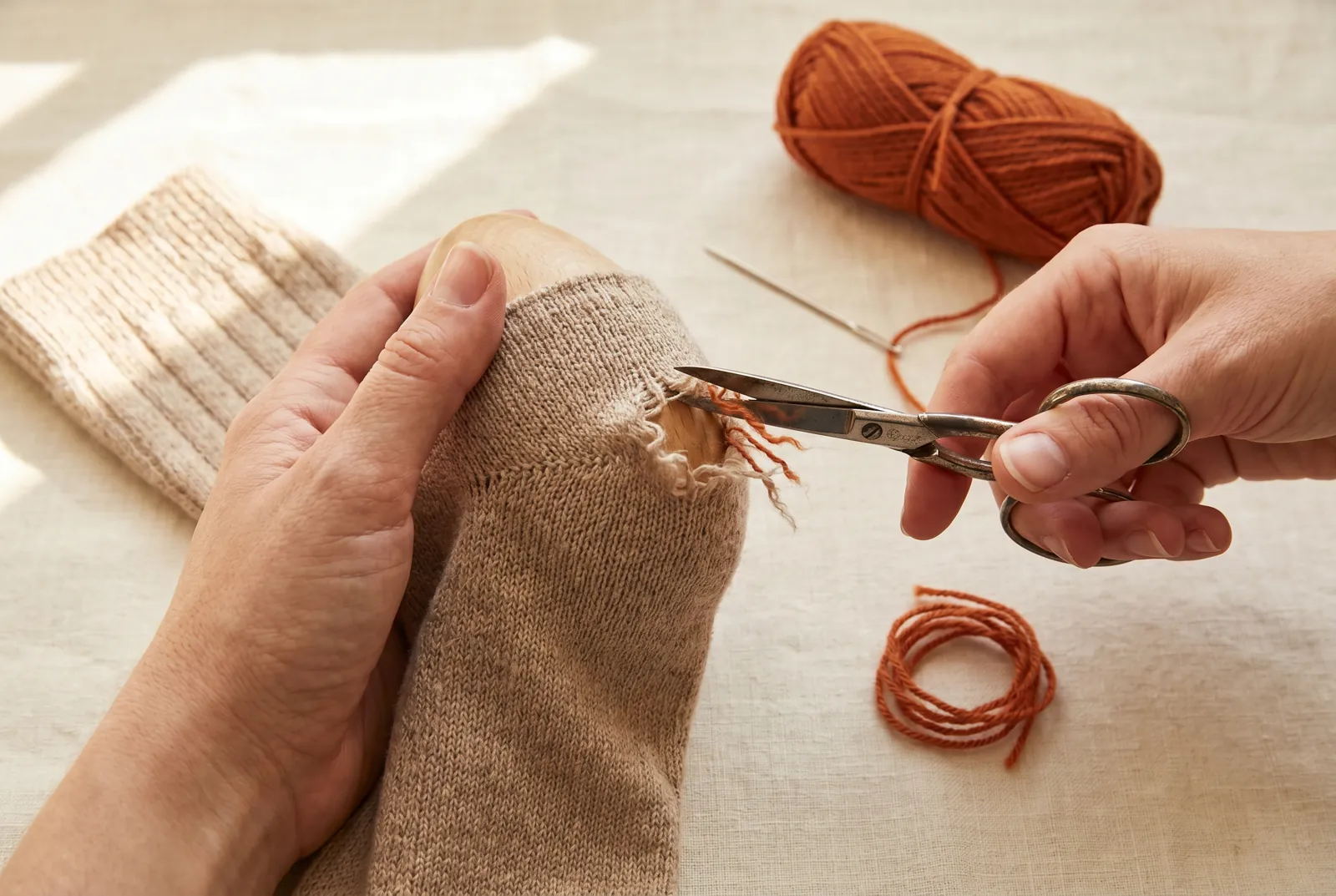
STEP 3/9Slip a darning egg or ball inside the sock, directly under the hole. Hold the sock smooth over the egg with your free hand, without stretching the fabric, so the worn area lies flat and rounded while you work.

Step 4
STEP 4/9With small scissors, trim away only the ragged, frayed ends around the hole, and cut no sound loop of the knit. Cutting into a good loop widens the hole rather than repairing it.
Step 5
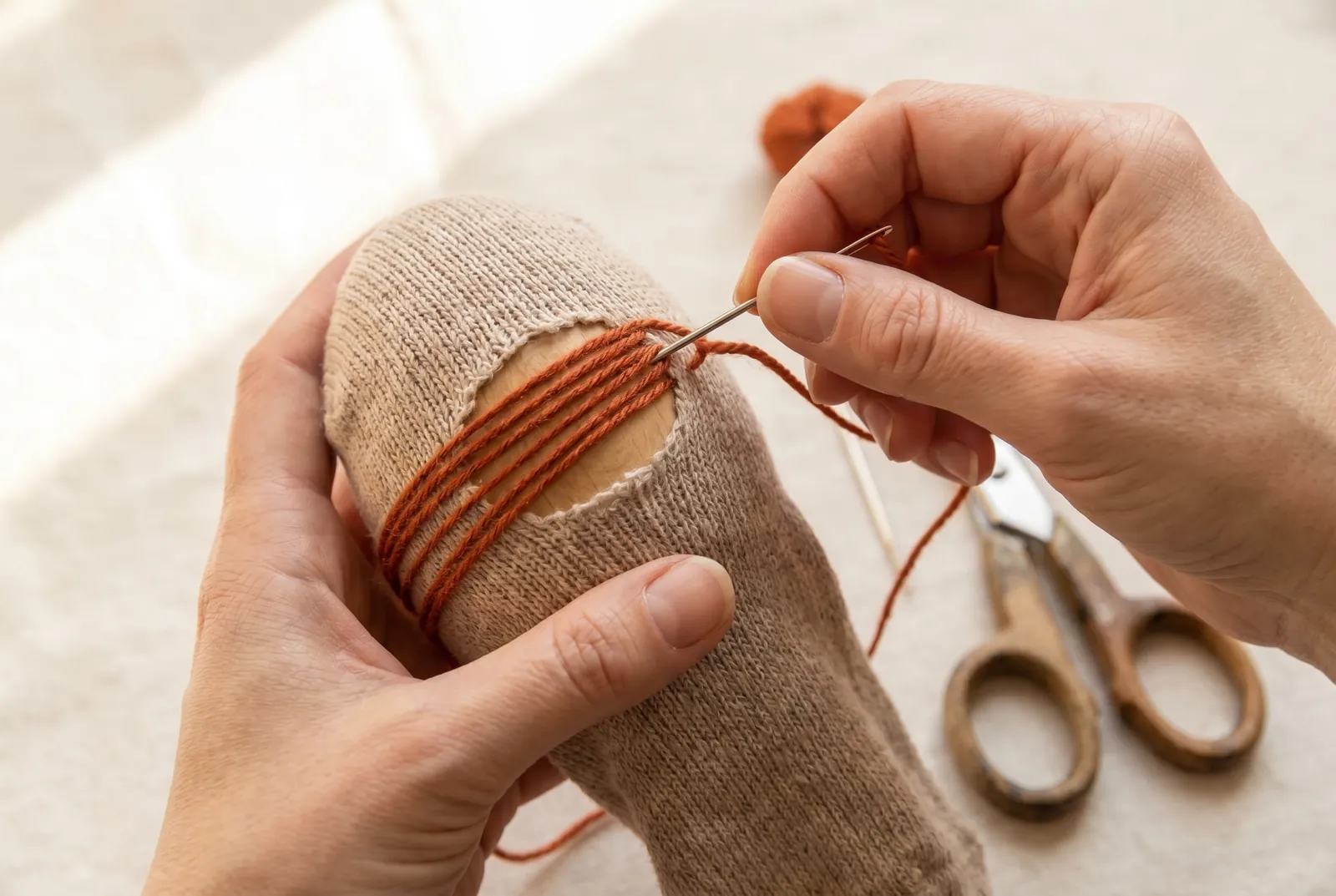
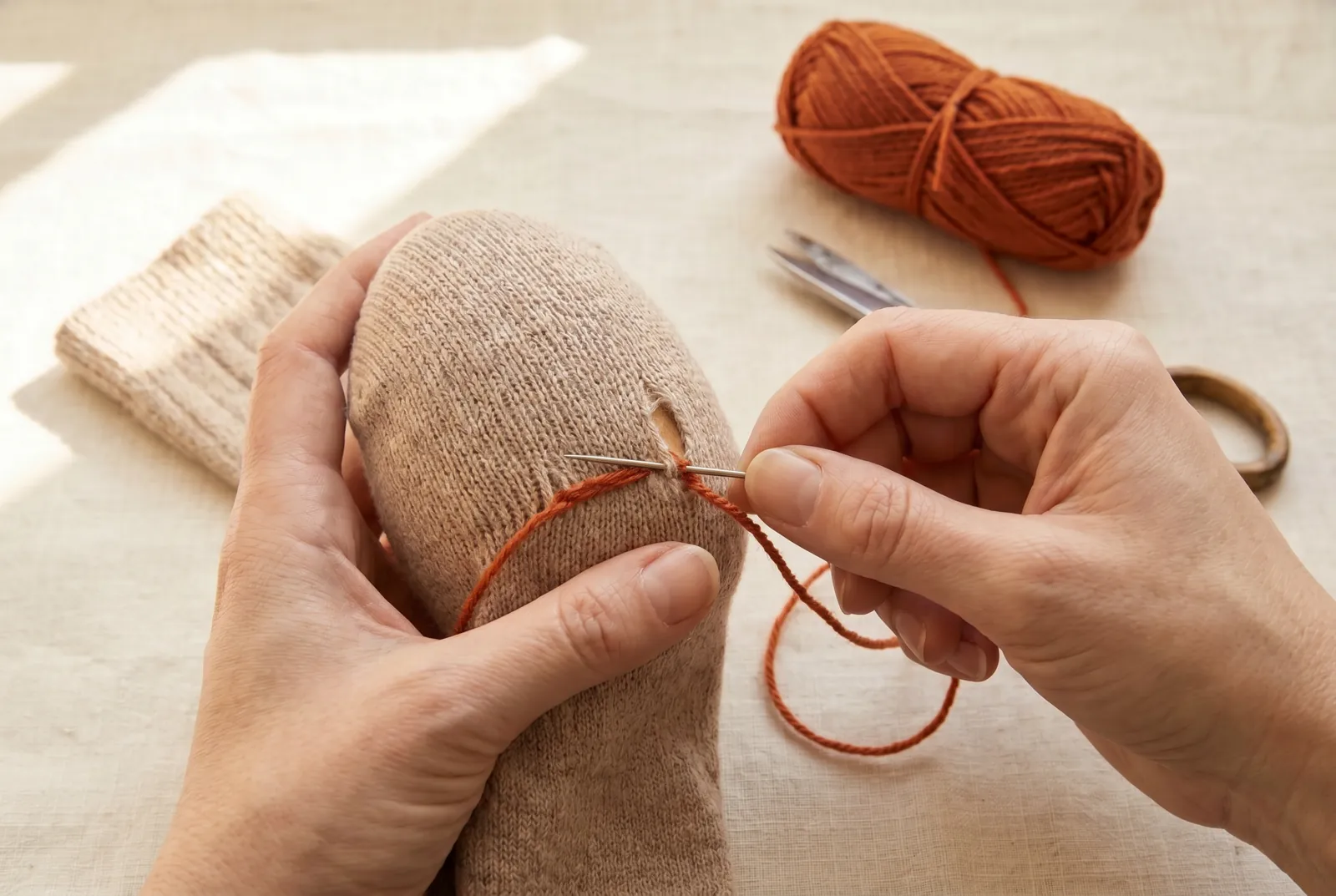
STEP 5/9Lay the lengthwise threads first, running each one along the ribs of the sock — the fine lengthwise lines of the knit, running from cuff toward toe (on a smooth heel with no visible lines, lengthwise is that same cuff-to-toe direction). Start a quarter to half an inch (6 to 13 mm) from the hole, in the sound knit, and run the needle in and out through the fabric, taking up one or two threads at a time. Leave a short tail lying on the surface at the start; the in-and-out stitches through the sound knit hold it, so no knot is needed.
Step 6
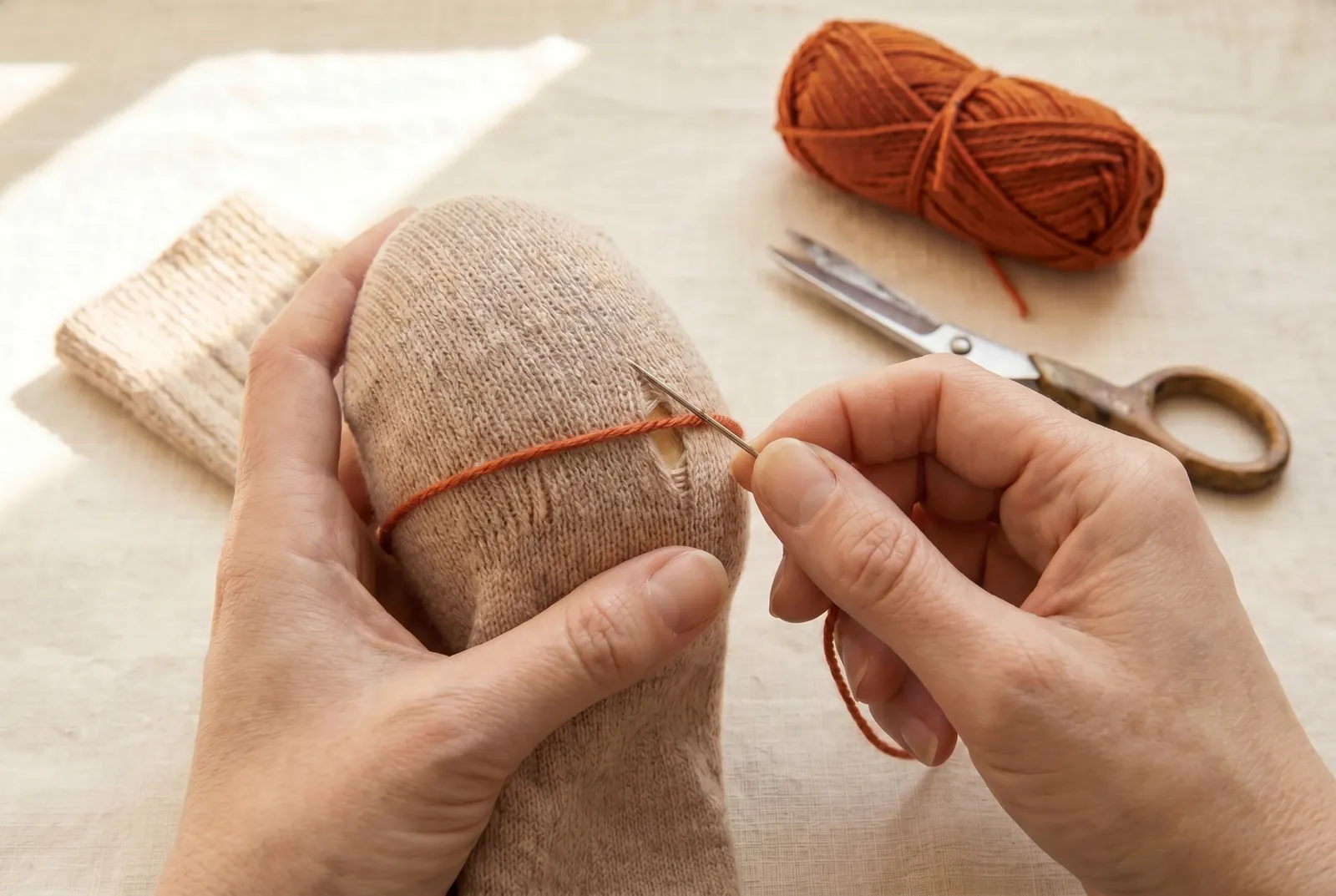
STEP 6/9Carry the thread across the hole in one straight strand, then run the needle back into the sound knit the same quarter to half an inch (6 to 13 mm) on the far side. Keep the strand flat and straight along the line of the ribs, not sagging down into the hole.
Step 7
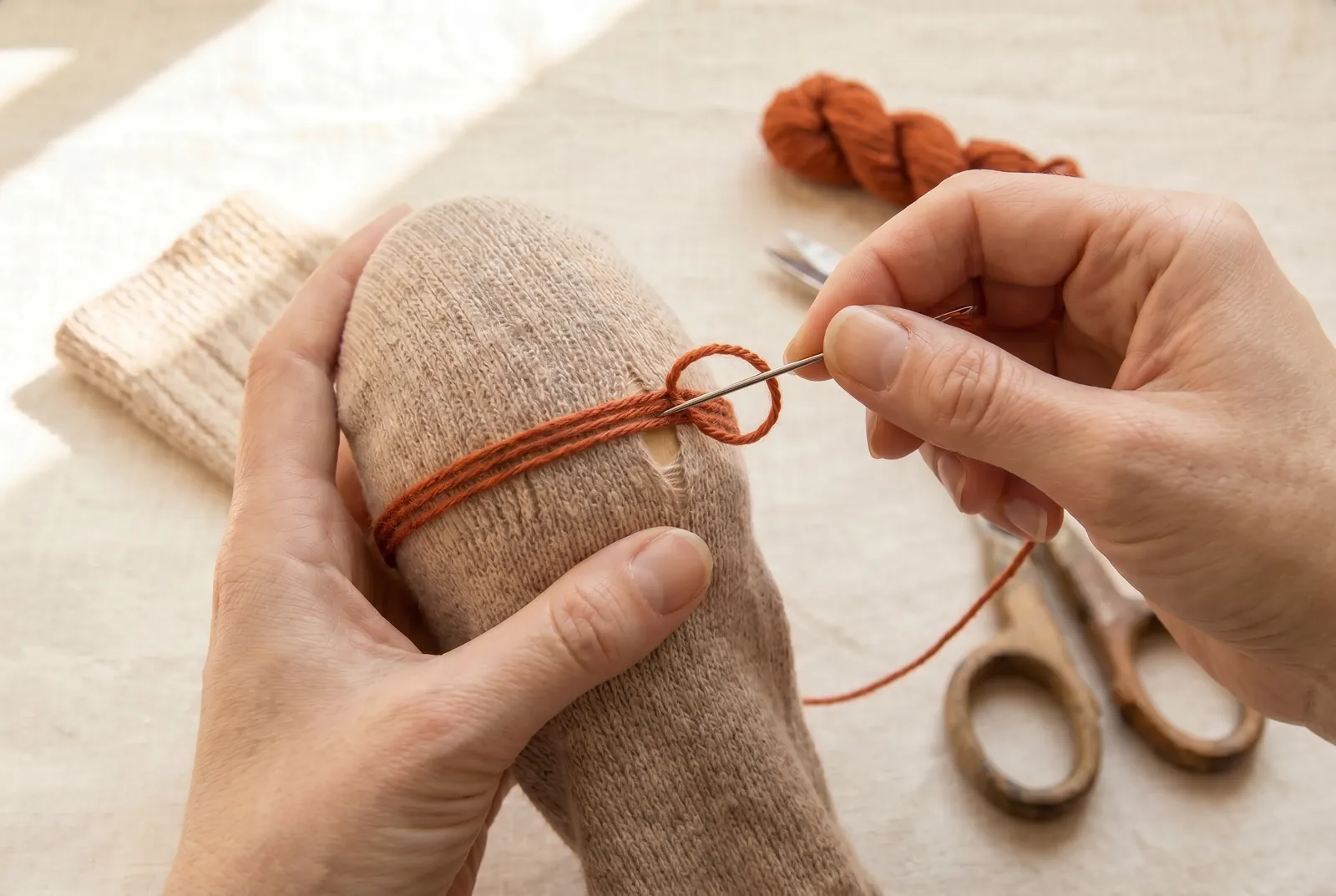
STEP 7/9Turn and bring the needle back close beside the first row, 2 mm (1/16 in) — a thread's width — away, laying another straight strand across the hole and into the sound knit as before. At each turn, leave a tiny loop of thread standing at the edge instead of pulling the row tight — these loops give the darn room to shrink in washing and to stretch as the sock is worn.
Step 8
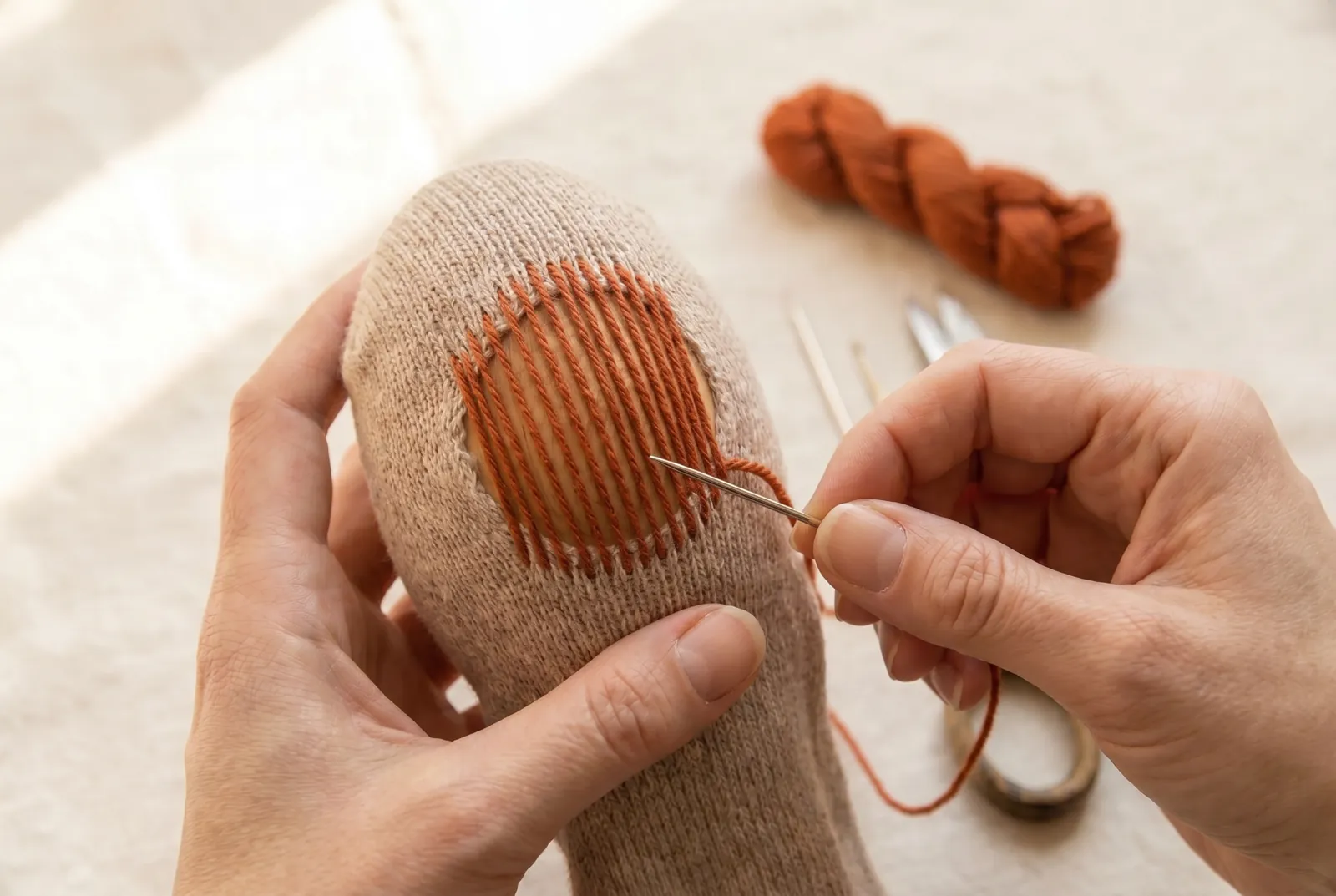
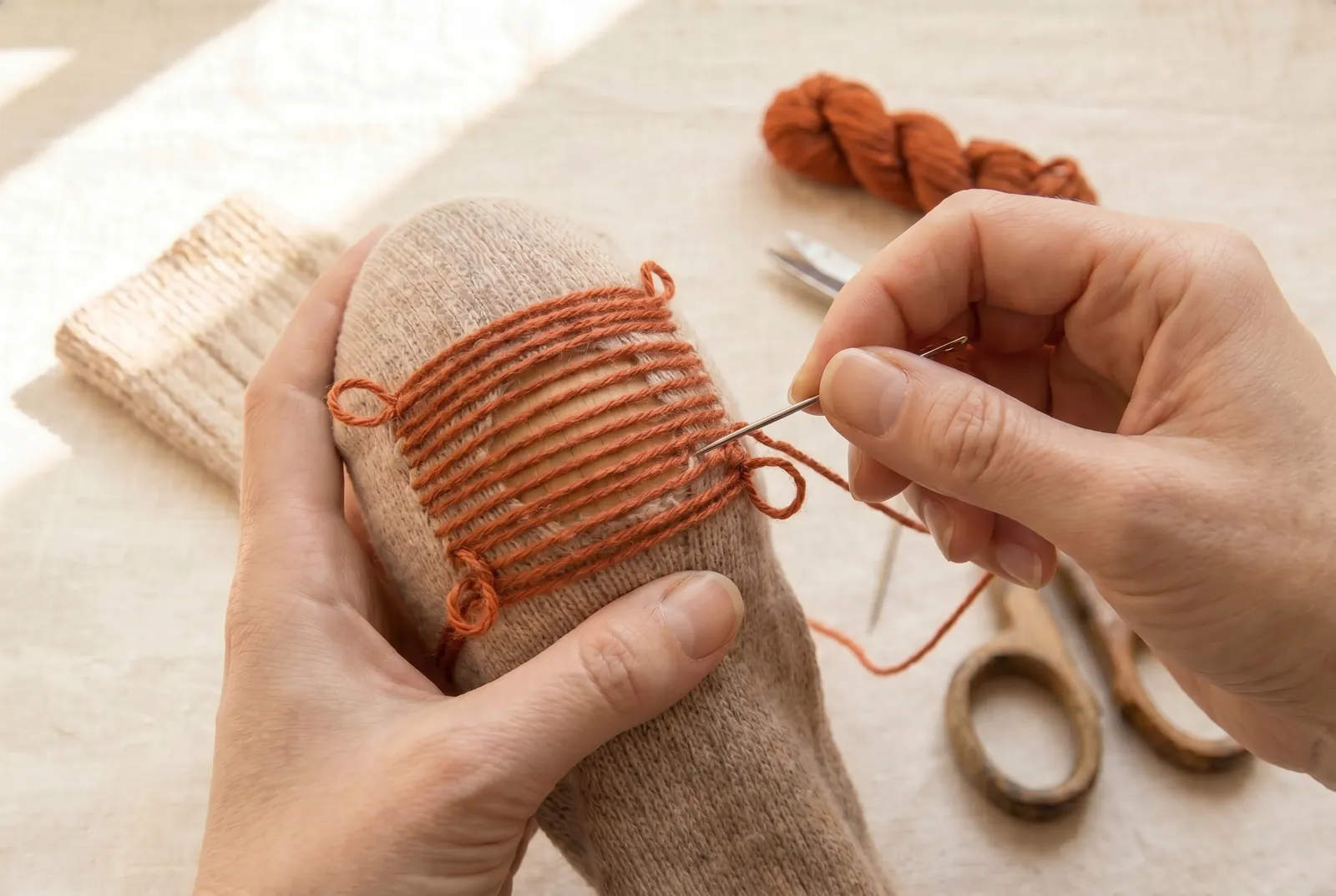
STEP 8/9Repeat the rows back and forth across the opening — each 2 mm (1/16 in) from the last, each leaving its loop at the turn — until parallel strands span the whole hole and every row is anchored in sound knit at both ends. Keep the spacing even so the foundation stays a flat, open bed of parallel strands rather than a tight bundle.
Step 9
STEP 9/9You now have the lengthwise foundation: stretchy parallel strands spanning the hole and anchored in sound knit on every side. The sock is not yet mended — these strands leave open gaps between them and would snag if the sock were worn now. A stocking darn is closed only by weaving a new web of thread over the hole, so weaving crosswise threads through this foundation is a required next stage that this lesson does not cover.